






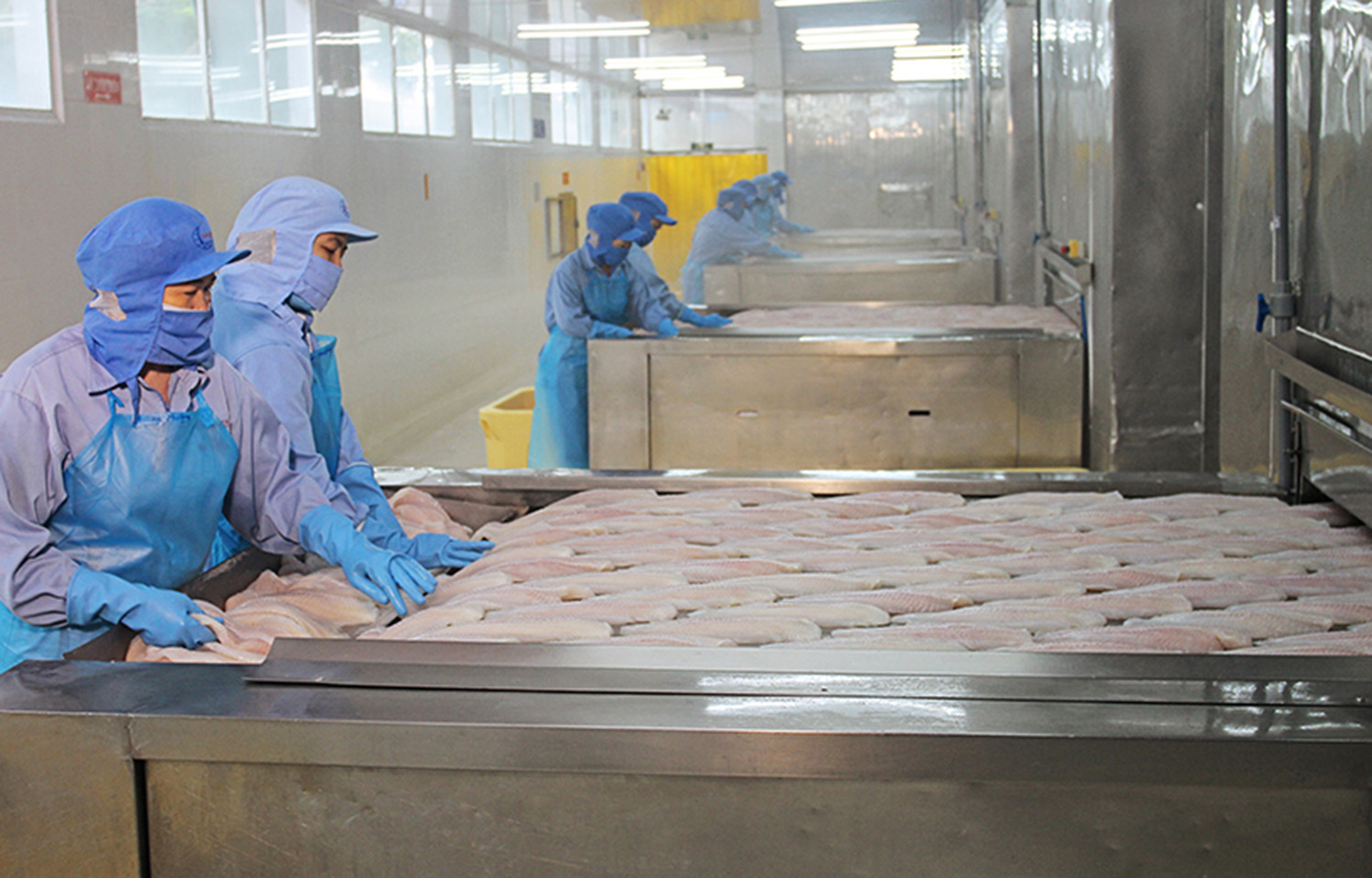
A U.S. Department of Commerce (DOC) review has determined certain Vietnamese companies dumped certain frozen fish fillets in the U.S. between 1 August 2023 and 31 July 2024.
The DOC review found that Dien Dong Seafood and NTSF Seafoods Joint Stock Company made sales of certain frozen fish fillets in the U.S. at less than normal value during the review period. According to the posting to the federal register, the final results of the administrative review determined weighted-average dumping margins of USD 1.00 (EUR 0.86) per kilogram for Bien Dong Seafood and USD 0.38 (EUR 0.32) per kilogram for NTSF Seafoods Joint Stock Company.
“Commerce has determined, and U.S. Customs and Border Protection (CBP) shall assess, antidumping duties on all appropriate entries of subject merchandise covered by this review,” DOC said in the posting.
The DOC also established rates for non-selected separate rate respondents, setting a USD 0.84 (EUR 0.72) per kilogram rate for Can Tho Import Export Seafood Joint Stock Company and for Nam Viet corporation.
Those amounts are significantly lower than the current antidumping rate that hits Vietnam companies that haven’t proven sufficient separation from the prevailing rates. The posting in the federal register said because there was no valid request for review of the “Vietnam-wide entity” in the latest review, that entity has been rescinded and the Vietnam-wide duty rate of USD 2.39 (EUR 2.06) per kilogram is “not subject to change.”
“Commerce considers all other companies for which a review was requested, and which did not demonstrate separate rate eligibility, to be part of the Vietnam-wide entity,” DOC said.
The U.S. government has regularly investigated companies in antidumping investigations, targeting the Vietnamese pangasius industry in particular. In June, the U.S. International Trade Commission decided to keep antidumping duties on frozen pangasius fillets from Vietnam following a mandatory five-year review of the order. Those original duties date to 2003, and the DOC has performed periodic reviews ever since, which occasionally result in either raised duties or lowered duties depending on the findings.
Reviews are often also requested either by U.S. companies or by the companies that are still subject to additional duties, and in some instances, companies will have duties removed.
