



For Wild Alaskan Company CEO and Founder Arron Kallenberg, seeing his direct-to-consumer seafood products on Target’s shelves is a reminder of his late father’s guiding principles that helped shape his entrepreneurship.
“My father, may he rest in peace, always said, ‘The most important thing is to be life-positive,’” Kallenberg said. “He also told me, ‘You don’t exchange energy in the universe without respect,’ words that now appear on the packaging of several products in Target. Those principles guide me as Wild Alaskan Company’s founder and CEO, a husband, and a father.”
The Homer, Alaska, U.S.A.-based company was founded in 2017 with the mission of making wild-caught Alaskan seafood accessible to consumers both in and beyond the state of Alaska. As a third-generation commercial fisherman, Kallenberg said his memories of fishing with his mother and father on the commercial drift gillnetter Mary K in Bristol Bay, Alaska, and seeing his father fish on his boat, the Polly K, helped shaped a 100-year family legacy of promoting the appeal of Alaskan-caught seafood.
“As someone who has spent a lifetime connected to Alaska’s seafood industry, I believe responsibly harvested wild Alaska seafood is some of the best food on the planet,” Kallenberg said. “It offers exceptional flavor and nutrition while supporting American fishing families and coastal communities.”
Wild Alaskan Company did just that last month, rolling out five frozen products nationwide on Target shelves – Pink Salmon, Sockeye Salmon with Lemon and Herb Butter, Wild Alaska Pollock Fillets, Wild Alaska Pollock Quick Cuts, and Sablefish (Black Cod). These five products are some of the brand’s 30 portfolio offerings that typically come to consumers in a membership-based subscription. Each product is “100 percent wild-caught, sustainably harvested in Alaska, and frozen at peak freshness to preserve quality and flavor,” the company said. Additionally, each product ranges in 14-23 grams of protein per serving.
Wild Alaskan Company Senior Vice President of Marketing and Innovation Emily Buckley said the Alaska-based company chose Target as its big box retailer because the two companies shared a vision of improving accessibility to healthy food. Wild Alaskan Company cited a 2024 research report from PubMed that only 1 in 10 Americans eat two weekly servings of seafood as recommended by the USDA Dietary Guidelines, and 80 percent of the seafood Americans consume is imported – a 2022 NOAA report found. Buckley said the Target partnership took about a year to solidify and rollout, and the advocacy for product awareness was consistent from day one.
“Alaska remains the single-largest domestic source of seafood, yet it accounts for a fraction of what is consumed in the U.S. Wild Alaskan Company's research points to why shoppers don't trust unlabeled seafood, can’t tell good from bad, and aren't confident cooking it,” the company said in a release. “So, they skip the aisle.”
Buckley told SeafoodSource that most “digitally native brands” are able to take direct-to-consumer (DTC) products and sell to stores, but none of Wild Alaskan Company’s products were curated for a retail freezer aisle, meaning the pack size, price point, and marketing had to be shifted. Though the format may have changed, Buckley said, the “win” was that Wild Alaskan Company did not have to change “who we are to get on the shelf.”
“Retail for us meant building an entirely new line – new packaging that could tell our story in seconds on shelf, a new product mix, new portions, a new price point – nothing carried over except the standards,” Buckley said. “Every one of those calls still had to clear the same sourcing and quality bar we hold every product to. What caught me off guard wasn’t the timeline, but watching our entire company execute this rapidly and seamlessly on top of their existing DTC workloads.”
Once the product’s physical packaging was ready, it was up to the Wild Alaskan Company team to communicate both to grocery store shoppers and audiences who are unfamiliar with not just wild-caught Alaskan seafood, but seafood as a whole.
“People know they should eat more fish,” Buckley said. “They don't know what to do with it on a Tuesday. Seafood has a trust problem the rest of the grocery store solved years ago. You can buy a chicken breast without thinking about it. Fish still makes people hesitate at the case, because they can't tell what's good, they don't know where it came from, and they're worried they'll ruin it.”
The company addressed this concern by placing a QR code on every package in stores that leads users to an online library of more than 600 recipes and the Kallenberg’s Eat Wild cookbook. Consumers can even call “1-833-EAT-WILD" and someone on the other end of the line will walk shoppers through how to prepare their selected fish. In stores, Buckley said the company is running point of purchase and freezer displays with Target, as well as teaming up with creators online to shoot 20-30 minute weeknight dinner cooking videos. Wild Alaskan Company Head of Communications Monica Haim-Kallenberg, who’s also Arron’s spouse, also releases a weekly newsletter called “Anchor Points” that contains resources for consumers to use when cooking at home.
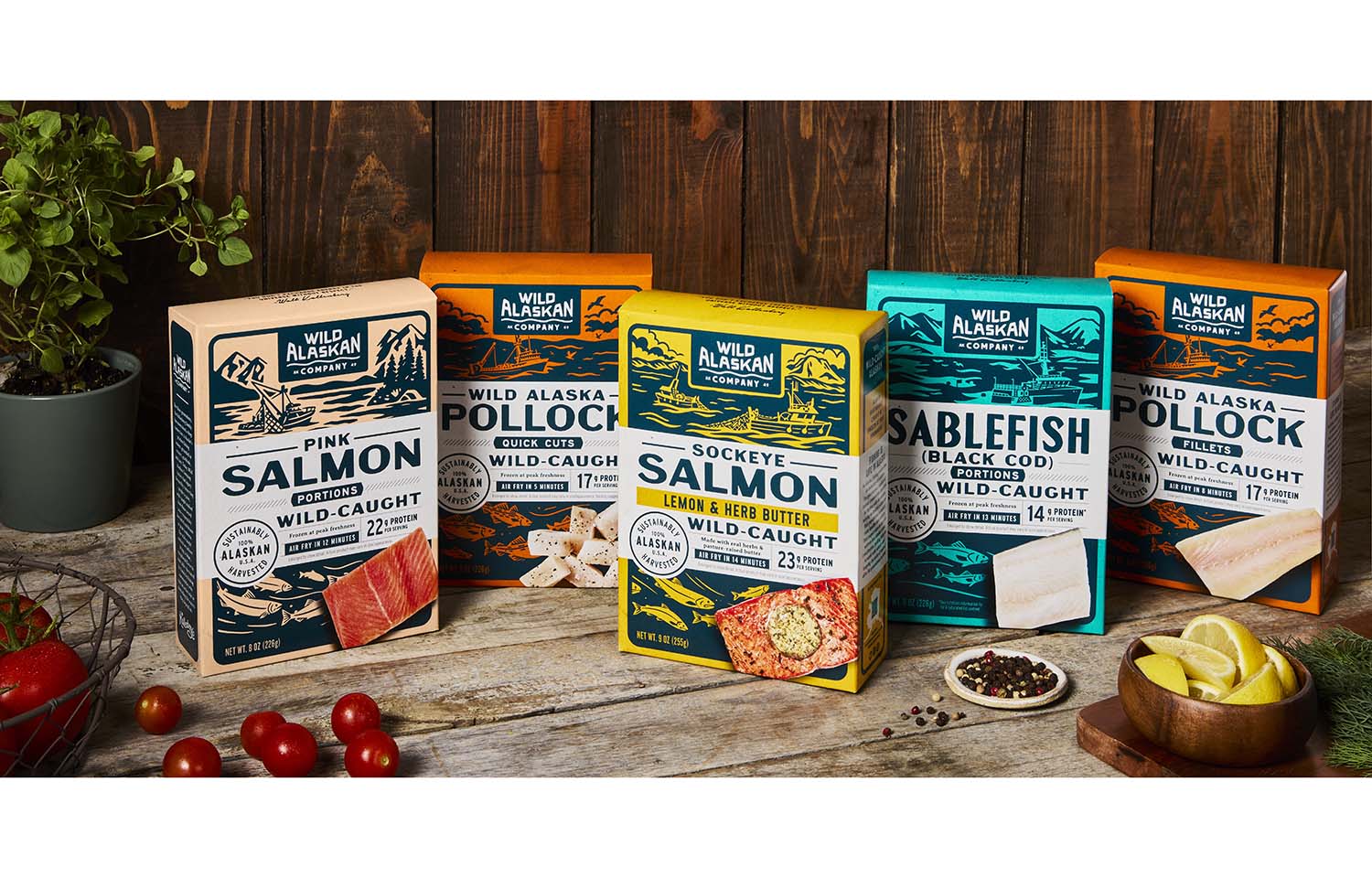
“If there's one piece of advice, it's that less is more,” Buckley said. “People overcook wild-caught. Once you've cooked one good piece of fish yourself, the intimidation goes away. That's the whole thesis.”
Ask Kallenberg, and he will say his favorite is the Sockeye Salmon with Lemon and Herb Butter, as it reminds him of his family’s sockeye fishing legacy.
“For me, seeing Wild Alaskan Company in Target feels like bringing a piece of home to families across the country,” Kallenberg said. “My grandfather and father spent most of their lives in the Alaska seafood industry, and building on that legacy means a great deal to me. I hope picking up a package at Target leads to a favorite family dinner – and a deeper connection to where their food comes from and the people who helped bring it to their table.”
Building off loyal membership numbers through the DTC business model, Wild Alaskan Company is now on Target’s membership-based service, Target Plus. Buckley added that a decade of subscriber data shows Wild Alaskan Company that consumers care about product sourcing that is both verifiable and better for the environment while being nutritionally sound. Kallenberg said that’s why it’s important to him for every piece of Wild Alaskan Company wild-caught fish to be processed in the U.S. both for traceability and to support domestic jobs for families just like his.
“Now, my wife, Monica, and I are doing our best to pass that legacy on to our kids, teaching them to know where our food comes from and to care for the places that sustain us,” Kallenberg said. “Born in Colombia, Monica immigrated to the United States as a young child. She often says that when she married me, she married Alaska. She came to Alaska seafood from the outside, and I think that perspective helps her connect with people who’ve never set foot on a fishing boat.”
