





The U.S. Court of Appeals for the Fifth Circuit is considering a challenge to a 2019 NOAA Fisheries rule forcing Louisiana inshore shrimpers to install turtle excluder devices (TEDs).
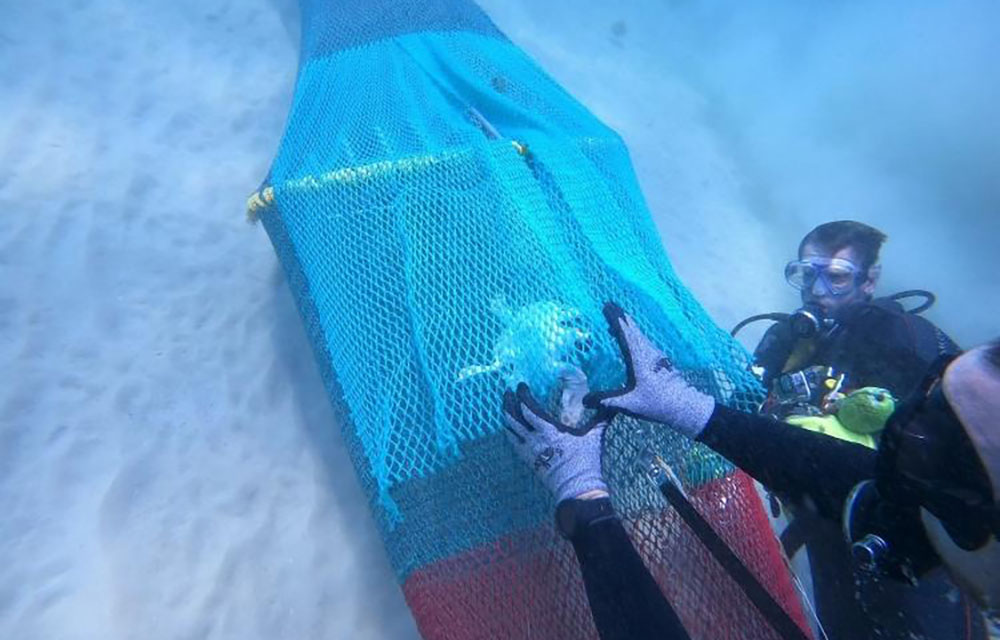
A TED is a grid of metal bars placed in a trawl net that block larger animals – like turtles – while allowing smaller animals – like shrimp – to pass through. Louisiana shrimpers claim the requirement on inshore vessels is excessive, making their work more difficult and expensive despite little risk to turtles.
Louisiana has a long history of opposition to TEDs. When NOAA Fisheries finalized a rule requiring TEDs in 1987, the state passed a law preventing state officials from enforcing it. That changed in 2015, when state lawmakers finally voted to repeal the law.
Frustration reemerged in 2019, when NOAA Fisheries expanded the TED requirement to include inshore skimmers 40 feet in length or longer. The New Orleans, Louisiana, U.S.A.-based Pelican Institute for Public Policy claims the agency presented little evidence publicly to support its decision, pointing to a 2010 study that found up to two turtles died after getting caught up in gillnets off the coast of North Carolina. According to the Pelican Institute, a 55-year-long ongoing bycatch study run by the Louisiana Department of Wildlife and Fisheries has only reported two instances of turtle interactions. Both were released alive.
The Pelican Institute filed a lawsuit on behalf of the Louisiana Shrimp Association and individual commercial shrimpers 17 January 2024, making this alleged dearth of evidence a key part of their lawsuit and arguing that NOAA Fisheries’ decision-making on the 2019 rule was fundamentally flawed.
“This entire regulation is based on the death of one turtle – or maybe two, the agency isn’t sure – in North Carolina. It’s the opposite of rational, reasoned decision-making based on scientific evidence,” attorney Scott St. John, who represented the Louisiana Shrimp Association before the court, said in a release.
According to a NOAA Fisheries environmental impact assessment, however, an estimated 7,794 sea turtles are captured every year by skimmer trawls, pusher-head trawl, and wing net fisheries in the Gulf of Mexico, with 2,118 to 2,868 of those sea turtles dying.
The District Court for the Eastern District of Louisiana agreed that sea turtles are, in fact, caught up by shrimp trawlers in inshore waters and, on 27 June 2025, dismissed all of the plaintiffs' claims in the Pelican lawsuit, ruling that NOAA Fisheries was acting within its regulatory authority in issuing the final rule.
Shortly after the ruling, the Pelican Institute appealed the case to the U.S. Court of Appeals for the Fifth Circuit. The court heard oral arguments for the case, Louisiana Shrimp Association v. Lutnick, on 4 August 2026.
“People who care about how rules are made and enjoy eating Louisiana shrimp should care about this case,” said Sarah Harbison of the Pelican Institute. “Bureaucrats in cubicles in Washington are driving up the price of shrimp, creating an opening for cheaper, foreign imports, and ending a way of life for many on the Gulf Coast. Louisianans deserve a say, and a process based on scientific evidence, when an entire industry could collapse based on a guess.”
