



The U.S. Court of Appeals for the Fifth Circuit has rejected a challenge to turtle excluder device (TED) requirements in Louisiana, upholding a lower court ruling.
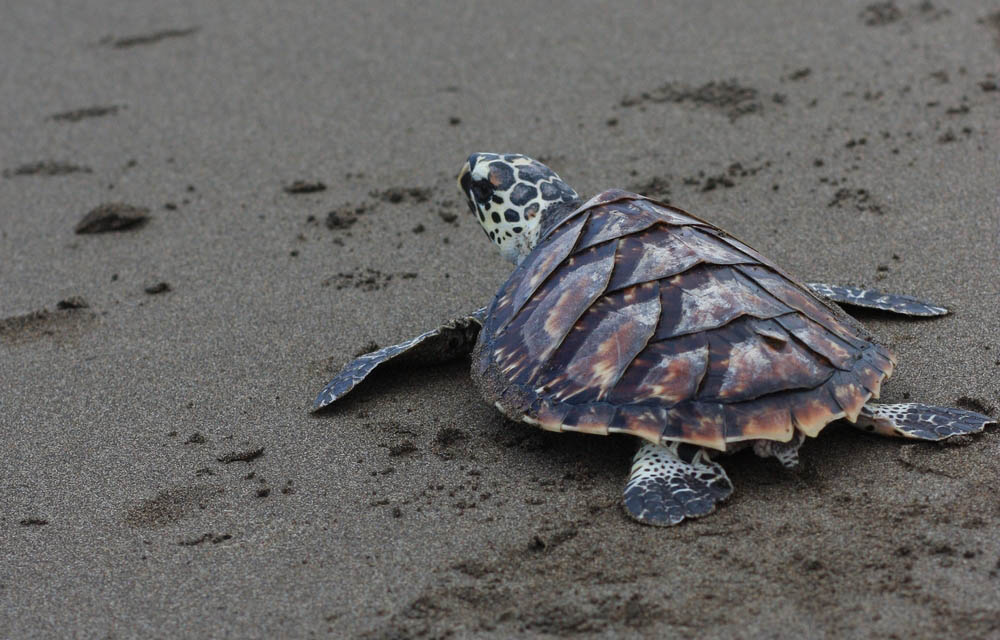
“We are delighted by this current ruling that will reduce the number of sea turtles from drowning in large shrimp nets, but we will continue to advocate for TEDs to be required in all skimmer trawls to prevent the continuing cruel and unnecessary drowning of these gentle endangered turtles,” Turtle Island Restoration Network Ocean Director Joanie Steinhaus said in a release.
TEDs help block animals like turtles from being caught up in the trawl nets used by shrimpers, which small shrimp can pass through the metal grids and into the nets.
In 2019, NOAA Fisheries expanded TED requirements to apply to more shrimpers, forcing inshore skimmers 40 feet in length or longer to begin using them. Louisiana shrimpers were upset by the new requirements, claiming that the devices were onerous to use despite their fishing efforts posing little danger to turtles. In 2024, the Louisiana Shrimpers Association filed a lawsuit against the requirements, claiming that NOAA Fisheries implemented the rule without adequate evidence to support it. The Pelican Institute for Public Policy, the New Orleans, Louisiana, U.S.A. law firm representing the shrimpers, claimed in its filings that a 55-year-long bycatch study run by the state had only found two instances of turtle interactions.
“People who care about how rules are made and enjoy eating Louisiana shrimp should care about this case,” said Sarah Harbison of the Pelican Institute. “Bureaucrats in cubicles in Washington are driving up the price of shrimp, creating an opening for cheaper, foreign imports, and ending a way of life for many on the Gulf Coast. Louisianans deserve a say, and a process based on scientific evidence, when an entire industry could collapse based on a guess.”
NOAA Fisheries strongly disputed that characterization in an environmental impact assessment, which estimated that 7,794 sea turtles are caught up by skimmer trawls, pusher-head trawls, and wing net fisheries in the Gulf of Mexico every year. Of those, 2,118 to 2,868 are estimated to have died.
In June 2025, the District Court for the Eastern District of Louisiana struck down the lawsuit, finding that NOAA Fisheries had acted properly within its authority in setting the TED rule and had shown that sea turtles are caught in shrimping nets.
The Louisiana Shrimpers Association filed an appeal, and the Fifth Circuit heard oral arguments on the case 4 August 2026.
In a 28 August ruling, the appeals court rejected the shrimpers arguments again, upholding the district court's ruling and the TED requirement.
“[NOAA Fisheries] has reasonably explained its decision and backed it with substantial evidence, and its reasoning accounts for all relevant factors. Plaintiffs therefore have not met their burden of showing that NMFS’s action was arbitrary and capricious such that we should set it aside under the [Administrative Procedures Act],” the court stated in its ruling. “[NOAA Fisheries] has articulated several reasons for its decision to require skimmer-trawl vessels 40 feet and longer to use TEDs. Plaintiffs meaningfully engage with two of these reasons on appeal, asserting that NMFS failed to back them with substantial evidence. We disagree, concluding that each is supported by substantial evidence in the administrative record.”
The ruling was praised by the three conservation groups – the Center for Biological Diversity (CBD), Defenders of Wildlife, and Turtle Island Restoration Network – that filed an amicus brief defending the TED requirements before the court.
“It’s a relief that the court didn’t take the bait and dismantle protections that are already far weaker than what’s needed to secure a future for our precious sea turtles,” CBD Director for Florida and the Caribbean Elise Bennett said in a release. “We won’t rest easy until these commonsense, lifesaving protections prevent senseless deaths of turtles in all skimmer trawls.”
