





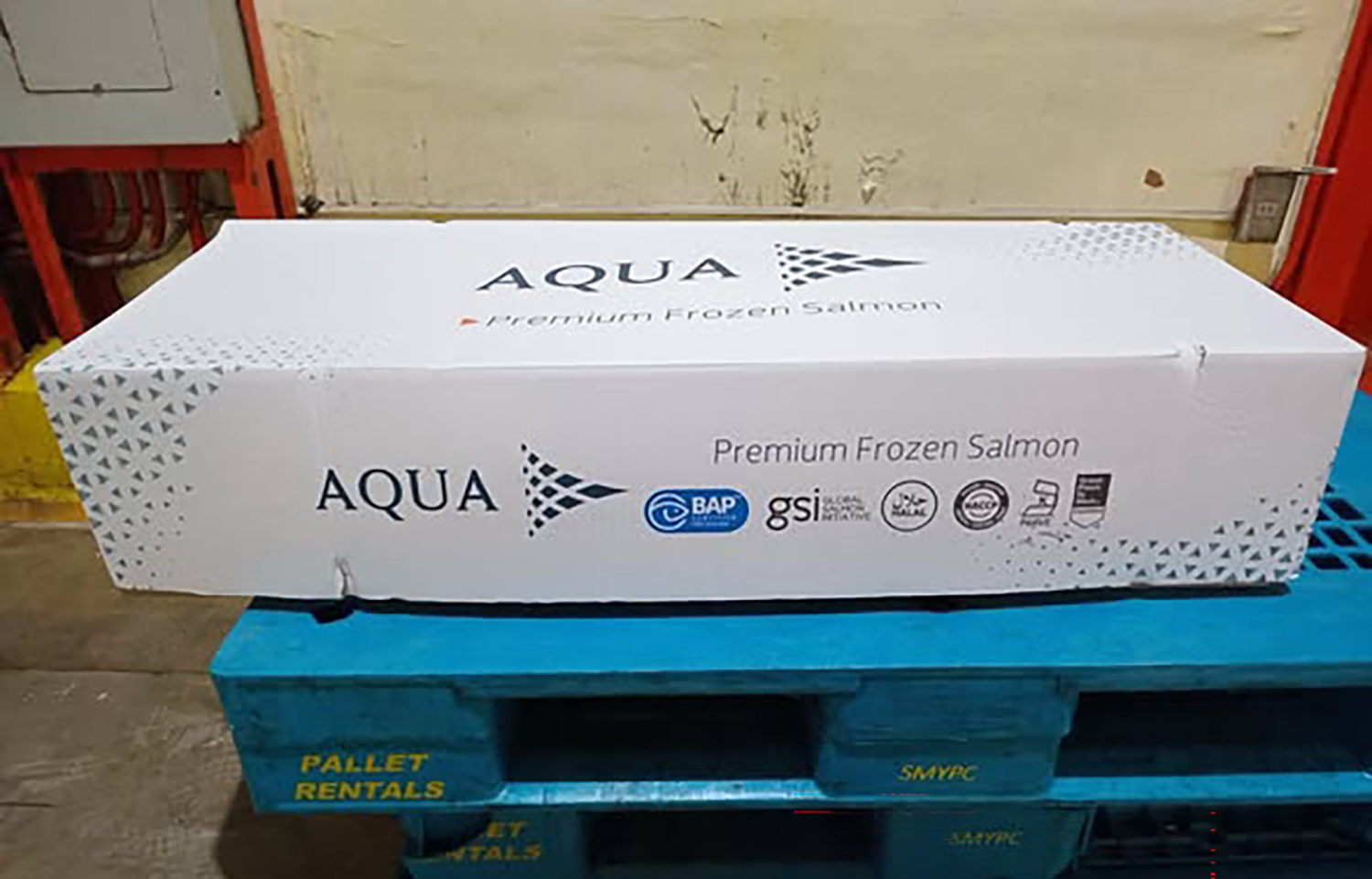
Chilean salmon-farming firm AquaChile is aiming to increase its share of Vietnam’s frozen salmon market to roughly 40 percent from its currently estimated 30 percent share over the next one to three years, as rising demand and growing Chilean production support further expansion in the country.
Vietnam’s salmon market has been growing by around 15 percent to 20 percent annually, AquaChile Sales Manager Daniel Do Minh told SeafoodSource during the 2026 Vietfish International Fisheries Exhibition.
Data from the World Integrated Trade Solution (WITS), a trade data platform developed by the World Bank, shows that Chile exported around 8,200 metric tons (MT) of frozen salmon worth USD 50.5 million (EUR 43.5 million) to Vietnam in 2024.
Norway is also a major salmon supplier to Vietnam and has largely cornered the fresh salmon market. According to data from the Norwegian Seafood Council, Norway exported 66,000 MT of seafood to Vietnam in 2025, valued at NOK 3.2 billion (USD 340.4 million, EUR 293.3 million). Salmon was the top species traded at 21,300 MT, fueled by a 40 percent year-over-year rise in fresh salmon shipments to 7,900 MT.
Minh said AquaChile also sells fresh salmon in Vietnam, where it holds a much smaller market share of about 7 percent, but Chile faces a greater challenge competing with Norway in fresh salmon because of its longer distance from Southeast Asia, which naturally results in increased airfreight costs. Norway has also built strong recognition among Vietnamese consumers in the fresh salmon segment, he said.
However, the economics are different for frozen salmon, according to Minh. Shipping costs for a refrigerated container from Chile to Vietnam are broadly comparable with those from Norway, while salmon production costs in Chile are lower, giving Chilean producers a stronger competitive position in the frozen segment.
Chile supplies Vietnam with both Atlantic and coho salmon, with the latter becoming increasingly popular among Vietnamese buyers of frozen products, Minh said, explaining that this is largely due to the fact coho typically has darker flesh than Atlantic salmon, a characteristic he said appeals to customers in Vietnam.
Minh cited a SalmoFan color score, which is a color reference system used by the salmon industry to assess flesh color, of around 28 for Chilean coho compared to around 23 to 24 for Atlantic salmon.
Besides Vietnam, AquaChile has also expressed interest in other Southeast Asian markets such as Thailand, where the firm attended THAIFEX – a food and beverage trade fair held in Bangkok – earlier this year.
“Our presence at THAIFEX responds to the interest of continuing to strengthen the connection with current and potential allies in Southeast Asia. This fair allows us to show a broader proposal, with value-added products that respond to the trends of convenience, standards, and versatility that these markets demand today,” AquaChile Sales Manager José Miguel Ugarte said.
At the fair, the company focused on categories of greater differentiation and processing, reflecting an evolution of formats more aligned with current trends playing out in the Asian market.
