






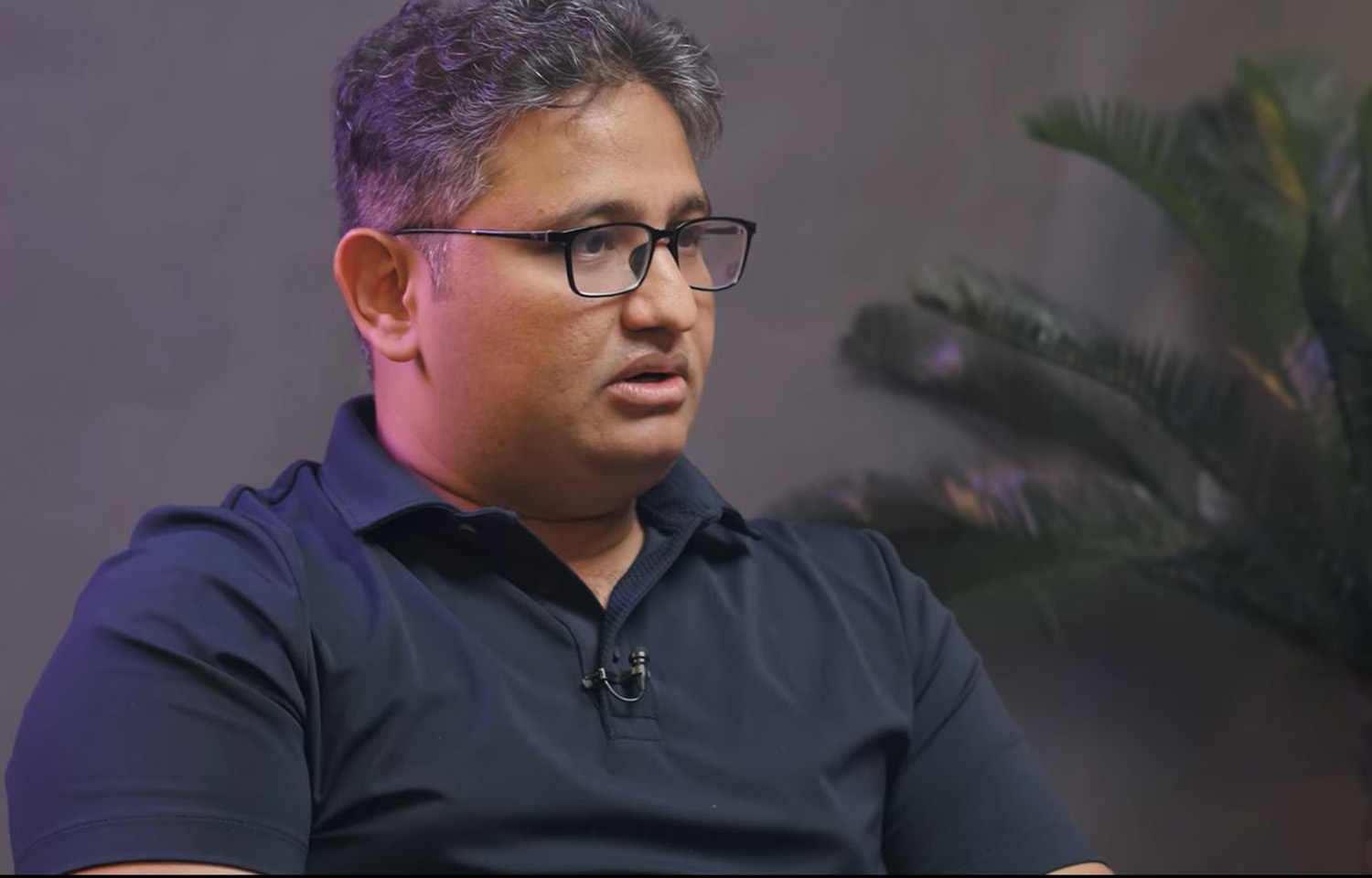
Utham Gowda is the CEO of Captain Fresh, a Karnataka, India-based online platform that matches seafood providers with retailers, facilitates e-auctions for sourcing, standardizes supplies, secures on-time payments, and uses digital traceability systems in its operations. Captain Fresh has expanded rapidly across India and has raised more than USD 100 million (EUR 93 million) in a series of funding rounds, including USD 25 million (EUR 23 million) in February 2024. The same month, it acquired CenSea, one of the largest shrimp importers in the United States.
SeafoodSource: Captain Fresh has grown quickly since it was founded in 2020. Can you describe how big the company is now and what your aspiration is in terms of growth?
Gowda: We are three-and-a-half years old, and in 2024, we should be closing any anywhere between USD 650 million to USD 700 million (EUR 612 million to EUR 659 million) in terms of top line. We are focused across the value chain and I think that's what gives us the strength to expand across all these markets. Our aspiration is to be the biggest multi-species, multi-origin platform in seafood.
SeafoodSource: Captain Fresh has presented itself as bringing something new and innovative to the seafood industry. What do you mean by that and how are you achieving it?
Gowda: The unique thing about Captain Fresh is we have taken a basket-of-seafood approach versus a species approach, which is typically the way the industry is structured. So we started off in India as a seafood supply chain player, wherein we started connecting all kinds of seafood supply to the retail shelves in India. India happens to be a fresh-dominated industry, so that's the business that we built out when we started. And by virtue of that, we had competence in sourcing all species – wild-caught and aquaculture. We leveraged that sourcing procurement competency when we started looking at the international market. Now we are India’s only multi-species exporter, and we do all kinds of species from cuttlefish, squid, whole fish and fillets, crab, all kinds of shrimp, both marine and farmed. So that's the competency that we built out, which helped us to grow very fast, and now we are one of the largest exporters of fish and seafood from India.
The model was very asset-light, where we used technology as a tool to aggregate both supplies and also processing capacities, we could easily take this model out of India. So today we are in the Philippines and other markets of Southeast Asia as well. With so much supply on the platform, the next logical step was to bridge the demand or distribution side of things, which is where you see acquisitions like CenSea and some other conversations that are going on right now, and then fitting them into the overall platform that we currently have.
On the technology side, we have built two tools out for suppliers. One is a tool called Fishgram, which basically helps connect us with boat owners, allowing them to see our sourcing requirement and allowing them to place their inventory for sale. This allows us to source from a broad range of places in a very asset-light manner. The second tool that we have is a low-cost farm-management tool, which also helps us in terms of building relationships with the farmers who are involved in shrimp farming and other aquaculture, and gives us access to their raw material. On the processing side, we’ve developed FaaS (Factories as a Service). We mandate the factories that are on our platform to use this tool, and with it, we get transparency in terms of the production and storage of the products, and it enables us to handle the complexity of the number of species that we deal with and the expanded network of factories that we work with it.
If we had to single out something new that we have brought to the industry, I think it is how we’ve changed the role technology is playing and the approach of using technology to scale sourcing across species and across formats, both fresh and frozen.
SeafoodSource: What percentage of your overall sales are seafood?
Gowda: Around 30 to 40 percent is seafood products.
SeafoodSource: Considering you work with other proteins, which are generally considered to be less complex to deal with and potentially more profitable, why commit so much of your efforts and energy to growing the seafood side of the business?
Gowda: Our idea is to be a one-point solution for the entire category. So if you walk into a Walmart store, as a customer, if you're looking at anything that you would want to buy from an efficiency food category, we would want to be a solution provider for that entire category. And in our own experience, we have seen profit pools quite good with seafood compared to [other] products. So there is an incentive for us to be in seafood, even while there is complexity. We like complexity and the more the complexity, the more the leverage our technology can bring.
SeafoodSource: What did you target Censea specifically?
Gowda: Censea gives us access to customers and relationships that we can really expand upon. If you look at the demand side of things, it's pretty hard to build a brand in this space – it takes decades of track record. So for a startup like ours, we can either choose to build this brand organically or look at opportunities like Censea. I'm somebody who believes that opportunities like Censea are a better approach to get the kind of assets on the customer side, particularly in in a consolidated market like the U.S. So that's the logic and given that we have an extended supply basket, we believe that the synergies are quite real and we should be able to unlock value with this combination.
SeafoodSource: What are you hoping to accomplish in Europe?
Gowda: We look at Europe as divided into three regions, Western Europe, Southern Europe, and Eastern Europe. In Western Europe, we have already made an acquisition [of Paris, France-based shrimp-processing and -distribution firm Senecrus], which is basically a distribution business which gives us access to some top retailers in the French market, but also has the processing capability, which is basically a cooking facility for shrimp. We have similar targets in other regions as well, which gives us access to the retailers, a track record that we can then extend, leverage, and add more products to the basket. The other angle that is interesting for us in Europe is from the product-sourcing side, where salmon is a key product that today we need to build competency in our basket. Second is whitefish, which is basically a North Atlantic product, and we are looking at either partnerships or some kind of inorganic moves to complete our portfolio on these products as well.
SeafoodSource: How does Captain Fresh’s Indian background shape its identity and aspirations?
Gowda: First off, we are a venture-funded company, which in itself makes us very unique in the seafood landscape. Our investors, which include Tiger Global, Prosus, Accel, and Matrix Partners, they are our majority owners, so that makes us a non-India owned company – technically we are a U.S.-owned company. But in terms of us coming in from India, yes, it did help us a lot in the beginning, because the kind of complexity that the Indian value chain faced was in a way representative of all the complexities that you would run into in terms of either sourcing or processing, or to an extent, even the distribution side of things. So it allowed us to develop technology tools and stress-test for adoption and functionality in a tough market like India. So from that standpoint, yes, coming out of India was quite strategic for us, and we see that as giving us a head start. I think it's a combination of the two that really shapes our ambition – that combination of being owned by venture capital funds searching for opportunities that give “hockey-stick” growth, and also fine-tuning some of our approaches in a not-so-forgiving market, that is allowing us to take this robust product and go to market in other regions of the world, potentially exporting our model to a global canvas.
