




Orlando, Florida, U.S.A.-based restaurant operating firm Darden Restaurants has raised the financial outlook for its 2026 fiscal year after reporting an increase in Q1 sales.
Darden reported a sales increase of 10.4 percent year over year to USD 3 billion (EUR 2.5 billion) in the first quarter of its 2026 fiscal year, largely driven by a blended same-restaurant sales increase of 4.7 percent, as well as sales accrued from the acquisition of 103 Chuy's Tex Mex restaurants and 22 other net new restaurants.
Darden said its chains Olive Garden and LongHorn Steakhouse performed particularly well in the period, with same-restaurant sales rising 5.9 percent and 5.5 percent for each chain, respectively. “Other business” sales also increased 3.3 percent.
Due to the positive Q1 results, the company has upgraded its financial outlook for the full fiscal year. Darden now expects total sales growth of 7.5 percent to 8.5 percent year over year.
Aiding the firm in meeting that goal is that Darden said it expects to open around 65 new restaurants in the fiscal year and expects same-restaurant sales growth of 2.5 percent to 3.5 percent.
Though most of its Q1 results were positive, Darden’s Fine Dining division experienced stagnation in the period, with sales in the segment, which includes such chains as Capital Grille and Eddie V’s, dropping 0.2 percent.
“I think we're seeing a little bit more drop-off in business travel that's leading to some weekday weakness,” Darden Senior VP and CFO Rajesh Vennam said.
Nevertheless, Darden CEO, President, and Director Ricardo Cardenas said he has been “encouraged by the actions each of our Fine Dining brands are taking to address the softness.”
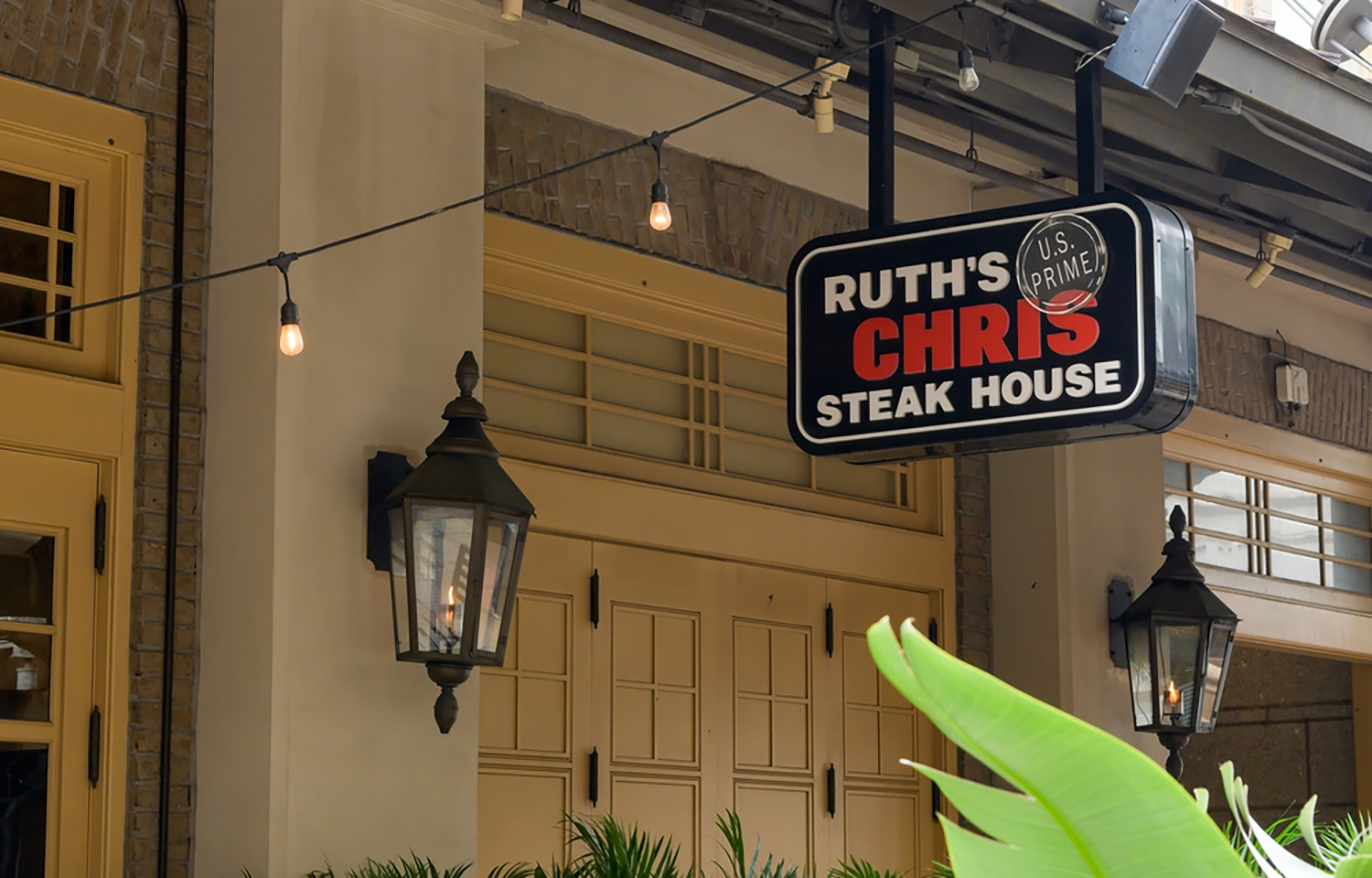
For instance, because more guests are more price-conscious amid economic uncertainty, Ruth's Chris Steakhouse introduced a five-week limited time offer (LTO) featuring a three-course menu that drove some positive traffic in the quarter, according to Cardenas. The deal included the choice of one of three entrees, a super salad, an individual side, and a dessert for USD 55 (EUR 47).
“The offer was well-received with strong guest preference and a sales lift,” Cardenas said.
The ability to roll out similar LTOs may be more difficult as the fiscal year rolls along, however, as the company has confirmed raised inflation projections for seafood and beef, primarily due to tariffs.
The company expects total inflation of 3 percent to 5 percent in the fiscal year. Darden expects high single-digit inflation for seafood and beef, while other categories, such as dairy and wheat, will experience low single-digit inflation, the company said.
Darden is already dealing with higher inflation on shrimp, Vennam said during a recent investor earnings call.
“Our team is working through to figure out how to mitigate some of that. That's really the reason why we're taking the inflation up from [projections of] 2.5 percent at the beginning of the year to now 3 percent to 4 percent,” Vennam said. “This situation is still very fluid here.”
Restaurant owners and operators across the U.S. have expressed concerns over the effect tariffs are beginning to have on their businesses.
"With restaurants operating on very tight margins, many operators may have no choice but to increase menu prices – something they are reluctant to do because we know Americans may have to make the choice to dine out less frequently if prices go up,” National Restaurant Association President and CEO Michelle Korsmo said in early August soon after U.S. President Donald Trump unveiled a slew of new tariffs. “Fewer people dining out jeopardizes an industry that supports millions of jobs and local economies.”
Korsmo and others have urged the Trump administration to “continue with sensible trade agreements” in order to mitigate impacts on the restaurant sector.
“While addressing trade deficits is important, food and beverage products are not major contributors to these imbalances. We strongly advocate for exempting food and beverage items from tariff negotiations,” Korsmo said.
