



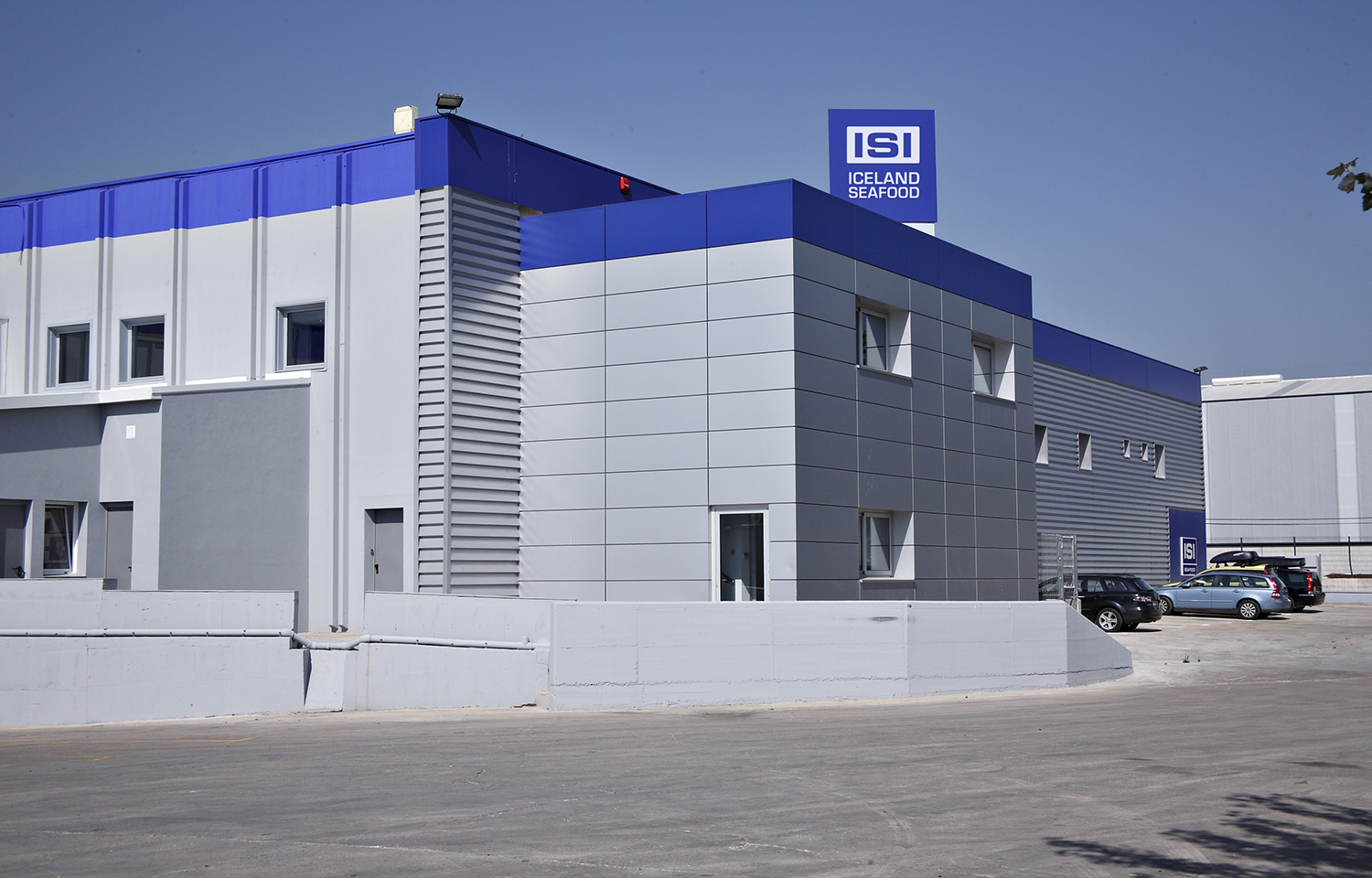
Reykjavik, Iceland-headquartered Iceland Seafood International (ISI) posted lower sales but higher profits in the first half of 2024, following up a tough 2023 that resulted in the firm declaring the need for a strategic pivot going into this year.
For H1 2024, ISI recorded group sales of EUR 212 million (USD 234 million), representing a 5 percent drop compared to the same period last year. Its H1 report advised that this decline was primarily due to lower sales in its Value-Added Southern Europe (VA S-Europe) division, driven by reduced prices and volumes.
VA S-Europe’s sales of nearly EUR 107 million (USD 118 million) were down EUR 6.6 million (USD 7.3 million) compared to H1 2023.
At the same time, the firm’s Sales & Distribution (S&D) division recorded an 8 percent drop in sales compared to last year, dipping to EUR 84.4 million (USD 93.2 million) mainly because no capelin quota was issued in 2024. Besides the absence of a capelin quota, the company advised it was pleased with S&D’s performance in the period, driven by robust sales from Iceland and sustained performance through the second quarter.
In its Value-Added Northern Europe (VA N-Europe) arm, higher sales prices led to a modest sales increase of 0.8 percent compared to the previous year – totaling EUR 26.7 million (USD 29.5 million).
Overall, ISI’s normalized profit before tax (PBT) for the six-month period increased by EUR 1.9 million (USD 2.1 million) to reach EUR 1.1 million (USD 1.2 million).
In a statement that accompanied the H1 report, CEO Ægir Páll Friðbertsson acknowledged that salmon prices were high in the six months to 30 June but the firm’s forecast for a decline in salmon prices by the end of the second quarter was accurate.
“We anticipate stable salmon prices throughout Q3 and the latter part of Q4,” he said.
Additionally, he said the U.S.’s ban on Russian fish has driven up prices for cod from the Barents Sea. The subsequent impact of this on ISI in the coming months remains to be seen, he said.
With all of these factors, ISI’s economic landscape remains “uncertain” and is expected to stay that way, with high interest rates continuing to stall the company’s markets, “making normal operations challenging while inflation persists,” he said.
“As a result, demand has decreased due to reduced fish consumption and rising prices in our key markets,” he said. “The increased financing and storage costs have made credit and inventory management more critical, requiring ongoing attention.”
Over the coming months, the company’s primary focus will continue to be enhancing the performance of its existing business units, optimizing its capital structure, and reassessing its overall strategy.
“We recognize the significant potential for growth within our strong company network, robust sales and sourcing channels, and our highly skilled team of seafood professionals,” he said. “We aim to strengthen Iceland Seafood further to effectively navigate future challenges and seize opportunities, which I believe will ultimately benefit the company, its owners, and our staff.”
Based on the results and its current trading, ISI said it is maintaining a normalized PBT range for the full year at EUR 5 million to EUR 7 million (USD 5.5 to USD 7.7 million). Additionally, it advises the outlook for its main species is that cod prices will remain high until the fall, while salmon prices will likely remain stable throughout the year.
“We expect all divisions to perform according to budget and do not foresee significant changes in the seafood sector in the coming months,” ISI said.
