





Thai Union reported higher sales and profits in the first quarter of 2026 as price increases and continued volume growth lifted both its seafood and pet food businesses.
The company reported sales of THB 32.05 billion (USD 985.1 million, EUR 841.7 million) in Q1 2026, which was up 7.6 percent from Q1 2025, marking its highest year-over-year sales growth since Q3 2022. Thai Union’s revenue growth in the quarter was led by stronger pricing across its main categories, leading to organic sales value increases of 9.3 percent year over year.
Sales volumes also rose 2.8 percent, marking its ninth straight quarterly volume increase, even though Q1 2026 included U.S. tariff costs that were not present in Q1 2025.
Thai Union’s gross profit increased 3.8 percent year over year to THB 5.83 billion (USD 179.2 million, EUR 153 million), as Thai Union’s pricing measures helped absorb higher input costs. However, the company’s gross profit margin edged down 0.5 percentage points to 18.2 percent, mainly due to U.S. tariff-related cost increases across the group after duties took effect in April last year.
Its operating profit in Q1 2026 grew 29 percent year over year to THB 1.16 billion (USD 35.7 million, EUR 30.5 million), helped by higher sales, gross profit growth, and lower selling, general, and administrative (SG&A) expenses as sonar transformation-related costs declined.
Thai Union’s reported net profit rose 9.2 percent year over year to THB 1.11 billion (USD 34 million, EUR 29.2 million), as stronger operating earnings, lower finance costs, and a non-recurring tax benefit outweighed foreign exchange losses in the quarter.
The company said the tax benefit came from an old exposure to TTV Limited, a Ghana-based company that formerly operated tuna vessels and closed in 2017. A European tax ruling allowed Thai Union to book THB 423 million (USD 13 million, EUR 11 million) in deferred tax assets, partly reduced by a THB 62 million (USD 1.9 million, EUR 1.6 million) foreign exchange loss, resulting in a net non-cash benefit of THB 361 million (USD 11 million, EUR 9.5 million) outside the group’s underlying operations, Thai Union said.
“Our first quarter performance underscores the strength of our pricing strategy, portfolio mix, and operational execution,” Thai Union President and CEO Thiraphong Chansiri said. “It also demonstrates Thai Union Group’s flexibility, experience, and global scale in navigating the combined headwinds of geopolitical conflict, tariffs, and unfavorable foreign exchange movements. Against this backdrop, PetCare and Frozen maintained strong momentum, transformation costs continued to unwind, and we will build on this strong start to 2026.”
PetCare was Thai Union’s fastest-growing category in the quarter. The segment sales value increased 22.6 percent year over year to THB 5.12 billion (USD 157.4 million, EUR 134.5 million), and volume increased 14.3 percent, driven by stronger demand in the U.S., Europe, and Japan, as well as further gains in premium products.
PetCare gross profit margin went up to 24.9 percent, staying near the top end of Thai Union’s target range, as premium products made up a larger share of the segment and accounted for 51.5 percent of sales.
Thai Union’s frozen sales also increased 11.6 percent year over year to THB 9.42 billion (USD 289.6 million, EUR 247.4 million) in Q1 2026, driven by pricing actions and volume growth of 4.4 percent in shrimp and feed. Frozen shrimp sales and volumes both increased from Q1 2025, even after prices were raised in response to U.S. tariff changes, as U.S. demand improved and customer ordering patterns normalized. Frozen gross profit margin fell to 11.3 percent, mainly due to normalization in feed and weaker chilled seafood margins, while tariff-related costs caused no major margin disruption, Thai Union said.
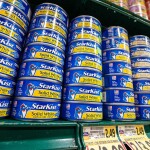
Ambient seafood sales, which include Thai Union’s canned tuna business, increased 2.5 percent year over year in Q1 2026 to THB 15.14 billion (USD 465.5 million, EUR 397.6 million), as price hikes in the U.S. and Thailand helped ease tariff-related cost inflation. Volumes were largely flat, as growth in Europe was offset by weaker shipments to the Middle East. Ambient gross profit margin was 19.3 percent, compared with 19.4 percent in Q1 2025. Thai Union said the small drop was mainly due to customer mix changes in Europe, where higher sales volumes came from lower-margin customers, rather than direct tariff effects.
Value-added was the only major category to post a sales drop, with revenue sliding 1.2 percent year over year to THB 2.4 billion (USD 73.8 million, EUR 63 million). The decline came mainly from softer U.S. sales and weaker demand for value-added products in Japan. Because Japan carries higher margins, its smaller contribution pulled the category’s gross profit margin down to 24 percent, according to Thai Union.
Thai Union said raw material volatility remains a risk, particularly for tuna, as geopolitical uncertainty and high oil prices continue to affect fishing costs. Tuna prices climbed sharply in March, and the company expects them to stay elevated for some time before easing. The company has built tuna inventory in advance, giving it a two- to four-month buffer against short-term cost pressure.
Thai Union kept its 2026 targets unchanged, with sales expected to grow 3 to 4 percent, gross profit margin projected at 19 to 20 percent, and SG&A expenses expected to be 13.5 to 14.5 percent of sales.
