
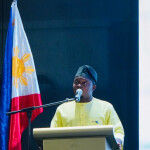



Peru President Keiko Fujimori took office on 28 July, and during her inaugural address to the nation, she declared a national emergency focused on two areas: organized crime and threats resulting from El Niño.
Some commentators have declared the weather phenomenon as the primary economic challenge for Fujimori's incoming government, possibly resulting in losses of up to PEN 16 billion (USD 4.7 billion, EUR 4.1 billion) for the Peruvian economy and shaving up to 1 percentage point off this year's GDP, according to estimates by Credicorp Capital per media outlet RPP Noticias.
Fujimori said her government will prioritize a prevention strategy that includes extraordinary resources and a contingency plan. Promised actions include measures to massively de-silt rivers, build riverside defenses, protect watersheds, and deploy heavy machinery in critical areas.
She also promised to deploy a rapid response logistics system to guarantee the supply of food, water, and medicine for vulnerable populations, while farmers affected by El Niño will receive financial and technical assistance as part of the response and recovery strategy.
She did not make specific mention of the fishing sector, however, limiting her scope of action to developments on land.
The exclusion of the fishing sector comes as warming ocean conditions linked to a coastal El Niño weather pattern have seriously affected operations within Peru’s anchovy fishery. Due to a high presence of juveniles, authorities originally called a halt within the nation’s main fishing area on 12 May and have extended that suspension indefinitely. Anchovy landings had reportedly reached only 453,000 metric tons (MT), or 24 percent of the 1.9 million MT quota that was set, which already marked more than a 1 million MT decrease from the total allowable catch set for the same season last year.
In an op-ed published in local paper Infobae just before Fujimori took office, Peru National Fisheries Society (SNP) President Jessica Luna warned that the country’s industrial fishing sector is in a state of emergency.
“The El Niño phenomenon is already hitting the industrial fishing sector, which has suspended its first anchovy fishing season in the North-Central area, and the second [fishing season] is at risk,” she said. “When industrial fishing is paralyzed, as it is now, an entire production chain is stopped: crew members, fishermen, suppliers … and port businesses, putting at risk the jobs and income of thousands of families and weakening the economy of coastal regions.”
Luna called on Peru’s Production Ministry (PRODUCE) and its scientific assessment unit, the Peruvian Marine Research Institute (Imarpe), to implement a permanent monitoring and evaluation plan. This would help to identify specific spaces in time where temporary catches could be allowed if conditions allow for it, Luna said.
A recent study by consultancy firm APOYO Consultoría determined that industrial fishing is an engine of economic growth in Peru, contributing 2.1 percent to national GDP in a regular year. The consultancy found that for every PEN 100 (USD 29, EUR 25) it generates directly, it mobilizes another PEN 80 (USD 23, EUR 20) in suppliers, transportation, and consumption. In 2025, the sector was responsible for the generation of more than 250,000 jobs and exports of USD 4.7 billion (EUR 4.1 billion).
“All of that is at risk today,” Luna said. “President Fujimori’s government must lead rapid actions to mobilize the currently absent state in prevention tasks – a hard task for a government that is just beginning.”
The effects are more serious considering the importance of fishing to areas such as Ancash, Piura, Tumbes, La Libertad, and Lambayeque, where industrial fishing in the local economy is up to five times as important as at the national level, Meanwhile, in the La Libertad department of the district of Razuri, fishing accounts for up to 42 percent of all income in the area, Luna noted.
“Doing nothing is not an option,” Luna added, pointing out that the sea warming, which was first recorded in February, is expected to last through the beginning of 2027, leading Peru’s Central Reserve Bank (BCR) to revise its projections for the sector. In March, the BCR projected a 6.6 percent contraction for fishing in 2026, but with suspended operations in the country’s main anchovy-fishing zone, it now estimates a 28.3 percent drop.
“In the face of this, we must be prudent and prepared,” Luna said. “In addition … Peru must continue to promote fisheries development to diversify risks. To this end, it is urgently necessary to evaluate alternatives for the sustainable use of anchovy fishing in the south, the promotion of industrial tuna fishing, the development of new fisheries, the strengthening of aquaculture as a complementary engine of growth, and, of course, to strengthen scientific research by incorporating new technologies and developing a flexible framework for these extraordinary conditions. In fishing, lost opportunities are not recovered.”
In an interview with TVPeru Noticias, outgoing PRODUCE Minister César Quispe said that a possible window of time to open anchovy fishing in August is being evaluated but that specialists at Imarpe would be the ones who would determine if this is feasible.
He called on the incoming government to coordinate with relevant ministries in order to focus social programs on the areas that may be affected by the fishing stoppage.
New PRODUCE Minister Juan Carlos Requejo previously served as deputy minister of industry and SMEs, deputy minister of labor, and deputy minister of fisheries and aquaculture, lending him prior experience in fisheries governance.
Fujimori is the ninth person to don Peru’s presidential sash in just 10 years, creating what observers have called “a crisis of governability.” Of the eight presidents who served before Fujimori, four have served jail time or been placed under house arrest, mostly related to corruption charges.
Fujimori won the election after obtaining 50.1 percent of the votes, securing just 49,641 votes over her competitor, leftist candidate Roberto Sánchez.
