




Lawmakers in the U.S. state of California have passed a pair of bills implementing higher fines and financial requirements for cold storage providers after a Lineage-owned facility burned down in Los Angeles, California, U.S.A.
The cold storage industry, however, is opposed to the legislation, claiming it would only lead to higher costs and food prices.
“The cold chain sector is committed to working with the legislature, community leaders, and the governor’s office to bring forward the right policies and recommendations with the knowledge and analysis of the full understanding of the causes of this incident and its response,” the Global Cold Chain Alliance (GCCA), an industry group representing cold storage providers, said in a release. “These current bills are rushed and do not benefit the community or the longstanding businesses that have been community members and leaders for decades.”
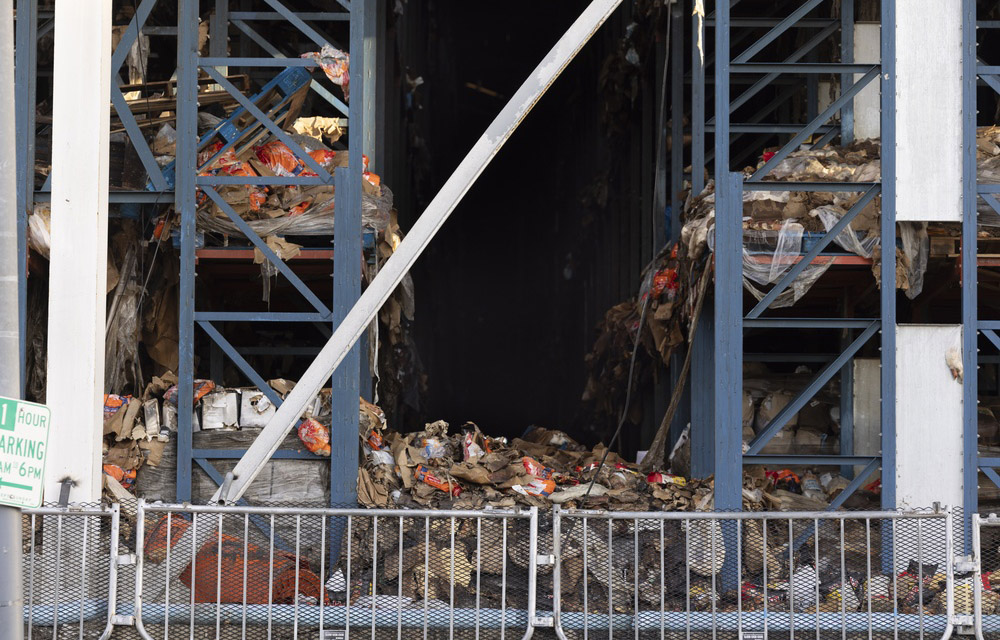
The 491,000-square-foot “Big Bear” facility caught fire 17 June and burned for multiple days. While firefighting crews were eventually able to put out the fire, the disaster left behind millions of pounds of rotting meat and seafood, resulting in a foul stench that drew thousands of odor complaints from the surrounding neighborhood. Local officials and news outlets also reported a massive uptick in flies and other pests in the area in the weeks after the burn, drawn by the rotting food.
Lineage reported that food cleanup was completed 29 August.
Frustrated with the impact of and response to the fire, California lawmakers took up two pieces of legislation.
The first, AB 817, would require companies to have a state-of-emergency contingency fund before securing a permit for an industrial food-storage facility. The second, SB 716, would remove the current cap of USD 2,000 (EUR 1,759) per day on fines for violating city or county ordinances. The new law would apply to nonresidential structures with a footprint larger than 20,000 square feet and set a USD 1,000 (EUR 880) fine for a first violation, USD 2,000 for a second, and USD 5,000 (EUR 4,398) for each subsequent violation, rising to USD 50,000 (EUR 43,984) in the case of a state or federal disaster declaration.
Both AB 817 and SB 716 were passed by the California Senate and Assembly on 31 August.
GCCA is asking its members to contact California Governor Gavin Newsom and urge him to veto the two bills.
“Our industry feeds families and protects access to medicines. California should not make that mission harder or more expensive,” the group said in a statement. “What happened at the Boyle Heights facility was a catastrophe. There are incredible lessons here, and opportunities for future improvements in emergency preparedness and response processes for industrial sites.”
The GCCA claims the two bills would only serve to discourage cold storage facilities from being built or undergoing upgrades, leading to high cold storage costs and, ultimately, higher food prices.
“AB 817 and SB 716 would raise cold storage costs across California’s food and pharmaceutical supply chain – affecting growers, processors, distributors, manufacturers, and retailers – while limiting facility improvements like energy efficiency upgrades and safety improvements and causing serious barriers to doing business in the state,” GCCA said in a release. “A standing multimillion-dollar fund discourages new and existing cold storage at a time when extreme heat requires more consistent upgrades and the state’s food supply chain already faces capacity pressure. AB 817 provides no formula of predictability or mechanism for implementation and oversight, meaning instability for businesses in the state. As such, facilities, jobs, and tax revenue will be diverted to other states, meaning California consumers will pay more for their groceries.”
