

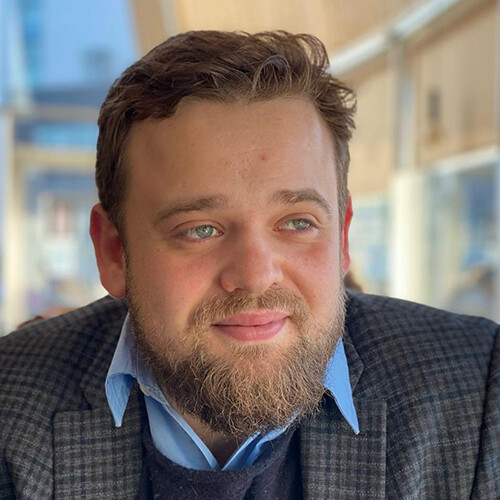
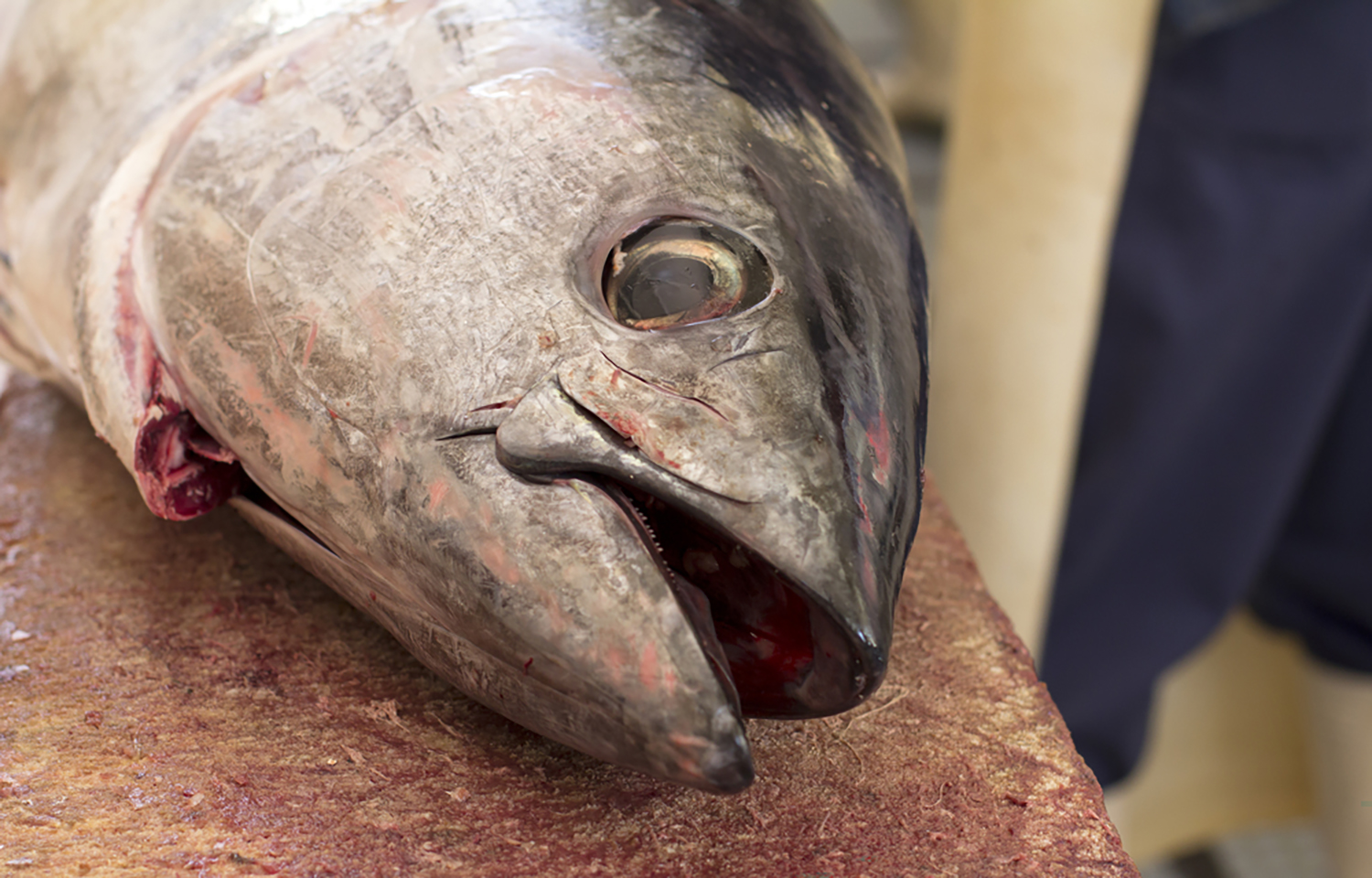
For 10 years, Kim Aarestrup, a professor at the Technical University of Denmark, has spent most of his summers on a boat, where he is in charge of a project to tag tuna off the coast of Denmark.
This year, he has overseen research conducted by 73 boats and 859 registered volunteers.
"It has been difficult to get them to bite. They're out there, but I have to say that I'm disappointed about the result," he told SeafoodSource, explaining that so far this year, the group had tagged 28 bluefin tuna. “The record is 222.”
He explained that though this year’s totals have lagged well behind other years he has conducted research, that does not necessarily mean there are fewer tuna in Danish waters.
“We get a status of exactly the place where we are fishing, so we will need other research as well to say something more about how many tuna there are,” he said.
Aarestrup’s work coincides with bluefin tuna’s return to Danish waters, which used to have abundant stocks of the species but virtually disappeared by the 1960s. Experts have largely attributed the stock’s downturn to overfishing of both tuna and the mackerel and herring that tuna feed on.
However, conservation efforts instituted by regional fishery management organizations (RFMOs) like the International Commission for the Conservation of Atlantic Tunas (ICCAT), such as strict catch quotas and seasonal closures, have helped the species return in reliable numbers.
Now, stakeholders are calling for greater representation at the ICCAT’s decision-making table and are considering the possibility of securing a dedicated quota for Denmark.
As for the former goal, Aarestrup said Denmark already meets the standard requirements for ICCAT membership, which include having historic fisheries, having provable amounts of fish in their waters, and contributing to research. While Denmark can’t attain its own independent representation as a member of the E.U., it can push for a greater voice at the RFMO.
Regarding the latter goal, securing a dedicated quota would require Denmark to negotiate a share of the E.U.'s overall quota, which would result in diminishing total catch of other member nations.
That path represents a steeper uphill climb, so in the meantime, Denmark has pursued other strategies, such as conducting quota swaps with Spain in which it traded quotas of alternative species for small portions of Spain’s bluefin quota.
Danish Minister for the Environment Maria Reumert Gjerding said she would not be opposed to trading for more bluefin tuna quota while simultaneously pursuing the longer-term goal of securing an E.U. share.
"If it becomes possible for Denmark next year to trade for a bluefin tuna quota for recreational anglers, I see no reason not to enter into such an agreement,” she said. “In the longer term, I would like to work toward Denmark receiving a share of the overall bluefin tuna quota. This should be done with due regard to the overall allocation of E.U. fishing quotas.”
For now, Gjerding said she is focused on assuring the continued health of the stock.
"It is very positive that bluefin tuna have returned to Danish waters. The most important thing for me is that the stock is healthy and continues to develop positively,” she told SeafoodSource through a representative. “The tuna research project being carried out in Danish waters can provide valuable knowledge about the tuna stock, which can contribute to sustainable and biologically sound management.”
Aarestrup said whether Denmark gets a quota is up to political officials, and if Denmark does secure quotas, it would also be up to politicians to decide whether recreational anglers, the commercial sector, or both get to fish that quota.
"As a biologist, that's not my decision to make. A dead fish is a dead fish; it doesn't matter who's done it," he said.
He added that economic potential is not his primary reason for wanting increased Danish representation at the ICCAT.
“I want Denmark to have a seat at the table where decisions about quotas and management of the stock are being made,” Aarestrup said. “Denmark should sit at the table so we can contribute with our knowledge.”
