
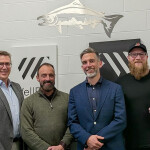

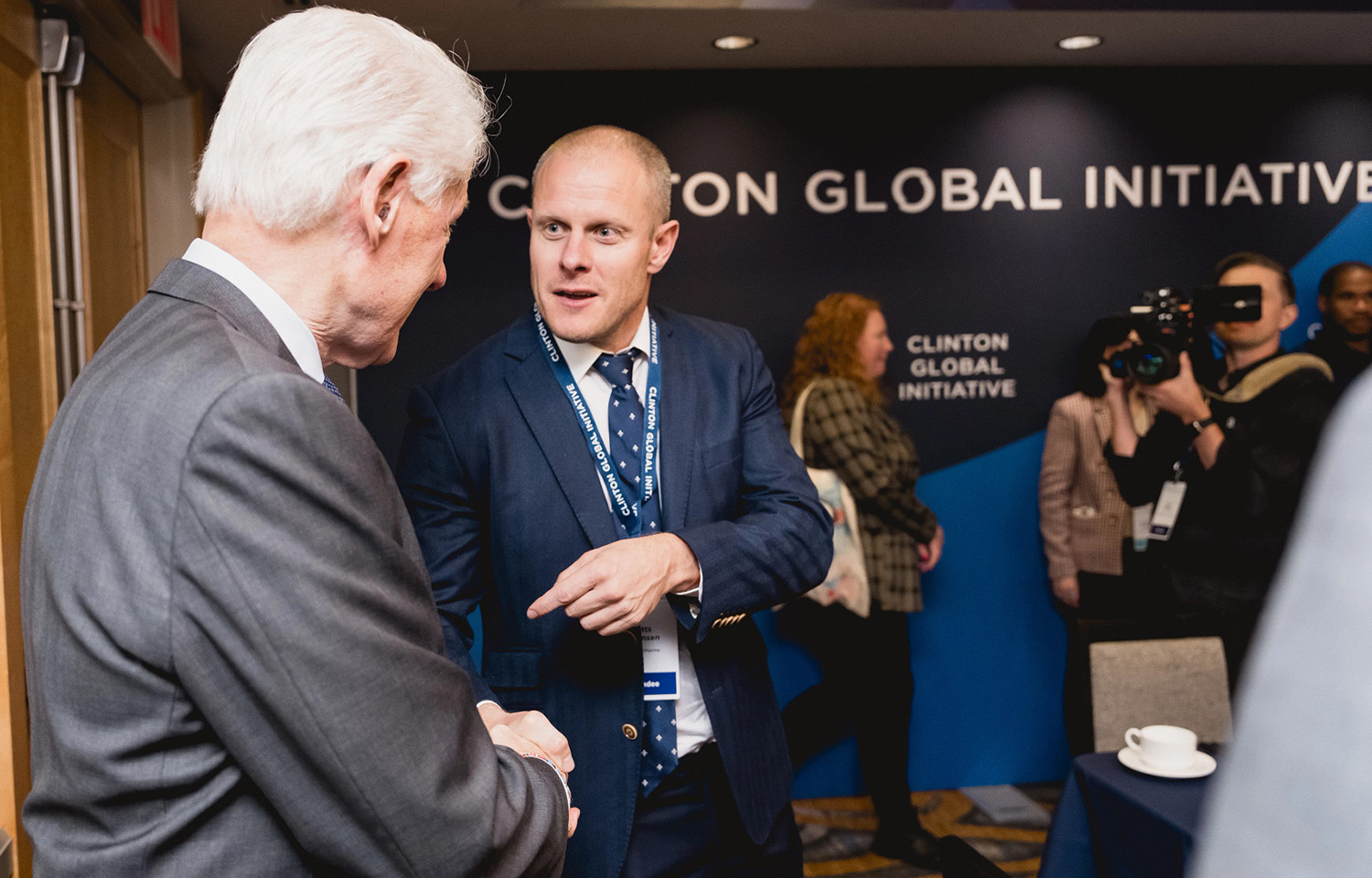
Aker BioMarine CEO Matts Johansen recently attended an executive roundtable aimed at discussing solutions for reaching climate targets, hosted by the Clinton Global Initiative on 23 September. The panel was moderated by U.S. Senior Advisor to the President for International Climate John Podesta, and was attended by former U.S. President Bill Clinton, California Governor Gavin Newsom, New York Governor Kathy Hochul, World Trade Organization Director-General Ngozi Okonjo-Iweala, U.S. Environmental Protection Agency Administrator Michael Regan, United Nations Climate Change Secretariat Executive Sectreatry Simon Stiell, the presidents of Barbados, Panama, and Guyana, and the CEOs of Gap, Chobani, Digicel, and Rudin Management, among others. Johansen attended to represent seafood and ocean industries.
SeafoodSource: What was the goal of the roundtable and why were you invited?
Johansen: The Clinton Initiative annually gathers world leaders to discuss the big challenges in the world. And we were here to talk about health and climate. I think we were the only fishery company to attend, and I think we might have been the smallest of all the companies here. But I still felt it was important to share some of our practices when it comes to building sustainable fisheries, including the innovative work we have done with collecting data with drones that is contributing to fishery management. We’ve developed something called feedback management, which is moving away from using historical data to set quotas, but rather setting quotas in real-time with the help of collecting live data and using machine learning. I also discussed working with Greenpeace and other organizations to establish marine protected areas in the Antarctic on a voluntary basis, as a means of working around governments or international organizations that are moving too slow.
SeafoodSource: What did you get out of the meeting? What were your takeaways?
Johansen: Hearing about solutions that other industries or companies in other sectors are pioneering or working on was useful for helping me think how we might use some of those ideas in seafood. It’s always good to get thought leaders in a room and see how they think.
It was also a fantastic marketing opportunity to inform a very powerful audience about seafood being the most sustainable nutritional source to sustain and improve human health. It’s low-carbon and most fisheries are managed very well. My goal at the meeting was to put fisheries back on the map as an important part of the solution to global health and climate problems. Actually, I was surprised at how high the commitment was to these topics from the leaders in attendance, including Bill Gates and Jill Biden. It seems that there is momentum behind it now that maybe will help us accelerate some of the changes that we need to do.
SeafoodSource: On which topics did the discussions focus?
Johansen: There was a lot of talk about funding. All these solutions we need to get in place to solve those challenges need funding, so the question is where is it going to come from? For us, being a commercial company, we just have to manage on our own. But they talked a lot about the combination of private capital, government subsidies, and philanthropic capital that can be combined to build out some of those cases. To me, it just shows that how challenging some of those topics we are facing are – it's not like a straight solution to fix them.
For the fishing industry, there was talk from some U.S. politicians about implementing strong global regulation for fuel usage from marine vessels, rather than doing small steps. That's something they're trying to push for. I think that’s going to be really challenging, though. Aker BioMarine is committed human and planetary health, and we are driving to zero emissions and looking at the solutions available at hand [to achieve that]. It seems green ammonia is the solution which is closest to making it work, but just the international regulation to transport ammonia is difficult. It’s not something good to lose out in the sea or when you get in an accident. Then you have to get the global distribution network of it up and running and last but not least, the cost is quite significantly higher than just standard diesel. So how we're going to be able to do that? It's going to take a massive international effort, and then after that, we will have to deal with the costs related to it, and I have questions about who's going to pay for that.
SeafoodSource: What else was discussed at the event?
Johansen: As you can imagine, at an event run by the Clintons, it's mainly Democrats around, and they're very worried about a change in the government and how that will impact the climate agenda. They were urging everybody to continue working despite concerns the government will change. But yeah, there was some nervousness in the air with the elections coming up.
SeafoodSource: Does the outcome of the election matter to Aker? Is it something that matters to international businesses like Aker, which doesn’t have a huge footprint in the U.S.?
Johansen: Not so much. I think the impact will be quite neutral. The only thing kind of we are worried about with election is the growing attitude around the election of anti-globalization, meaning that it will be harder to trade internationally. But, our sense is that America is dependent on international trade, so we don't pay a lot of attention or get to worried about the outcome of the elections. I think it will be more or less business as usual for us.
SeafoodSource: Does it pay to be a leader in seafood sustainability? It seems like it's a lot of work, a lot of meetings, a lot of money, and a lot of frustration.
Johansen: I’m afraid to say that the answer so far is no. But the belief is that if we give it a couple of years, it will become a key competitive advantage. We have made lots of investment to do the right thing on the fishery side, on sustainability, getting our carbon footprint down, and today, that helps us get to the table with customers that prioritize those things. They want to deal with us, but we're not able to get single-center premium on our products. So there's not a positive business case of that yet. But our fundamental belief is the investments and commitments we’ve made over the last 15 years will pay off in the long run, either through consumer demand slowly coming around, but maybe more likely tightening regulations. So those companies that already have a head start will be in a much better position than those that don’t. I'm sure we're going to grow faster and be more profitable than the other guys in the future, when we start to really get paid for all of our hard work on sustainability. We continue to back that proposition. A side benefit of that is a lot of young talent wants to work for us. They are attracted to work for a company that take this seriously. So from that point of view, we’ve made some gains – the HR case is interesting. Gen Z is now coming to the workforce and they really care about this on a much deeper level than previous generations. And you can imagine that fisheries is not the most sexy business, and it’s not the easiest business to attract the best talent coming out of business schools. But I think with this clear positioning, we can actually select people from the from the highest level to join our company.
SeafoodSource: The krill fishery has a strong sustainability story, but it also keeps popping up in mass media in a negative light. Do you feel like Aker can be a force for pushing movement toward sustainability in the fishery?
Johansen: I think we can and we are. Aker BioMarine catches 70 percent of all Antarctic krill. When you have an industry payer that is so strong, it means that we can implement a lot of change on our own, then the rest will just follow, because we are setting the standards. We established the Association of Responsible Krill Harvesting Companies and we have now every fishing vessel involving krill fishing as a member. Through that organization, we implement all these initiatives we’ve developed as a company to the whole industry. So I think we're leading that direction. Yes, there are negative stories, but the Chinese have the similar approach to the management of the fishery as the Norwegian government. They're 100 percent science-based. And CCAMLR, the regulatory body managing the Antarctic region, looks at the scientific evidence, and makes decision on the basis of that. Sometimes the media creates a false picture of there being bad countries, but I think the krill fishery is a good example of solid management of a fishery that’s transparent.
SeafoodSource: Speaking of CCAMLR, the organization has recently deadlocked as a result of international tensions related to Russia’s invasion of Ukraine. And regional fisheries management organizations have been broadly criticized as being slow to act on sustainability issues. Is CCAMLR another example of how multilateral fisheries management is just struggling under the weight of geopolitical conflict?
Johansen: CCAMLR has always been a little bit unwieldy, because there's 26 nations as members, and all of them have veto power for every single decision. But the good thing is that when CCAMLR was established, the management of the fishery was set on a very conservative basis, with a quota set at 10 percent of the biomass every year, and with a precautionary catch limit of 10 percent of that set aside until we have more data to be absolutely sure that it's OK to fish. The challenge is that to increase that to remove that precautionary catch level is very difficult now in this environment. Even if we have science that shows we can increase the quota maybe not all the way up to 10 percent but quite significantly, it's not happening. Since we started from that very conservative level, there’s no environmental problem with the fishery, but it does cause a problem for the expansion of the fishery. That being said, only 60 percent of the quota is fished up every year, so there's more than enough growth available within that.
SeafoodSource: Within seafood, is it your opinion you need dominant players in each sector, whether it's tuna or pollock, whatever it is, to take the lead in order to advance sustainability initiatives? Is that where the progress is going to come from?
Johansen: At least in our case, that's how we make progress, because we are dominant and we can set the tone. But I also appreciate that in many fisheries, there’s no dominant player, and it’s much harder to lay down a marker and have others follow.
SeafoodSource: Aker BioMarine recently sold its feed ingredients business to American Industrial Partners. That was a big shift for the company. Was there a sustainability angle to that move, or was that purely a business decision?
Johansen: It was strictly a business decision. It came from the fact that we listed on the stock exchange in 2020 and the stock hasn't performed really well. We feel that the value that of the stock price doesn't represent the value of the company. If you look at our company, it's partly fishing vessels, which take a lot of cap-ex and deal with a lot of volatility natural to a wild-catch fishery. Still, certain investors like that, and certain investors prefer the other part of our business, which is the feed-ingredient business, where there’s research and development, there's marketing, there's brands on the shelves of retailers. We found it's really hard to find investors that like both to be involved in both businesses, so that's why we decided to restructure the company. We will still own 40 percent of the feed ingredients business after the sale, so it’s not a full sellout. But, what's left on the stock exchange is a much more pure play in the human health and nutrition space, which will make it much easier to find the right investors. And our stock price after the announcement has reflected that change.
