



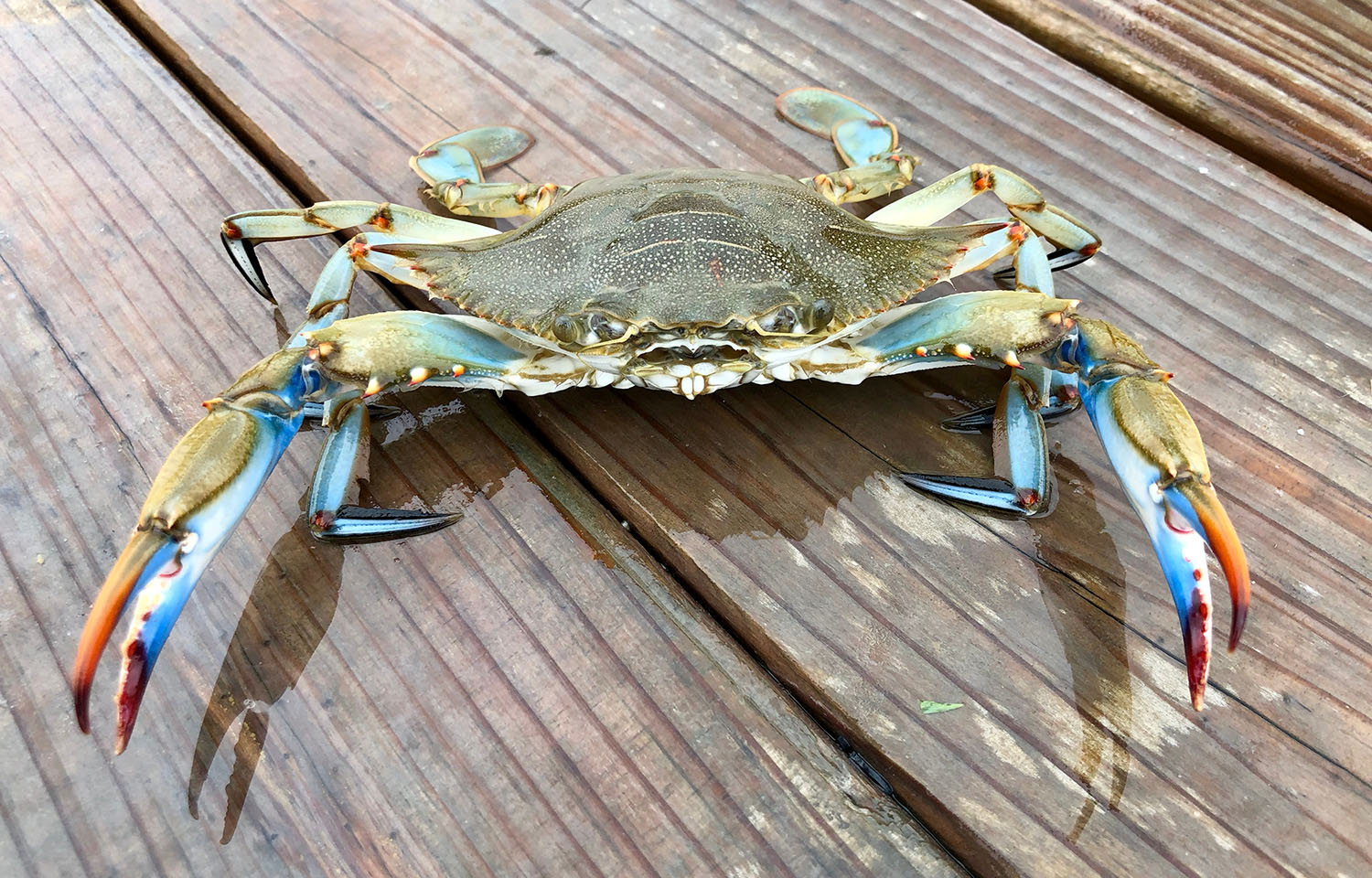
The most updated edition of the annual Chesapeake Bay blue crab winter dredge survey has found that the blue crab population in the U.S. states of Maryland and Virginia is the second-smallest recorded in recent history.
The survey, conducted by the Virginia Institute of Marine Science and the Maryland Department of Natural Resources, estimated the total crab population to be 238 million, just above 2022’s all-time low of 226 million.
Last year, the estimated blue crab population in the same area was only slightly below average, coming in at 317 million blue crabs. Experts aren’t sure why the species’ population varies so dramatically year to year, but some believe that environmental factors such as loss of critical habitats and the rise of invasive predators may be playing a role in declines.
Chesapeake Bay Foundation (CBF) Executive Director for Maryland Allison Colden called the 2025 survey results a “red flag” for the species.
“With more than five years of below average crab numbers, it is clear that changing conditions in the bay are undermining the current management of this important species,” she said.
The winter dredge survey results have prompted Maryland and Virginia to conduct a comprehensive stock assessment of the species to be completed in 2026, the first such study of the population in 15 years. While the winter dredge uses a small sample to model the total population, the stock assessment will look far more closely at the population itself and propose management recommendations to prevent further declines.
Colden said that the upcoming assessment would provide a “more complete picture of the impacts of environmental threats to blue crabs and what Maryland and Virginia can do to better protect them.”
Conservation organization the Chesapeake Bay Foundation (CBF), which issued a press release and recommendations in response to the winter dredge, said that protection of the species was dependent on the joint conservation efforts of both Maryland and Virginia and urged the states to strengthen protections for certain subsets of the population.
In recent months, the CBF has been critical of U.S. President Donald Trump’s 2026 fiscal year budget, which the organization said would “devastate the federal government’s ability to lead efforts to restore the Chesapeake Bay and its rivers and streams.”
Foundation spokespeople emphasized that blue crabs were an essential feature of the Chesapeake Bay area economy and culture and that their conservation was thus an important issue for both political parties.
"Blue crab numbers are crashing just as the Trump administration dismantles programs restoring water quality and underwater habitat like grasses vital for crabs," CBF Federal Director Keisha Sedlacek said. "Saving the bay and its iconic species like crabs has always been a bipartisan effort. Congress must work together to ensure federal investments in restoration continue. We cannot backtrack on blue crabs or the bay.”
