






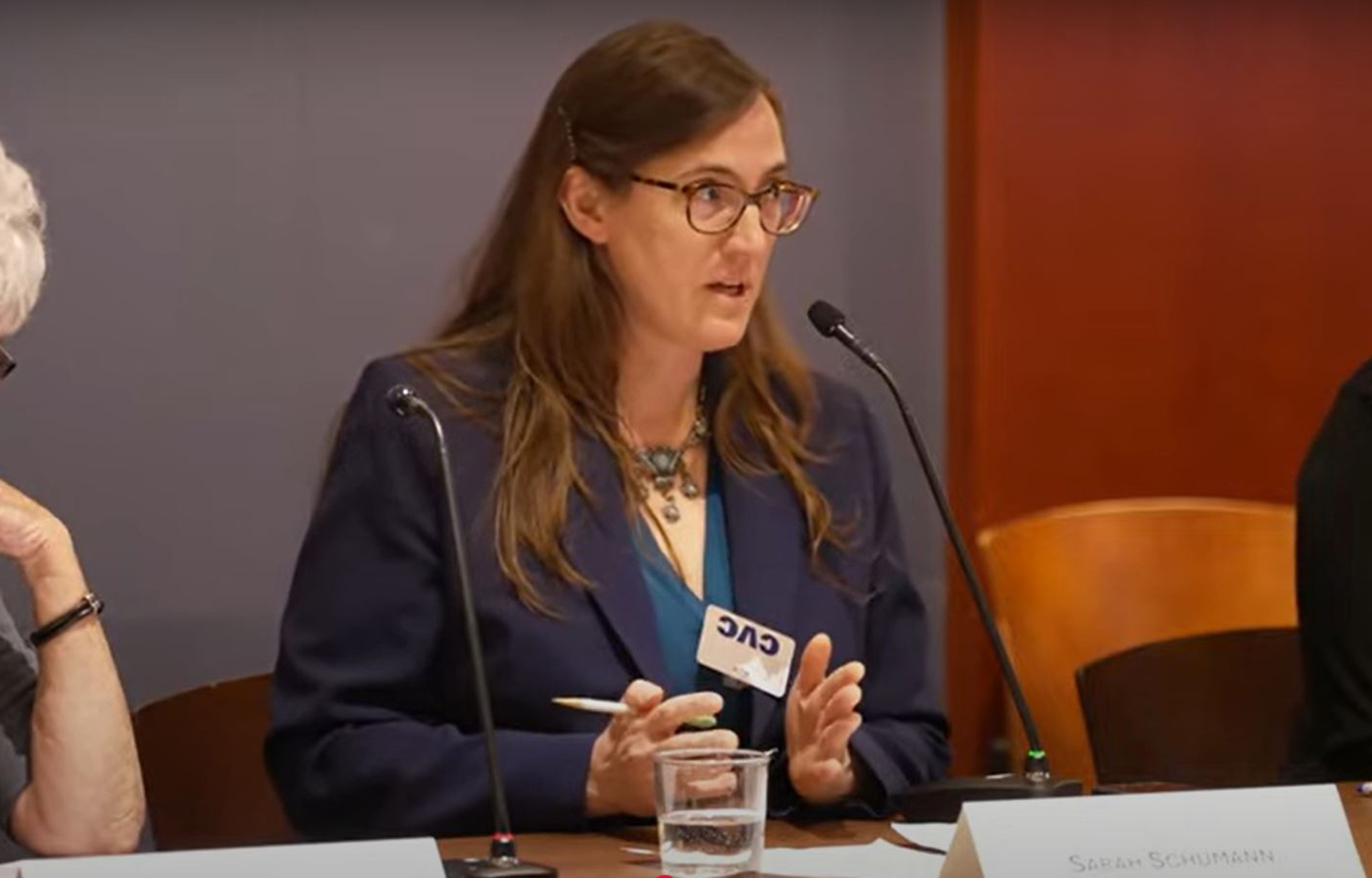
In an unofficial hearing hosted by U.S. Democrats on the House Natural Resources Committee, lawmakers and experts laid out how cuts the administration of U.S. President Donald Trump have made to NOAA and seafood-related funding are impacting the nation’s commercial fishers.
“This was all previewed for us. The authors of Project 2025 told us that they would attack science and dismantle NOAA if Trump was reelected. Of course, he denied that this was his plan, but we are all witnessing that the Trump administration is delivering exactly what Project 2025 promised and, in some cases, even worse,” U.S. Representative Jared Huffman (D-California) said during the hearing.
Trump and the Elon Musk-led Department of Government Efficiency (DOGE) have initiated a government-wide effort to cut government programs that don’t align with Trump’s priorities, but environmental agencies have been hardest hit. DOGE staffers first gained access to NOAA in early February, and by the end of the month had fired more than 700 employees.
“Because of climate change, we desperately need faster, more nimble, and more collaborative data collection and decision-making, and there is a very slim chance we’re going to get that with this,” Rhode Island fisher and Shining Sea Fisheries Consulting Owner Sarah Schumann said. “What we need, actually, is not only what we had for the last four years but a much more robustly funded and staffed NOAA that has the capacity to collaborate with communities who have bright ideas across the U.S. and to put those ideas into action.”
The cruelty of the firings and the ensuant job insecurity of working at NOAA make working at the agency far less attractive to young people, added Elizabeth Lewis, a senior associate attorney with Eubanks & Associates.
“We are losing an entire generation of scientists and leaders,” Lewis said. “That to me is the devastating human cost. These are scientists, for the most part. They just want to do their work. The culture has gone from one of general support at a quality federal agency to one of real fear.”
DOGE has also moved to shut down NOAA offices and sell off some of the agency’s real estate.
“In my district alone, two [NOAA Fisheries] offices are slated for closure by the end of the year, leaving an already data-limited fishery management system much closer to the brink of collapse,” Huffman said.
The Trump administration’s efforts to stimy new government regulations are also affecting the fishing industry. In an early executive order, Trump demanded that for every new regulation an agency passes, 10 regulations must be rescinded.
“You need a regulation to open a fishery. You need a regulation to close a fishery. In the first Trump administration, they exempted hunting and fishing regulations from this freeze. That has not happened this time,” Lewis said.
That unwillingness to issue regulations has slowed down the government’s ability to open commercial fishing seasons on time, according to Lewis.
“New England fisheries are expected to open late, according to the New England Fisheries Management Council. If everything stays the way it is, groundfish will miss their 1 May date, the scallop fishery may only partially open on 1 April, and cod and halibut only opened on time with intervention from Senator [Lisa] Murkowski (R-Alaska), who personally had to call [Treasury Secretary Howard Lutnick] and beg for the approval to issue the regulation to open the fishery,” Lewis said.
In an address to the Alaska state legislature in March, Murkowski took credit for securing approval from Lutnick and Secretary of State Marco Rubio to open the fisheries.
“That was caught up in a process that most fishermen will not know. They don’t care to know how the sausage is made; they just want to know they’ll be able to get out on the water and be able to do their fishing,” Murkowski said. “We were able to do that for them, so that was a good win.”
Fellow U.S. Senator Dan Sullivan (R-Alaska) also noted that his staff had to work with the Trump administration to get fisheries open.
“My team and I have made sure the new administration is focused on opening fisheries on time this spring,” Sullivan said.
Without Murkowski’s intervention, Canadian fishers would have been able to access the shared fishery first, “which would have hurt American fishermen,” Lewis said.
“Although we don’t know the full impact – because the agency doesn’t know – of the firings, we are seeing reports that at least 5 percent of the workforce dealing with fisheries were probationary employees, who are now on administrative leave,” Lewis said. “So these people can’t write the regulations, they can’t do the science.”
In March, the Center for Biological Diversity filed a Freedom of Information Act request seeking official job descriptions of NOAA staff fired by the Trump administration to find out what missions might be understaffed now.
Beyond the general cuts to NOAA staff, the Trump administration has canceled or attempted to rescind funding for several programs that directly benefit commercial fisheries.
Schumann also brought up the sudden elimination of funding for Maine Sea Grant last month. The Trump administration unceremoniously cut funding for the grant program in March, which many saw as a continuation of Trump’s personal vendetta against Maine Governor Janet Mills. Trump threatened to cut all federal funding to Maine after Mills declined to submit to his demand to remove transgender athletes from girls’ sports programs. His administration has moved swiftly to punish the state, temporarily freezing Social Security contracts with the state and firing all staff at a program that offers heating assistance to Mainers during the winter.
Following an outcry from Maine’s congressional delegation, funding for Maine Sea Grant was quickly restored.
“We saw the temporary freezing of Maine Sea Grant funding after President Trump became enraged at Maine’s Governor Janet Mills, and although funding was reinstated later, it left fishing communities across the country thinking about what would happen if the state sea grant programs that they depend on also became political footballs,” Schumann said.
Additionally, funding for the Saltonstall-Kennedy Program, which provides grants to the fishing industry for marketing and research from revenue raised by customs duties on imported seafood, was zeroed out in the most recently passed continuing resolution.
“It’s a rare and coveted source of support for innovators in the seafood industry,” Schumann said.
According to Schumann, members of the committee that reads Saltonstall-Kennedy Program proposals and decides where funding should go were told not to show up for meetings or read any proposals because there would be no funding.
Schumann added that there are rumors that NOAA Fisheries’ finance program has been zeroed out and that loans are already “being clawed back.”
The Trump administration’s decision to end the U.S. Department of Agriculture’s Local Food Purchasing Assistance Program – which bought locally sourced products for food banks – has also harmed fishers, Schumann said.
“I have friends at the Commercial Fisheries Center of Rhode Island who were just beginning on a three-year grant contract with the USDA to purchase 200,000 pounds of seafood from Rhode Island fishermen – including the boat I work on – and provide it for free to Rhode Island families facing food insecurity,” Schumann said. “They found out recently that that contract was being clawed back.”
