


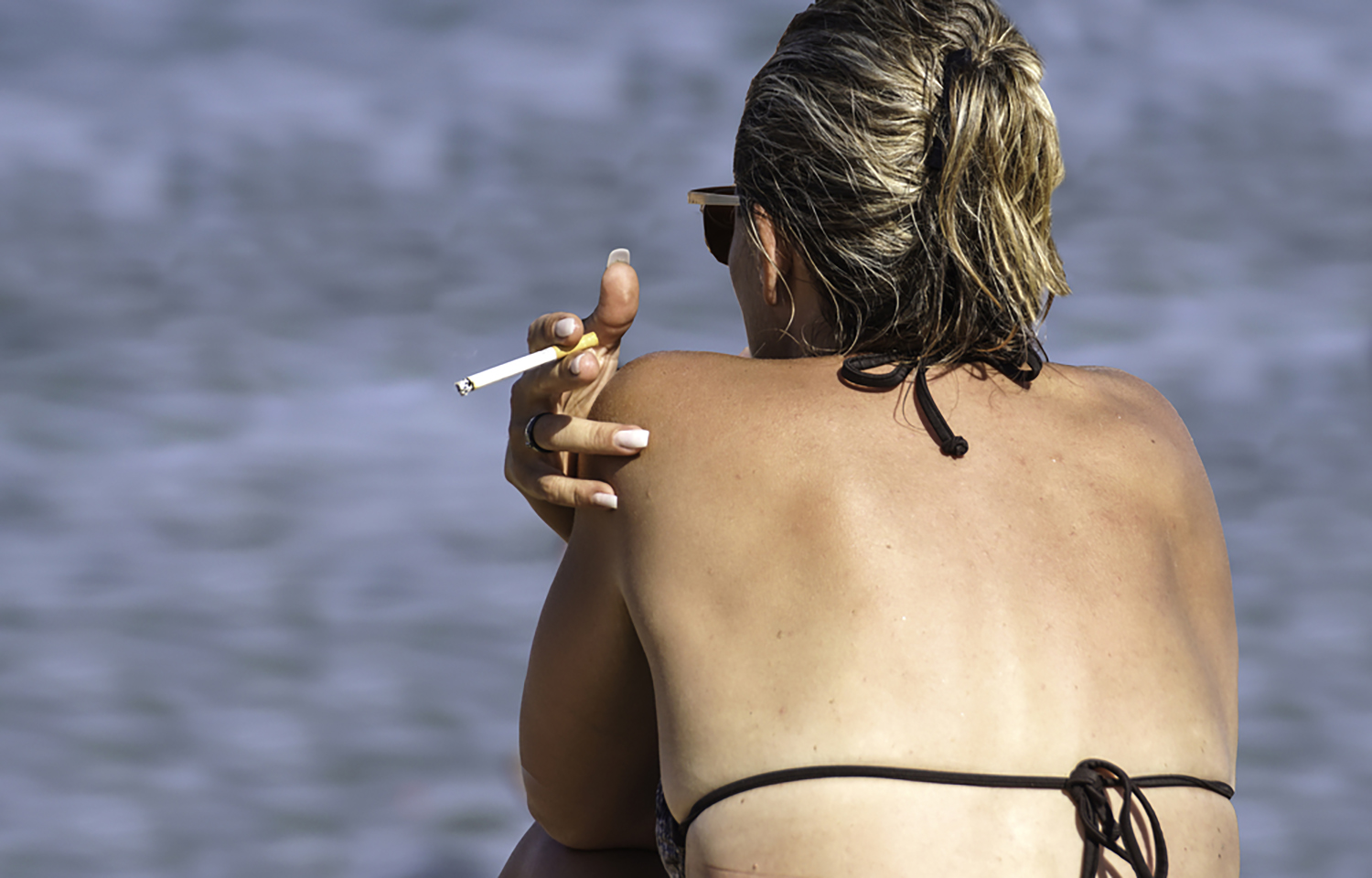
France has banned smoking in many outdoor areas around the country, especially those frequented by children, in a move that could prevent up to 25,000 metric tons of cigarette butts from polluting the environment each year, including in the nation’s waterways.
The law, which went into effect on 1 July, bans smoking in outdoor areas such as beaches, public parks, sports venues, and bus stops during operating hours.
According to the Ocean Conservancy, an environmental nonprofit that has organized efforts to collect over 63 million cigarette butts worldwide since 1986, cigarette butts are the most commonly found items polluting coastlines and bodies of water worldwide.
“Once cigarette butts make it into the environment, they start to degrade into fibers, and fibers and microplastics are almost impossible to effectively clean out of the environment. That’s why it's really important to prevent those from reaching the environment in the first place,” Ocean Conservancy Ocean Plastics Research Director Britta Baechler said.
The damage even one cigarette butt does to marine environments is extensive and longlasting.
A 2014 study found that a single butt can contaminate up to 1,000 liters of water, and in a separate study, researchers found that cigarette butts left in freshwater with natural sunlight degraded only about 10 percent of their mass after 18 months.
“My Ph.D. focused on microplastics and shellfish in the [U.S.] Pacific Northwest, and 99.9 percent of the microplastics that I encountered were the fiber type – just like you would find in a cigarette butt. Unfortunately, they are very commonly found in the environment and in organisms and marine animals. Ingestion of microfibers is shown to reduce or impact them in a lot of ways,” Baechler said. “It can reduce their ability to eat and reduce the energy they have to grow and reproduce. It can alter how they express genes, and it can damage DNA. There's a ton of evidence showing that these things are really harmful when they're taken in.”
Cigarette butt pollution doesn’t just harm individual animals, either, as it can disrupt entire marine food webs. Chemicals that impair oyster larvae or inhibit algae growth can cascade through the ecosystem, weakening the base of the food chain and ultimately reducing fish populations that sustain both commercial and recreational fisheries.
France’s oyster and mussel farms could benefit from reduced butt pollution, too. These shellfish filter seawater to feed, making them highly vulnerable to ingesting microplastics and toxins from discarded cigarette filters. Contamination, thus, also risks human exposure when they are eaten, threatening seafood safety.
“We don't have great data on the impact of smoking bans on beaches yet, but we have seen a noticeable decrease in pollution on beaches following bands of other single-use plastic products, specifically plastic grocery bags,” Baechler said.
According to the World Health Organization (WHO), there are approximately 1.3 billion tobacco users worldwide, with cigarette smoking being the most common ingestion form.
France has one of the highest smoking rates in Europe, and Paris alone has an estimated 2 billion butts tossed onto its streets each year. The new law carries fines ranging from EUR 135 (USD 158) to EUR 750 (USD 878).
“There was a recent opinion survey done of French respondents, and six out of 10 people were in favor of banning smoking in public places,” Baechler said. “[The ban] is important, and it's a favorable type of legislation. It's great to see progressive measures being taken to reduce pollution. It’s an incredibly important step toward a cleaner environment, and I hope other nations take notice.”
