





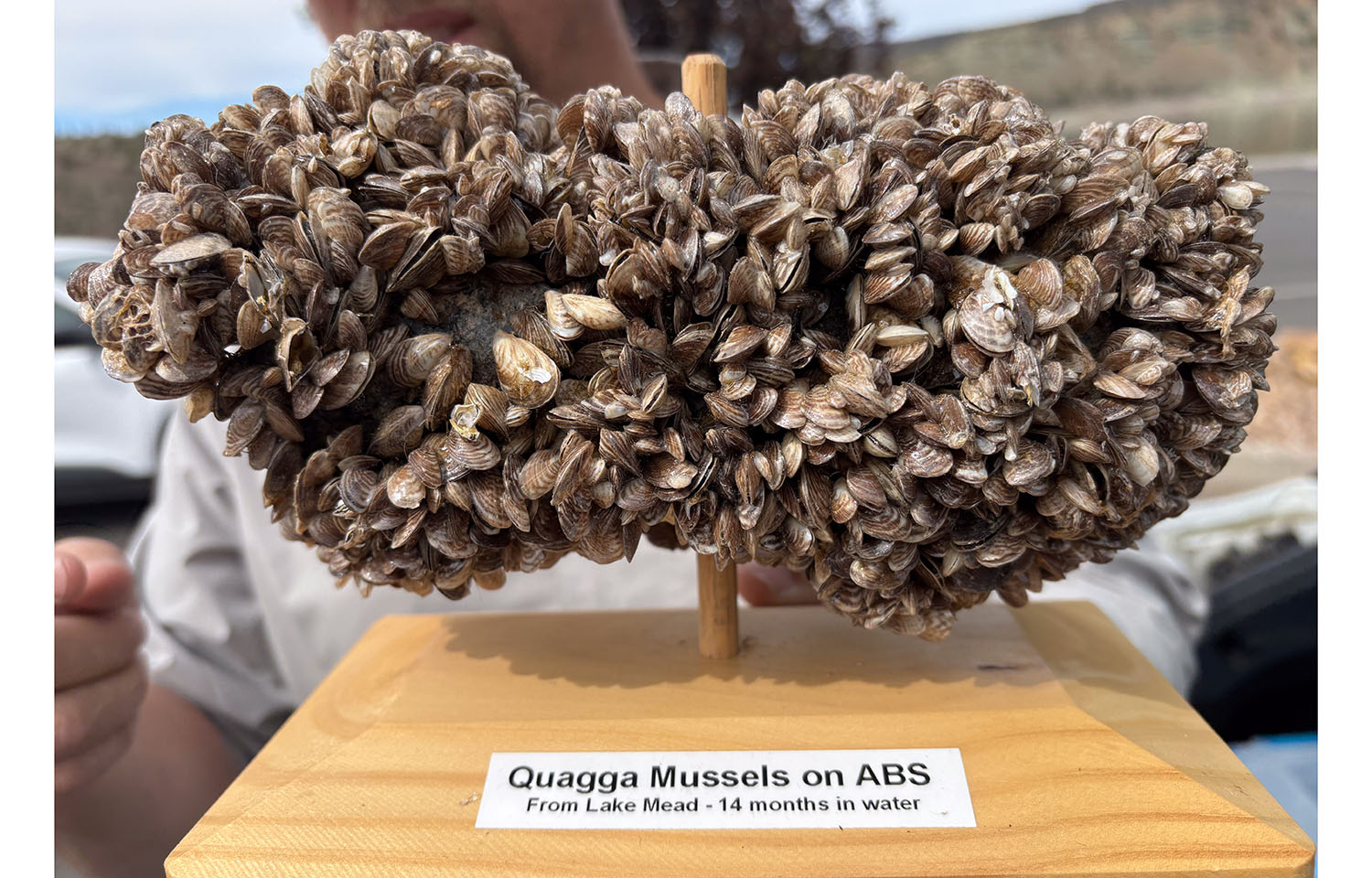
A single adult quagga mussel was found dead on the shore in Prineville, Oregon, U.S.A., while Portland State University (PSU) crews were completing a routine survey, marking a first-time discovery of the invasive species in the state.
"We are taking this finding extremely seriously but also cautiously as we work to confirm what we're seeing at Prineville Reservoir,” Oregon Department of Fish and Wildlife (ODFW) Aquatic Invasive Species Coordinator Keith DeHart said. "Our top priority is protecting Oregon's waters while making sure every action we take is grounded in the best available information."
Once the quagga mussel was discovered, members of the PSU Center for Lakes and Reservoirs completed additional surveys and reported the finding to ODFW, the Oregon State Marine Board (OSMB), and the Oregon Invasive Species Council. No additional invasive mussels were found at the Prineville Reservoir, and the origin of the mussel is undetermined, even after DNA testing.
“This discovery is a serious environmental and economic concern for Oregon and the Pacific Northwest,” ODFW said in a release. “Invasive quagga mussels are small non-native freshwater mollusks that have caused major problems in the United States since their introduction in the 1980s. They can reproduce extremely quickly and can seriously damage Oregon's waterways. They attach to any hard surface to colonize, clog water intake systems, outcompete native species, and disrupt recreation and aquatic habitats and infrastructure.”
Under the Oregon Invasive Freshwater Mussel Rapid Response Plan, ODFW and OSMB have worked with federal, state, and local partners since the discovery and formed a Unified Command for continued surveillance, sampling, and outreach efforts.
One of the state's outreach campaigns, known as “Clean, Drain, Dry,” encourages boaters to clean all boats, trailers, and equipment before leaving a lake or stream; drain all of the water; and allow everything to dry before entering another waterway. This campaign is aimed at reducing the possibility of unknowingly inviting an invasive species into a new waterway via vessel. Recreational boats are one of the most common sources of freshwater invasive mussel spread in the U.S., ODFW said.
ODFW added that there are no plans to close the Prineville Reservoir, and inspections of every boat will continue. The organization added that the public can report any suspicious sightings to the Oregon Invasive Species Hotline, via phone or online.
