




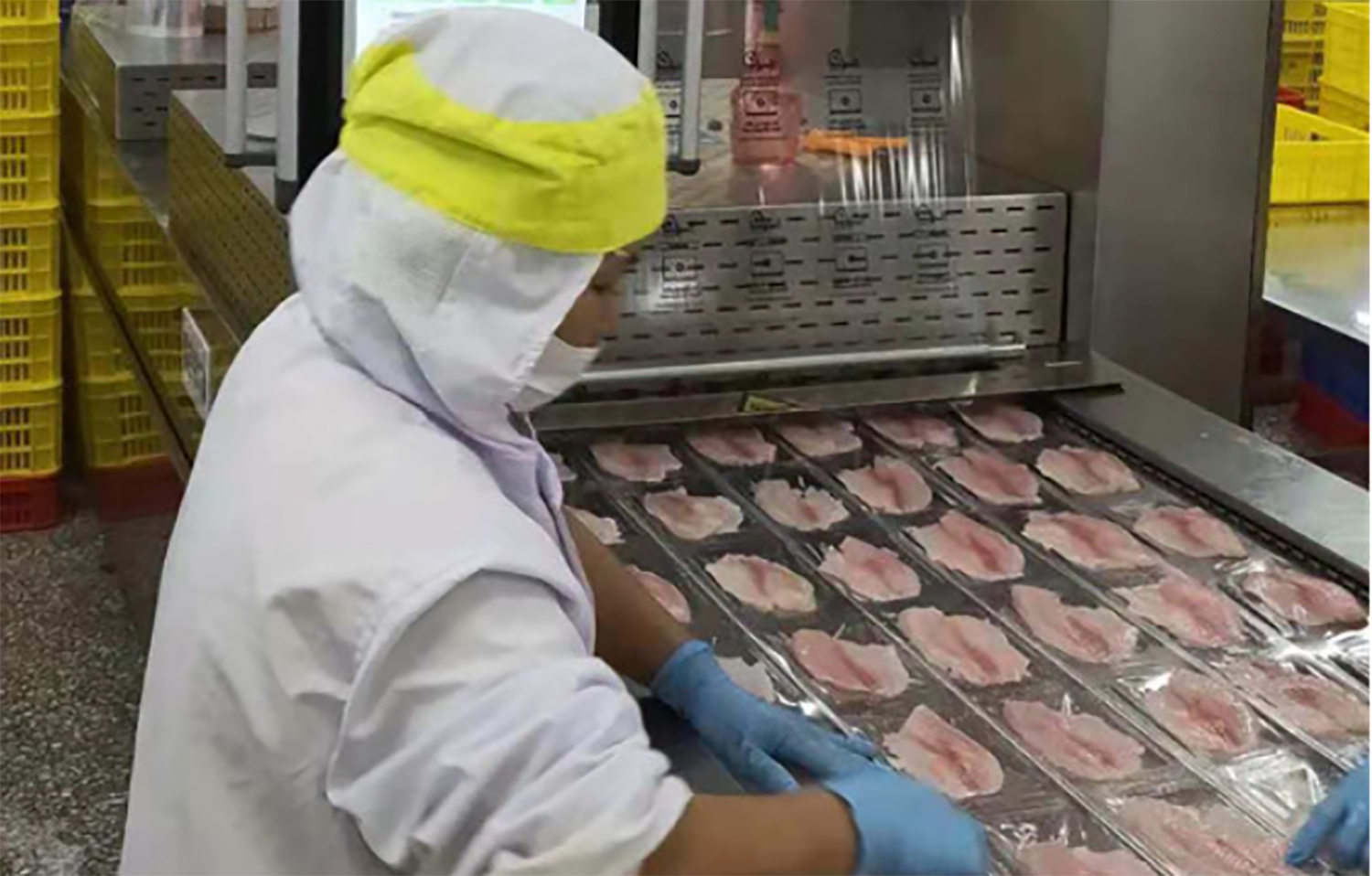
Guangdong, China-based Jingtang Agriculture recently announced it is nearing completion on a 100,000-ton processing plant in Maoming.
The facility, according to the firm, will produce tilapia feed, seed, and animal health products while also processing fish, aiming to secure greater domestic tilapia market share.
Though Jingtang is celebrating the new facility as providing a “whole industrial value chain” that benefits the local community, the opening of the plant comes at a time when many in the Chinese tilapia sector are on edge about weak demand and a glut of inventory – a problem that is only exacerbated by the opening of yet another processing facility.
Difficulties within the sector, which has faced tariff volatility, heavy competition, increasingly stringent regulations, and more over the past year, are exemplified in the financial results of such firms as Chinese tilapia exporter and feed producer Baiyang Aquatic.
The firm announced upward of CNY 80 million (USD 11.2 million, EUR 10.4 million) in net loss attributable to shareholders of the listed company in the first half of 2026, compared with turning a profit of CNY 11.8 million (USD 1.75 million, EUR 1.52 million) in the same period a year prior. The company blamed weaker demand in key markets, as well as higher freight costs, for the steep year-over-year decline.
It’s not just Baiyang, as Mark Ma, the sales manager at seafood firm Maoming Hongye Aquatic, which is located in the same city as the new Jingtang plant, said these issues are playing out across the sector.
“Demand from Africa is strong at the moment, but demand from America is weak,” Ma told SeafoodSource.
Even when demand is strong in certain markets, high freight costs prompted by the war in Iran are crushing the bottom line of many export businesses, Ma said.
“The prices we are getting are okay; we can cover our costs, but after the rise in freight costs, we are losing money on all orders,” he said. “Freight costs are high for all markets. This is curbing the profitability of our shipments to the African West Coast where buyers prefer whole fish.”
Josephine Wang, the export sales manager at tilapia export firm Hainan Golden Springs, said her firm experienced a 10 percent volume increase in exports in the first half of 2026, but the average price of exports “dropped quite a lot.” One of the few bright spots in the period, she said, was an increase in demand from Europe.
“Our sales to the E.U. market are better than last year,” Wang said, adding she is optimistic this trend will continue but was also hopeful the E.U. would have made the decision to sanction Russian fish, which would have likely increased demand for tilapia as an alternative raw material.
At the same time as all of this is playing out, firms are seeing lower prices for raw materials. In 2026, the farmgate price for tilapia in China is averaging CNY 7.00 (USD 0.98, EUR 0.91) per kilogram, marking a sharp drop on the CNY 9.60 (USD 1.34, EUR 1.24) per kilogram paid by processing factories in 2025, Wang explained.
Although this would normally be seen as a positive reduction in costs, an executive at a tilapia processing firm in Hainan, who requested anonymity to speak plainly, said this has brought about its own problems.
“Many factories took advantage of the low raw material costs to build inventory, and the industry is now carrying substantial stock. As a result, factories are competing aggressively on price to secure orders,” they said. “This has created a clear buyer’s market. Buyers know there is no shortage of supply, and if one supplier refuses a price, another is often willing to accept it. Because of this, buyers feel little urgency to place orders. Instead, they continue comparing offers and negotiating for better prices.”
The executive said they are worried the addition of extra capacity via such facilities as Jingtang’s new plant will put pressure on an already struggling sector by using scale to edge out smaller processors.
“What concerns me even more is the possibility of another round of destructive price competition within the industry,” they said. “Before the U.S. market eventually recovers, many processors that are neither large enough to enjoy significant economies of scale nor small enough to remain flexible, including companies like ours, are likely to face tremendous challenges.”
