


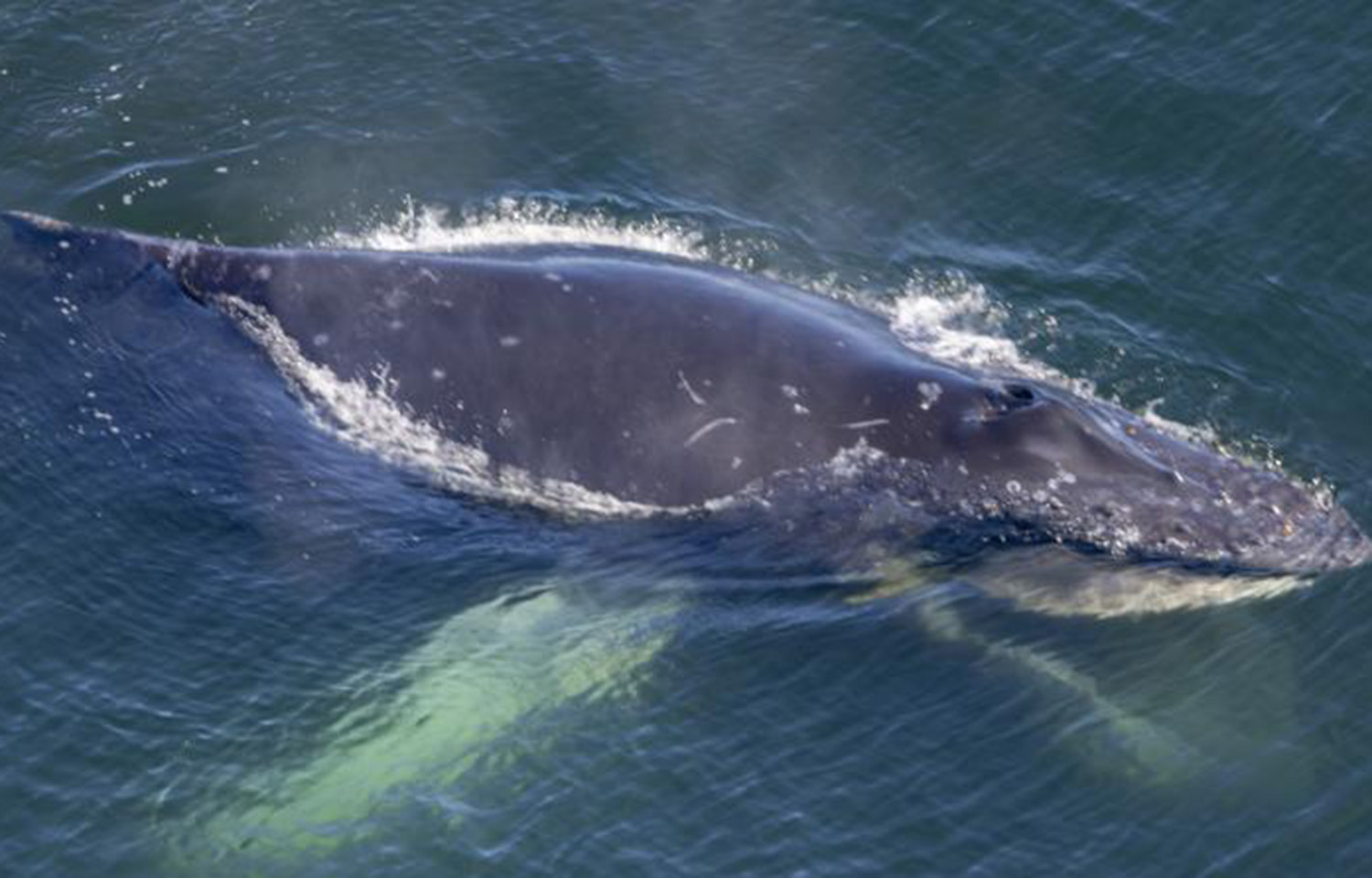
A juvenile humpback whale found tangled in fishing gear 20 miles off the coast of Oregon has been disentangled, but the animal’s jaw was stuck permanently open, meaning the whale is unable to feed and will likely die.
“This is truly a heartbreaker because of the whale’s injuries, but we will learn so much from this case that can help us prevent future entanglements,” NOAA Fisheries West Coast Region Coordinator Lauren Saez said. “We disentangled the whale safely, got all the gear back, and had great collaboration with the fishing industry. Additionally, we got whale DNA samples from the gear to help identify which population it belongs to. All this information is crucial to understand what happened and what we can do to help prevent future entanglements.”
According to a release from NOAA Fisheries, the whale was disentangled on 26 July by a team from Oregon and Washington, and the effort took four days. More than 3,000 feet of line, five sablefish pots, and individual commercial Dungeness crab traps from Oregon and Washington were recovered, and NOAA said it is following up with gear owners after retrieval.
Oregon Public Broadcasting reported that Oregon State University Research Assistant Craig Hayslip was the first to spot the whale from a U.S. Coast Guard helicopter while on a survey looking for whales and fishing gear. Once spotted, NOAA said Hayslip reported the whale to NOAA's West Coast Entanglement Hotline. Then, researchers attached a camera to the end of a pole to detect where the tangled line ended. At over 400 feet in depth, researchers on site could not reach the line tangling the whale for several days due to how tightly and how deep the line had been pulled. Crews were able to successfully disentangle the whale, but the permanent injury is expected to be fatal.
“Even though this poor young humpback was disentangled from fishing gear, they’re still likely to die. This shows exactly why we need to work harder to avoid these horrific incidents in the first place,” Center for Biological Diversity Oceans Campaigner Ben Grundy said in a release. “Fishing gear is a constant landmine in our oceans, and 3,000 feet of gear entangling a whale isn’t an accident. It’s an avoidable tragedy. Killing whales cannot be the cost of selling seafood.”
The entanglement follows Oregon implementing rules earlier this year in an attempt to reduce entanglements, which itself followed NOAA reporting higher-than-average numbers of large whale entanglements in 2024.
NGOs have continued to call for the implementation of ropeless fishing systems, also known as pop-up or on-demand fishing gear, which have been deemed safe around whales due to the equipment's lack of a vertical line in the water column.
In the meantime, on 4 August, NOAA released a newsletter reminding fishermen and boaters across the country about water safety with whales and fishing gear.
"Whales can get hooked in tuna rigs or tangled in monofilament lines," NOAA said in the release. "Recently, the Atlantic Large Whale Disentanglement Network has received a number of reports of fishermen trolling their gear too close to humpback whales. This can result in injuries to both the whales and the people."
