



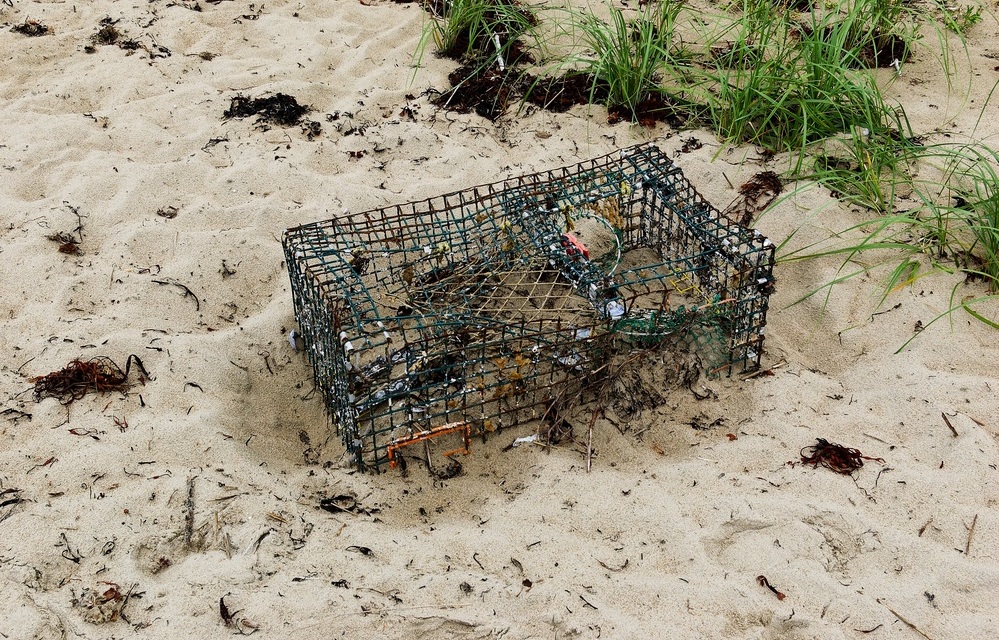
The U.S. state of Massachusetts has introduced new regulations designed to help clean up discarded fishing gear and other marine debris.
“Massachusetts is taking action to protect our environment, marine life, and public safety,” Executive Office of Energy and Environmental Affairs Secretary Rebecca Tepper said in a release. “This is a win-win for our coastal communities; we look forward to continued partnership with the fishing industry and conservationists to tackle this challenge coastwide through creativity and collaboration.”
According to the state government, existing laws afford fishing gear debris property rights, giving owners 30 days to recover gear washed ashore and 60 days before property rights could be ceded to the upland owner. While those rules may have made sense when most fishing gear debris was lobster traps or other recoverable items, today, it holds back government efforts to remove discarded fishing gear, the state claimed.
“Abandoned, lost, and derelict fishing gear has no place in our environment. Over 9 percent of fishing gear is lost or abandoned annually, but outdated state laws previously prevented our efforts to recover it,” Massachusetts Divison of Marine Fisheries (DMF) Director Dan McKiernan said in a release.
Last year, the state legislature passed updated legislation that makes it easier to remove discarded gear in a timely manner. The legislation updated state law to differentiate between intact, functional gear that has been lost and fishing gear debris. The new regulations also enable DMF to permit local leaders, community organizations, and other partners to carry out coastal cleanups.
The regulations were developed by the DMF in collaboration with the fishing sector, conservation groups, law enforcement, and municipal governments.
“We are grateful to the Legislature’s Coastal Caucus, lobster industry, and conservation community who all played an important role in advocating for this change to greatly enhance our capacity to clean up fishing gear debris with partners,” McKiernan said.
The new regulations will go into effect 30 January.
“This is a significant achievement. This will allow cleanup of ghost gear to make our coasts safer and healthier for marine life and mariners alike,” Massachusetts Department of Fish and Game Commissioner Tom O’Shea said. “We are grateful to all the champions in the legislature, across the industry, and the conservation community who came together to call for this much-needed change and look forward to continued partnership to host cleanups in each of our 78 coastal communities.”
