




The Mexican Ministry of Agriculture and Rural Development (AGRICULTURA) plans to expand the number of fishing refuge zones (ZRP) across nine coastal states, with a goal of protecting 2.2 million marine hectares by 2026.
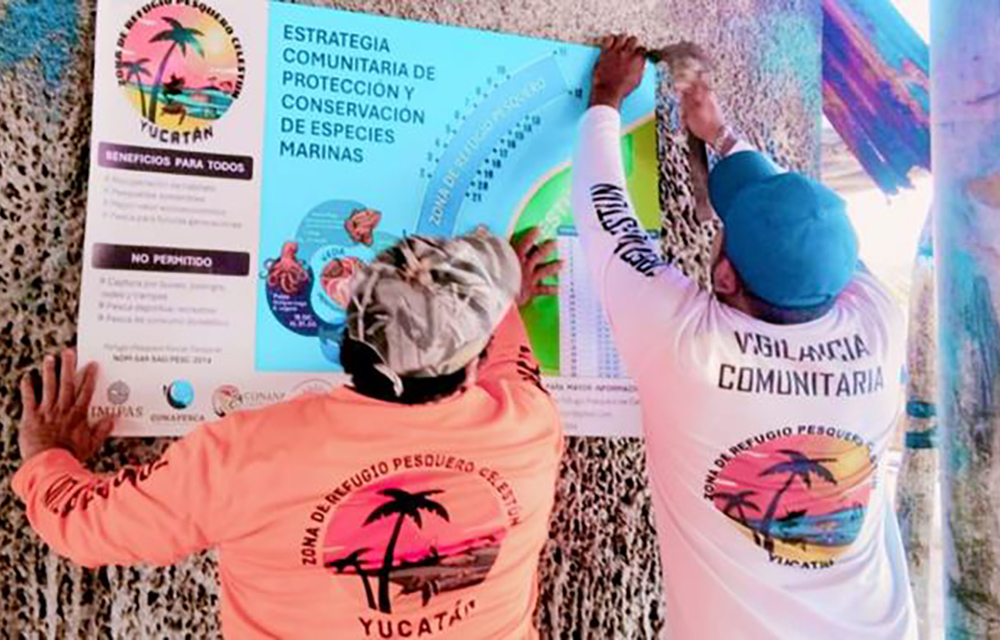
The Mexican government has already established 28 ZPRs in the country, spanning the four coastal states of Baja California Sur, Campeche, Yucatán, and Quintana Roo. However, the National Commission for Aquaculture and Fisheries (CONAPESCA) plans to roughly triple that number to 83 by 2026, protecting more than 130 key species for the nation’s food sovereignty. Under that plan, ZRPs will be established for the first time in the states of Tamaulipas, Nayarit, Colima, Oaxaca, and Campeche.
“The new ZRPs are developed through the active participation of fishing communities, which seek to restore fisheries, protect their environment, improve their economy, and contribute to the country's food sovereignty,” CONAPESCA said in a press release.
The expansion is part of the government's commitment to Goal 14 of the 2030 Sustainable Development Agenda, which emphasizes ocean and marine resource sustainability.
In a social media post, Cámara Nacional de las Industrias Pesquera y Acuícola (Canainpesca) criticized the government for expanding ZPRs without consulting the fishing industry.
“We reject the authorities' intention to continue making decisions without scientific support, without resources, and without consulting the productive sector, affecting food self-sufficiency and those engaged in legal fishing in Mexico,” Canainpesca said.
The Mexican government is also in the process of establishing a National Traceability System which will be able to track fishery and aquaculture products from their point of origin and then throughout the supply chain. The administration has set a target date of 31 December 2026 to have the system completed.
"We must not degrade ecosystems. Those who do this activity well should be recognized by consumers,” AGRICULTURA Julio Berdegué Sacristán said in a press release.
In a visit to Baja California Sur to meet with various fishing and conservation groups, Berdegué Sacristán stated that fisheries and aquaculture is a priority of the current administration.
"It's important to recognize fishing and aquaculture because they've been largely overlooked. That's why President Claudia Sheinbaum Pardo has reiterated her interest in prioritizing them, even during the presidential campaign, and we're working on that effort from the Ministry of Agriculture," he said.
In addition to expanding ZPRs and establishing a National Traceability System, CONAPESCA is also working to revitalize its state and local offices and transition from a volume-value model to a sustainable value model for its local seafood economies.
Berdegué Sacristán said the government has proposed amending the General Law on Sustainable Fisheries and Aquaculture to allow surveillance of protected natural areas and operations on the high seas to better enforce the country’s fisheries regulations.
The Mexican government is also set to conduct a review of its Bienpesca registry – which provides financial support to fishers and aquaculturists – starting in July, Berdegué Sacristán confirmed.
Bienpesca is part of the Mexican government’s well-being programs, operating under the Agriculture, Livestock, Fisheries, and Aquaculture Promotion Program. Bienpesca provides MXN 7,500 (USD 394, EUR 340) to registered individuals engaged in fishing or aquaculture to help them achieve food self-sufficiency. According to the Mexican government, most of the funding goes to small-scale producers. In his comments, Berdegué Sacristán emphasized the support Bienpesca now provides to women in the fishing sector.
"It's about feeding those who feed the people of Mexico and contributing to the country's food self-sufficiency,” he said.
Separately, AGRICULTURA and CONAPESCA celebrated World Sea Turtle Day by announcing that Mexico had been granted certification to export wild shrimp to the United States due to the use of Sea Turtle Excluder Devices (TEDs) on larger vessels. According to a 12 May notice in the U.S. government’s Federal Register, Mexican fishers have adopted effective measures to reduce incidental sea turtle bycatch. CONAPESCA claims to have trained 1,202 crew members, 45 netters, and 16 specialists as part of its efforts to reduce sea turtle bycatch in the country.
“This certification confirms that Mexico has adopted effective measures to reduce the incidental capture of sea turtles, a measure verified annually by U.S. authorities through inspections of shrimp boats, both on land and at sea,” CONAPESCA said in a release. “The positive outcome of the inspections is the result of a joint effort by Mexican government authorities and the high-seas fishing sector.”
