




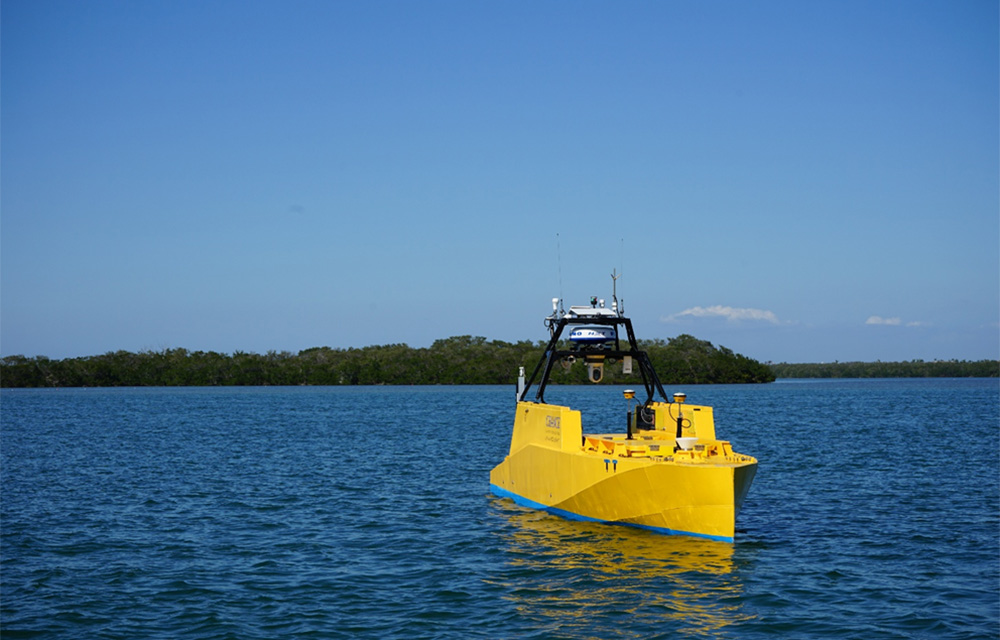
NOAA has announced the purchase of eight new uncrewed marine systems for USD 21.6 million (EUR 18.3 million), which the agency claims will support charting, mapping, and fisheries surveys.
"Uncrewed systems provide more efficiency in data collection, ensuring that our nation remains at the forefront of scientific innovation,” NOAA Administrator Neil Jacobs said. “The administration’s focus on integrating emerging technologies into agency operations allows NOAA to serve the public more effectively and demonstrate our leadership in scientific collaboration on the world stage.”
The eight systems will be provided by Lafayette, Louisiana, U.S.A.-based Chance Maritime Technologies over the next five years. The uncrewed platforms will have semi-autonomous capabilities that help them stay on-course and avoid collisions, and NOAA specified that they will be equipped with technology to support fisheries acoustic surveys. The uncrewed systems will be paired with NOAA’s latest mapping and charting vessels, Surveyor and Navigator, which are expected to join the agency’s research fleet in 2027 and 2028, respectively.
“NOAA is uniquely positioned to leverage cutting-edge maritime technology to efficiently collect data in some of the ocean’s most challenging regions,” said Rear Admiral Chad M. Cary, who is a NOAA Corps director and a NOAA Marine and Aviation Operations assistant administrator. “Teaming these systems with Surveyor and Navigator achieves a major waypoint on the charted course to building the hybrid fleet of the future.”
In its latest budget request, the administration of U.S. President Donald Trump has emphasized the value of uncrewed systems to support fisheries surveys. Despite proposing to slash NOAA Fisheries budget by nearly 41 percent, the administration has asked for an increase of USD 75 million (EUR 64 million) to begin building a fleet of autonomous research vessels. The funding will be used to purchased two “high-endurance, ocean-going uncrewed marine systems.” Unlike the eight systems purchased by NOAA from Chance Maritime Technologies, these two systems will work independently from NOAA vessels and remain at sea for long periods of time.
“Emerging technologies such as uncrewed surface vehicles, autonomous underwater vehicles, and environmental DNA offer an unprecedented opportunity to expand survey coverage, reduce operational costs, and provide higher resolution data in near real time,” NOAA said in its fiscal year 2027 budget request.
