

A new Greenpeace protest that has involved painting on trawling vessels while at sea has drawn criticism from one of the targeted companies, which claims the environmental organization’s activities are unsafe and risky.
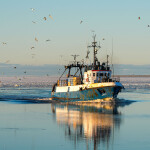
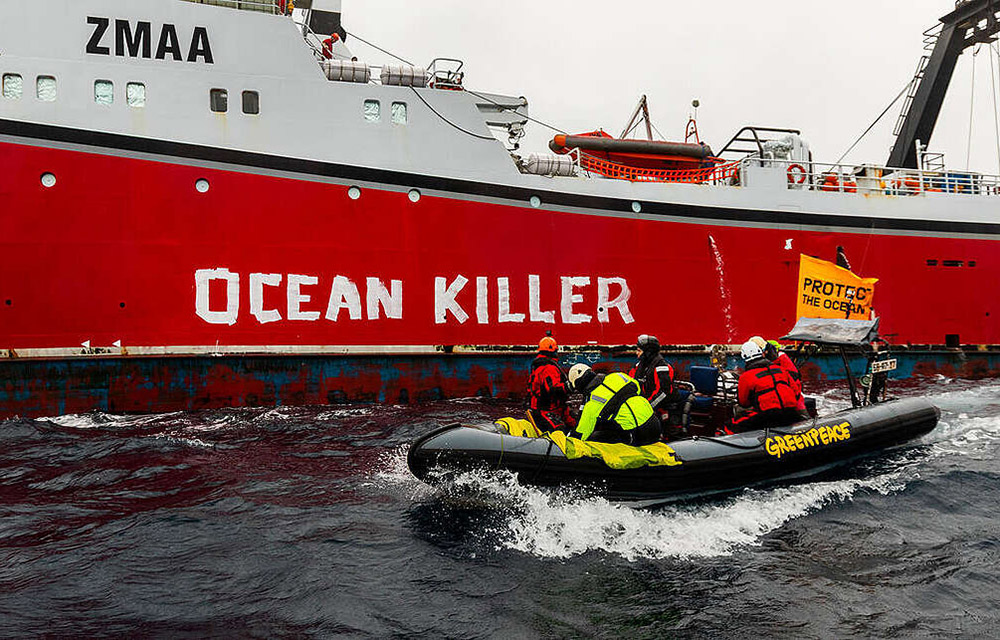
Members of Greenpeace Aotearoa have intercepted two trawling vessels operating off the eastern coast of New Zealand, approaching them and writing “OCEAN KILLER” on their hulls in non-toxic paint before departing. The activist group said the vandalization is a protest against trawling in the Chatham Rise, an area it said is a hotspot for coral.
“Greenpeace Aotearoa activists have again taken action to stand up for ocean life that we all want to see thrive. Today, they have rebranded another bottom trawler at sea, once more calling out bottom trawlers for what they are – ‘ocean killers,’” Greenpeace Aotearoa spokesperson Juan Parada said in a statement. “Bottom trawling is indiscriminate and destructive. When the heavy trawl nets are dragged across the seafloor and over seamounts, they turn coral into rubble and kill fur seals, sharks and seabirds as ‘bycatch.’ Out here, we’ve observed these trawlers operating day and night, emptying the oceans on which we all rely.”
Greenpeace Aotearoa claims it has been tracking trawling operations from its vessel, Rainbow Warrior, after it detected multiple trawlers had turned off their automatic identification systems (AIS).
On 27 June, Rainbow Warrior approached New Zealand seafood provider Talley’s vessel, the Amaltal Atlantis, on the Chatham Rise, painting “OCEAN KILLER” on its hull. Greenpeace Aotearoa activists had previously blocked Amaltal Atlantis from leaving port for 10 hours back in 2022.
According to Greenpeace, Talley’s has responded to the painting incident by threatening legal action that “may include the arrest of the Rainbow Warrior.”
On 30 June, Rainbow Warrior approached another trawler, this time the Ocean Dawn, owned and operated by New Zealand seafood company Sealord. Again, the activists painted “OCEAN KILLER” on the hull before departing.
In a release, Greenpeace Aotearoa noted that Ocean Dawn had illegally trawled in the Mid-Chatham Rise Benthic Protection Area in October 2018, pulling up 1,300 kilograms of sponges from the ocean floor. The vessel’s owner, Sealord, self-reported the incident to New Zealand authorities and was forced to forfeit the USD 112,294 (EUR 95,562) in proceeds from the illegal trawls and fined USD 24,000 (EUR 20,424). The company was also forced to forfeit the Ocean Dawn, valued at USD 16 million (EUR 13.6 million), but it was later able to reclaim the vessel by paying a fee.
“It’s time Sealord, the trawling industry, and the government listened to the tens of thousands of New Zealanders who want ocean health valued over industry interests,” Parada said. “From depleted fish numbers to smashed coral and dead sharks and seabirds, the cost of bottom trawling is too high. To protect the ocean for the future and safeguard the ocean we all love, bottom trawling must stop.”
In response, Sealord called the incident “deeply troubling,” claiming the actions taken by Greenpeace Aotearoa members were far too risky.
“We are very concerned at the close call that happened while the Ocean Dawn was actively fishing and the other potential risks to Greenpeace’s demonstrators as they painted graffiti on our 64-meter-long boat. If their small z-boat malfunctioned or someone fell off, they would have been dragged to the back of the vessel, into the wires, and down into the water, which would likely have been fatal,” Sealord General Manager of Operations Rui Ventura said in a statement.
Ventura noted that the smaller Greenpeace boat maneuvered under the Ocean Dawn’s factory water sump outlet, which could have knocked one of the demonstrators overboard. He also said a collision or sea surge could have flipped the Greenpeace craft.
“It just shows that they have no idea how these vessels operate; there are a number of automatic operating functions, so if you don’t know how things work, getting up close to, and in contact with, a moving large fishing vessel in the deep sea is very unsafe,” Ventura said.
Sealord said Greenpeace’s Rainbow Warrior had shadowed one of its other vessels, the Thomas Harrison, on 24 June, sending a smaller vessel to document the trawler’s fishing activities.
“The skipper of the Thomas Harrison, a highly experienced mariner, was alarmed by the Rainbow Warrior’s unsafe decisions. Although the Greenpeace skipper agreed to move their vessel to a safer distance, they then launched an inflatable boat. Given the rough weather and 30-knot winds, it was exceptionally dangerous for a small inflatable. The boat crew insisted on staying upwind, which meant losing control could have sent them drifting into our nets, posing serious risk,” Ventura said.
Ventura added that Sealord will be talking to authorities about filing charges.
