




Lawmakers in the U.S. House of Representatives have passed a bill directing NOAA Fisheries to establish a task force to tackle shark depredation – the partial or complete removal of a hooked fish from an angler’s line by a shark.
The Supporting the Health of Aquatic systems through Research, Knowledge, and Enhanced Dialogue (SHARKED) Act was first introduced in 2023 and initially passed the House in February 2024. However, the legislation was not considered in the U.S. Senate, and died with the end of the 118th Congress earlier in January.
Hoping for a different outcome on the SHARKED Act with the new Congress, U.S. representatives Rob Wittman (R-Virginia), Darren Soto (D-Florida), Daniel Webster (R-Florida), and Marc Veasey (D-Texas) reintroduced the bill.
Lawmakers were quick to reapprove the bill, and the House passed it by voice vote on 21 January, sending the bill to the U.S. Senate for further consideration.
“As a lifelong fisherman, I have seen firsthand the impact of shark depredation on our marine ecosystem and the sportfishing community,” Wittman said in a statement. “With the passage of my SHARKED Act today, we are taking important steps to conserve our marine life and protect sharks from unsafe conditions and food sources. I’m proud to see my SHARKED Act pass the House once again, and I look forward to advancing it through the Senate to finally get it to the president’s desk. I’m grateful for the support of my colleagues from across the aisle in this effort, and I’m determined to lead the way in restoring the health of our marine ecosystem and enhancing the fishing experience for all.”
The legislation received substantial support from sportfishing groups, including endorsements from the American Fisheries Society, American Sportfishing Association, Association of Fish and Wildlife Agencies, Center for Sportfishing Policy, Coastal Conservation Association, Congressional Sportsmen’s Foundation, Florida Fish and Wildlife Conservation Commission, International Game Fish Association, Marine Retailers Association of the Americas, National Marine Manufacturers Association, National Professional Anglers Association, and the Theodore Roosevelt Conservation Partnership.
“Shark depredation is a growing problem that is negatively impacting fishing up and down the coast but hasn’t been receiving the attention it deserves,” Mike Leonard, vice president of government affairs for the American Sportfishing Association, said in a statement following the bill’s passage.
The South Atlantic Fishery Management Council noted in a 2023 article that shark depredation was also one of the most consistent concerns of fishers in the South Atlantic.
According to NOAA Fisheries, the agency has funded shark depredation research at Florida Atlantic University and Mississippi State University.
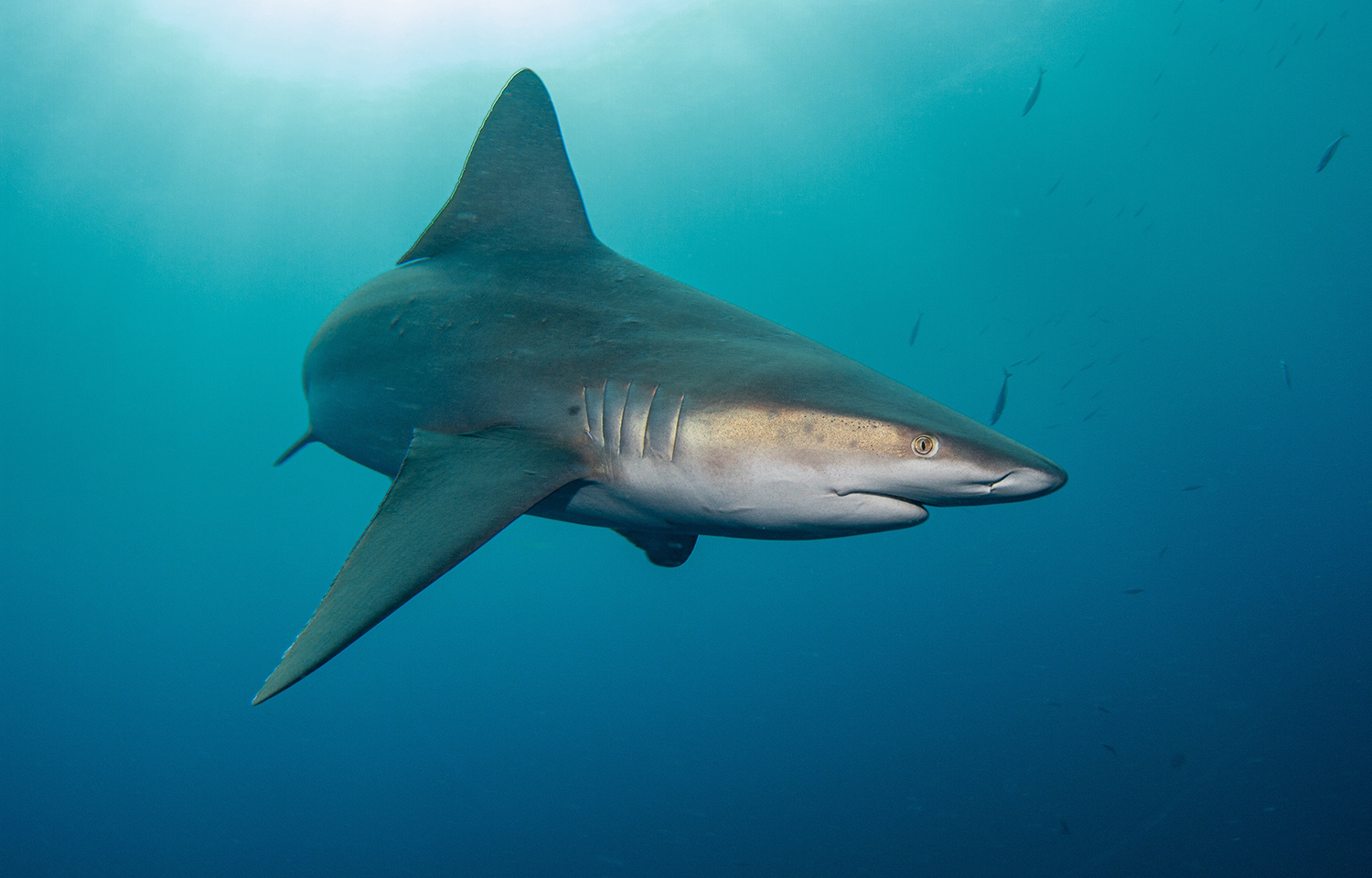
NOAA Fisheries claims there are several possible reasons for the increase in shark depredation reports, including the presence of more sharks, the increased number of anglers on the water, and that sharks have learned that recreational fishing boats are associated with easy meals. Researchers have identified sandbar sharks and bull sharks as the species that most frequently prey on fishers’ catches utilizing DNA swabs on damaged fish.
