



During a recent hearing of the U.S. House Water, Wildlife, and Fisheries Subcommittee, lawmakers considered the merits of creating a new commission to coordinate fisheries management within the Mississippi River Basin.
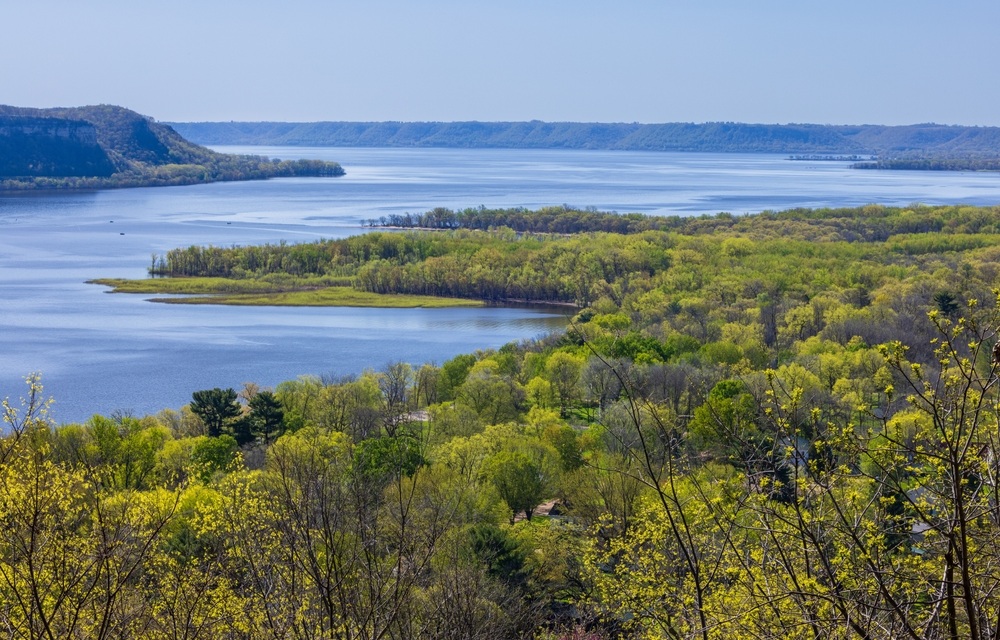
“The Mississippi River Basin isn’t just a river system; it’s the backbone of our country. The basin’s water comes from 31 states, carries about 40 percent of America’s water, and supports communities, farms, and industries from the Midwest all the way down to the Gulf Coast,” U.S. Representative Mike Ezell (R-Mississippi) said during the hearing. “But, managing the largest river system in North America requires diligant collaboration; 31 states, several Tribal nations, and at least seven federal agencies all share some responsibilities for the basin’s fisheries. However, coordination is inconsistent and funding is often unreliable.”
Earlier this year, Ezell and other federal legislators introduced the Mississippi River Basin Fishery Commission Act, a bill that would establish a commission to help coordinate federal and state management of fisheries throughout the basin and provide funding to support that collaboration. If created by Congress, the commission would operate with non-binding authority and any decisions would be made via consensus.
“The Mississippi River Basin Fishery Commission would be housed under the Department of the Interior and built on a voluntary partnership. Each state would be represented by the chief of fisheries to ensure that all decisions are based on local needs and local science – not D.C. bureaucrats,” Ezell said. “We’re giving our states the tools and stability they need to protect one of the world’s most important river systems and to make sure it continues supporting jobs, recreations, and healthy ecosystems for future generations.”
The legislation has been backed by the Mississippi Wildlife Federation, the Arkansas Game and Fish Commission, the Mississippi Interstate Cooperative Resource Association, the American Sportfishing Association (ASA), and the National Wildlife Federation.
Arkansas Game and Fish Commission Deputy Director Ben Batten, who serves as chair of the Mississippi Interstate Cooperative Resource Association (MICRA), also testified in favor of the bill during the November hearing.
“Fisheries in the basin face critical and escalating threats, including water quality and quantity issues, habitat fragmentation and degradation, and invasion of aquatic invasive species such as carp and mussels,” Batten said. “At least 90 different fish species migrate hundreds or thousands of miles across multiple states and jurisdictional boundaries. This scale demands an elevated perspective and an enhanced level of collaboration among management agencies.”
Despite that, there is no Congressionally recognized interstate body focused on the basin’s fisheries. In designing the proposed commission, Batten and other collaborators looked to the Great Lakes Fishery Commission, which was designed to stop the spread of invasive sea lampreys in the Great Lakes.
“The framework for the Mississippi River Basin Commission is a proven model, mimicking successful commissions that manage interjurisdictional fisheries in the Great Lakes, the Gulf, Atlantic, and Pacific,” Batten said. “Fish do not know state boundaries, and unfortunately, invasive species do not either. We’re far past the time for the commission to be established.”
Stakeholders from the Mississippi Sound have also asked lawmakers to overhaul management of the Mississippi River basin, with particular concern to how pollution, flooding, and upriver water quality issues impact the commercial fisheries at the end of the river. The issue came to a head in 2019, when the U.S. Army Corps of Engineers opened the Bonnet Carré Spillway twice. While the action helped divert floodwater away from population centers, the surge of freshwater shocked and killed shellfish that fishers relied on and impacted commercial harvests for years.
“The openings really crippled the seafood industry,” Commercial Fisheries United Executive Director Ryan Bradley said. “In 2019, the Bonnet Carré opening resulted in a catastrophic federal fishery disaster. We are still dealing with the fallout. The oysters are just now beginning to come back, and another prolonged opening could set us back once again. The number of fishermen and shrimp boats is now at a critically low level.”
To address some of those issues, the Mississippi Sound Coalition drafted a 33-page bill. However, the legislation has not yet been taken up by a federal lawmaker or introduced in Congress.
