


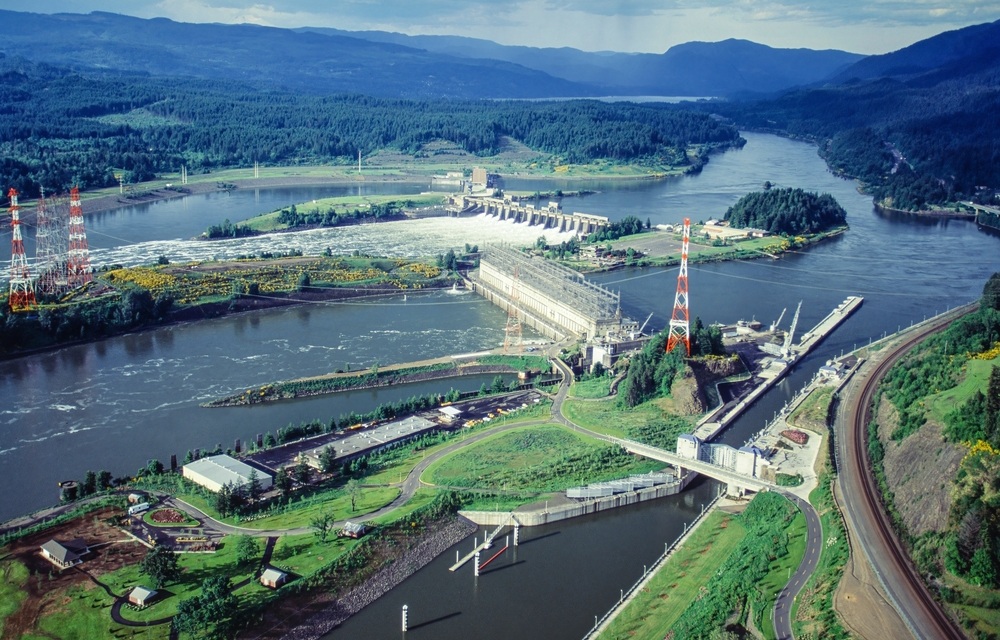
The Northwest Power and Conservation Council has released its draft plan for the Columbia River Basin Fish and Wildlife Program that aims to keep water temperatures cooler, reduce predation, and invest in habitat restoration.
Established more than 40 years ago, the Columbia River Basin Fish and Wildlife Program represents the U.S. states of Oregon, Idaho, Washington, and Montana in developing a program that supports salmon and other species, including steelhead, white sturgeon, Pacific lamprey, and bull trout, that are impacted by hydroelectric power infrastructure in the basin. The program is paid for by the Bonneville Power Administration as part of its legal obligation to mitigate the impact of hydroelectric power on the region’s fish and habitat.
Among the program’s goals is achieving an annual return of 5 million adult salmon and steelhead, and the new draft carries that goal forward. Though the 10-year rolling average is less than half that, there have been individual years that approached that number; regulators reported a total return of 4.6 million fish in 2014.
The Northwest Power and Conservation Council voted 16 December to release a draft of the plan for public comment, with the council accepting feedback through 2 March 2026. The council plans to schedule multiple public hearings during that period and hopes to have the plan finalized in May of next year.
“For over 40 years, our Fish and Wildlife Program has demonstrated the power of working together in a broad and diverse region,” Council Vice Chair Les Purce said in a statement. “This year, we received hundreds of recommendations from our regional partners and the public on what the next Fish and Wildlife Program should include and thousands of comments on these recommendations. Council members and staff have spent countless hours engaged in careful study, thoughtful deliberation, and collaborative problem-solving. Now, we’re asking the public to weigh in on our proposal. Your input will help chart the path our Fish and Wildlife Program takes over the next decade.”
Among the biggest changes in the new plan is the implementation of long-term, consistent operations that limit ramping and flow fluctuation on the Columbia and Snake rivers in the spring and summer. Council staff claim the new proposal will help prevent ponding and lower water temperature to the benefit of migrating salmon that prefer cooler temperatures on their journey upriver.
“Our proposal seeks long-term continuity and stability in hydro-operations in the Columbia Basin,” Council Executive Director Peter Cogswell said in a statement. “This will help us continue to sustain and grow fish and wildlife populations while ensuring that we’ll continue to have the dependable, well-functioning power system that we have relied on for decades in the Northwest.”
The council also wants to continue expanding management for predators like seals, sea lions, birds, northern pike, and northern pikeminnow, which can substantially impede fish recovery. The U.S. House Water, Wildlife, and Fisheries Subcommittee held a hearing on the challenge sea lions pose to salmon recovery earlier in December, with lawmakers and regulators voicing support for increased culling of sea lions in the Columbia River Basin.
“We’ve got a lot of predators out there. We have invasive species. We have predation happening. We want to make sure that the impacts of predation do not outweigh the gains of trying to keep fish in river and move them through the system,” Council Fish and Wildlife Division Director Patty O’Toole said during a 17 December press conference.
The draft plan comes amid renewed tensions between state and Tribal governments on one side and the U.S. federal government on the other after U.S. President Donald Trump reneged on the Resilient Columbia Basin Agreement (RCBA).
The agreement had been announced by then-U.S. President Joe Biden in 2023, ending years of litigation in favor of a compromise plan that would have the federal government invest heavily in and prioritize Columbia River Basin salmon recovery. Trump, however, has moved quickly to reverse Biden’s work on salmon restoration, attempting to eliminate federal salmon recovery funding and pulling out of the RCBA in June 2025.
In the wake of Trump’s canceling of the agreement, the other parties opted to resume litigation against the federal government. In October, those states, Tribal governments, and conservation groups asked a federal court to force dam operators to take emergency actions that will support salmon recovery.
“The requested emergency measures will benefit the baby salmon leaving the river next year and provide hope for those whose livelihoods and culture depend on their success,” Northwest Sportfishing Industry Association Policy Director Liz Hamilton said at the time. “These measures help keep fish in the game while we continue our work with others in the region on a comprehensive solution.”
When asked about the ongoing litigation, O’Toole said there was “overlap” between the measures being sought by those parties and the actions in the draft plan, noting that the commission works at the intersection of regional power needs and the needs of fish.
