


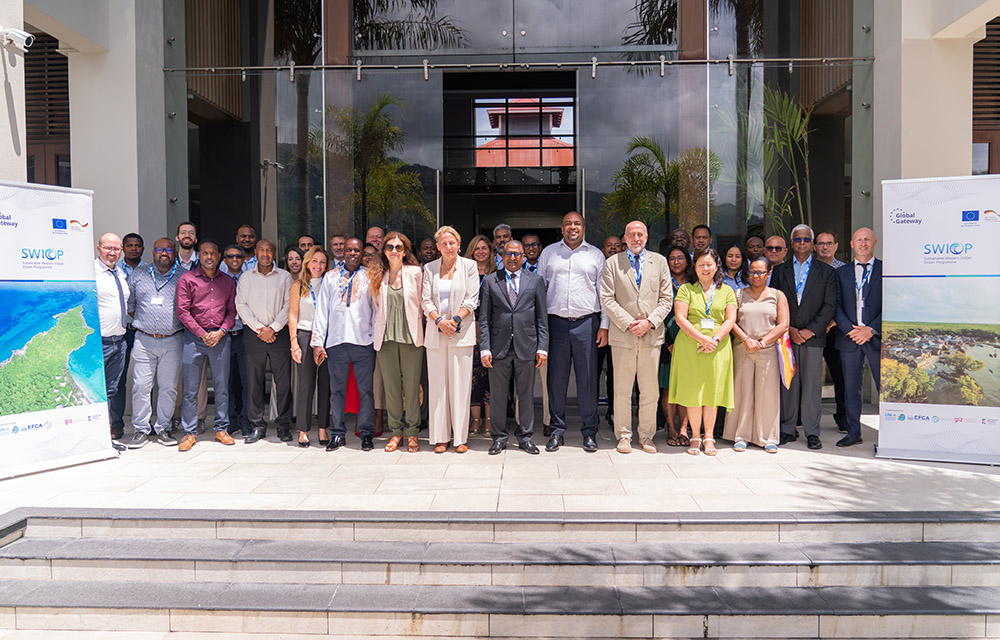
The European Fisheries Control Agency (EFCA), Expertise France, and the Indian Ocean Commission (IOC) have joined forces on a new initiative to tackle illegal, unreported, and unregulated (IUU) fishing in the Western Indian Ocean.
The launch is one of the first actions taken under the Sustainable Western Indian Ocean Program (SWIOP) – a five-year, EUR 60.5 million (USD 67.9 million) effort created in June to improve the blue economy, marine resilience, and ocean governance in the region. On 26 October, the three groups announced the launch of a EUR 11 million (USD 12.4 million) initiative under SWIOP to improve surveillance, monitoring, information sharing, and fisheries research to combat IUU fishing.
"IUU fishing destroys ecosystems, and IUU fishing does not stop at national borders. We can only tackle it by coordinated commitment and collaboration at [a] regional level,” EFCA Executive Director Susan Steele said in a release. “EFCA stands ready to bring our experience and expertise to the SWIOP and are very excited and committed to the operational, 'hands-on' model which the project will deliver with local partners.”
The EFCA contributions include operational cooperation, support for the IOC’s Plan Regional de Surveillance des Pêches (PRSP) patrols, improved surveillance systems, and support for “stronger legislative and institutional framework,” while Expertise France’s contribution will go toward improving data collection and scientific research on high-seas and straddling fish stocks. The IOC is also planning the establishment of a Regional Center for Fisheries Surveillance, Control, Monitoring, and Observation.
Countries participating in the program include Comoros, Djibouti, Kenya, Madagascar, Mauritius, Mozambique, Seychelles, Somalia, and Tanzania.
“The fight against IUU fishing can only be effective if it is based on close, coordinated, and sustainable cooperation between all stakeholders concerned,” IOC Secretary-General Ibrahim Norbert Richard said in a release. “Fishing activities and the movements of vessels transcend national borders. Responses must, therefore, be based on information-sharing, the coordination of operations, capacity-building, and the pooling of expertise. This is precisely the purpose of the IOC’s PRSP, which the SWIOP program will support. Through this program, our aim is to consolidate existing regional mechanisms, improve Member States’ surveillance capabilities, and strengthen operational cooperation between the institutions involved in combating IUU fishing.”
