






European consumers are eating seafood less frequently, with both total and per capita consumption falling to their lowest levels in 10 years, according to new analysis from the European Market Observatory for Fisheries and Aquaculture Products (EUMOFA).
The latest “Consumption of Fishery and Aquaculture Products in the E.U.” report from EUMOFA estimates consumption of fishery and aquaculture products (FAPs) across the bloc fell to 10.25 million metric tons (MT) in 2023, equivalent to 22.9 kilograms per capita. Those totals were down from 12.94 million MT and 25.5 kilograms per capita in 2014.
The study posited that the E.U. market is undergoing a broader transformation rather than simply experiencing declining demand, with consumers placing greater emphasis on convenience, value, and reliable supply.
"Analysis across the E.U. markets points to a shift in consumption patterns rather than a simple decline in demand," the report said. "The most consistent trend is a decline in consumption frequency, especially at home."
To that end, it found weekly European seafood consumption at home has steadily resulted in more occasional eating habits, while out-of-home consumption has become more common. This trend is particularly evident among younger consumers, who were found to have lower familiarity with seafood preparation, weaker cooking skills, and stronger expectations for convenience than older generations.
Amid the bloc-wide decline, consumption trends differed considerably between member nations.
Lithuania recorded the largest fall in per capita seafood consumption over the decade – down 55 percent to 20 kilograms per person. Other countries posting declines included Spain, down 12 percent to 40.6 kilograms per capita; France down 7 percent to 32.1 kilograms; and the Netherlands down 12 percent to 19.9 kilograms.
Among nations recording spikes in per capita consumption, both Italy and Poland increased by 5 percent to 30.3 kilograms and 13.7 kilograms, respectively, while Romania posted one of the strongest increases, rising 39 percent to 8.8 kilograms.
Portugal remained Europe's highest seafood-consuming nation throughout the study period, ahead of Spain.
Although seafood expenditure continued to rise in nominal terms, it remained a relatively small component of food budgets. E.U. households spent EUR 62.8 billion (USD 71.7 billion) on seafood in 2024, compared with more than EUR 246 billion (USD 281 billion) on meat and EUR 170 billion (USD 194.2 billion) on milk, cheese, and eggs. As such, the average seafood expenditure reached EUR 139 (USD 159) per person, representing around 5 percent of total food spending.
On an individual country basis, Portugal again led Europe, with consumers spending an average of EUR 416 (USD 475) per person on seafood annually, ahead of Luxembourg with EUR 274 (USD 313) and Spain at EUR 260 (USD 297).
Price was identified as “a central but complex determinant of FAP consumption,” but EUMOFA’s report particularly highlighted convenience as one of the most significant drivers of seafood purchasing decisions across Europe, with demand continuing to grow for products that are portioned, pre-packed, ready-to-cook, and ready-to-eat.
In turn, the trend toward convenience bolstered the consumption of species capable of delivering year-round supply, stable pricing, and predictable availability. Consequently, salmon, tuna, and shrimp continue gaining market share, while the consumption of several traditional species has declined.
Among the E.U.’s top 10 consumed seafood species, cod recorded one of the steepest declines, with consumption declining 43 percent between 2014 and 2023 to 690,648 MT. By contrast, skipjack tuna consumption increased by 500 percent to 662,575 MT, while yellowfin tuna consumption rose 49 percent over the same period to 334,485 MT. Warmwater shrimp and herring also both posted gains of 17 percent to 385,330 MT and 553,946 MT, respectively.
The bloc’s top consumed species in 2023 was salmon at 1.07 million MT, according to the report, followed by Alaska pollock at 796,735 MT.
The report warned that the growing concentration around a relatively small number of globally available species risks reducing consumer awareness of the wider diversity of seafood available, particularly in Southern European markets.
EUMOFA also identified the European marketplace is becoming increasingly polarized, with lower-income consumers more likely to trade down to cheaper seafood options or ditch the category altogether and buy less expensive proteins such as chicken. Higher-income households, meanwhile, continue purchasing premium seafood products, particularly for special occasions.
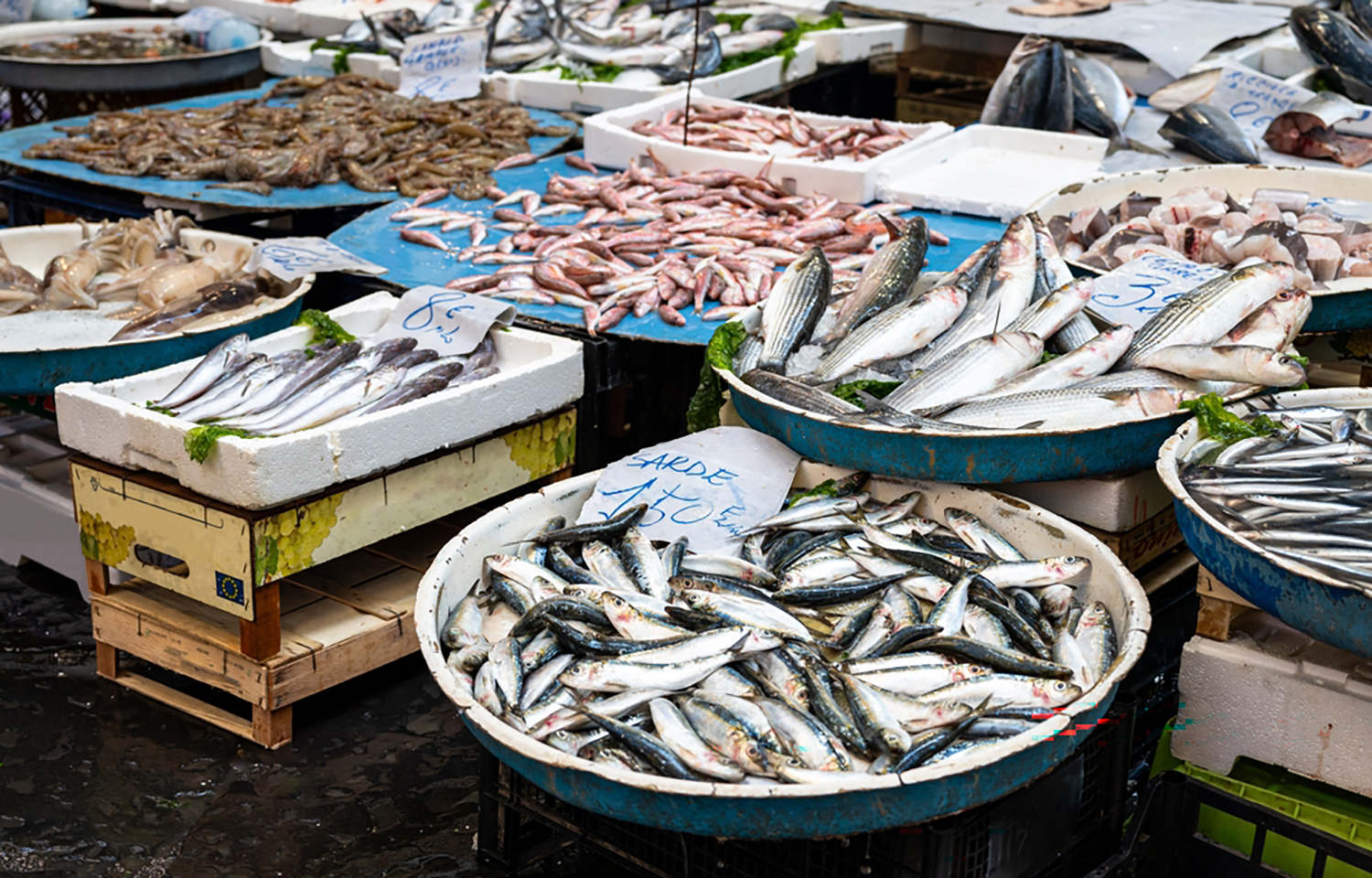
People have also shifted where they buy seafood, with supermarkets and hypermarkets further strengthening their position as consumers' preferred purchasing channels. Traditional fishmongers, open-air markets, and fresh seafood counters have continued to lose market share, with the study attributing this shift to changing shopping habits, labor shortages among specialist retailers, and growing demand for one-stop shopping.
Stakeholders interviewed for the study expressed concerns that the decline of traditional retail channels is reducing consumer knowledge of seafood seasonality, species diversity, and preparation techniques.
Additionally, sustainability considerations are becoming increasingly important to seafood purchasing, particularly among younger consumers. However, EUMOFA researchers also learned that consumers frequently feel overwhelmed by the volume and complexity of sustainability information available when purchasing FAPs.
