




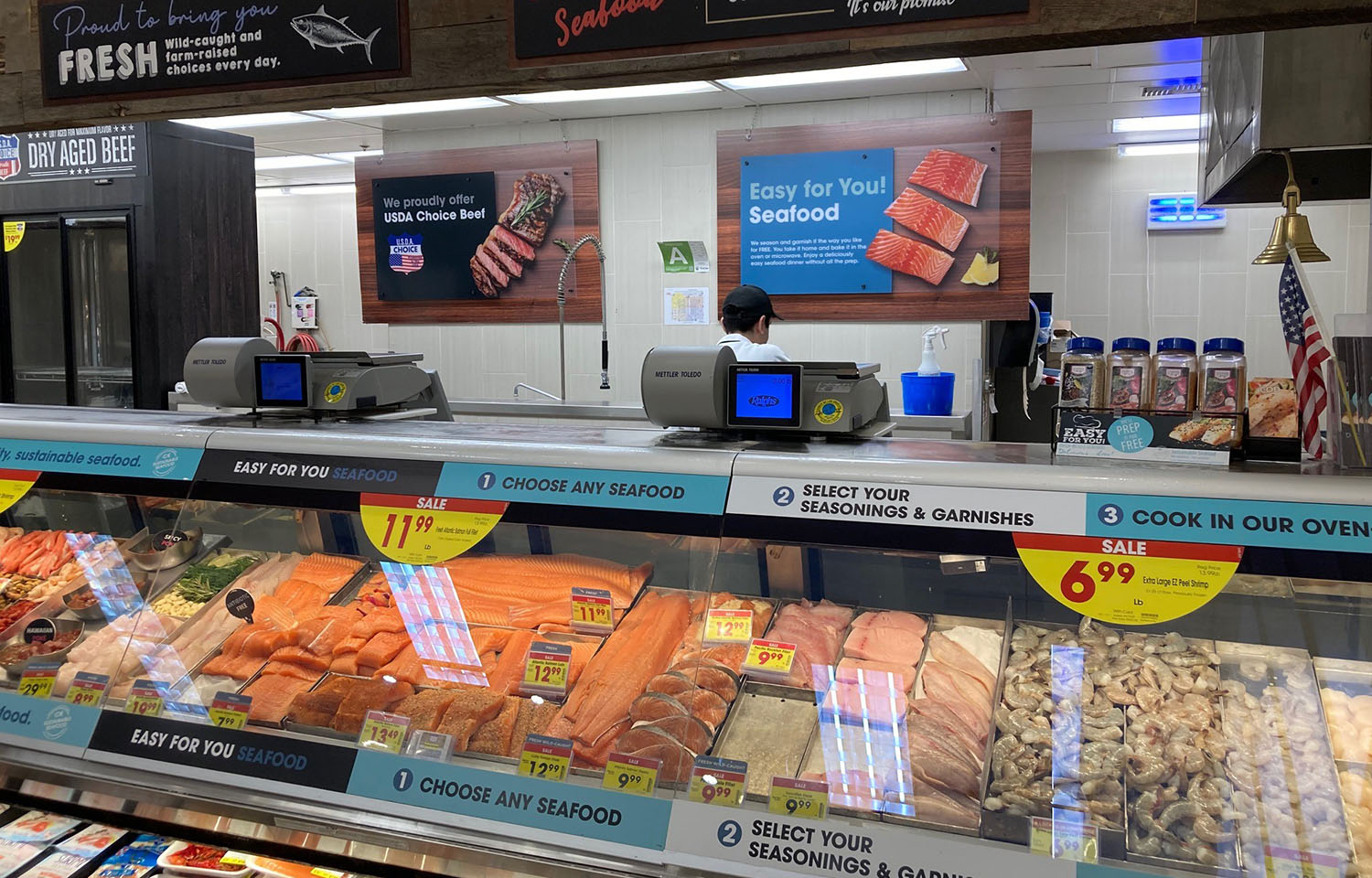
Average seafood retail prices dropped again in May 2024, continuing a steady decline in recent months. But it was not enough to boost sales, which dropped despite holiday surges from both Mother’s Day and Memorial Day.
Frozen seafood prices dropped 3.6 percent year over year in May, the largest decrease by category across the seafood retail landscape, but sales of frozen seafood by value dipped 4.6 percent to USD 738 million (EUR 687 million), according to Circana data analyzed by Lakeland, Florida, U.S.A.-based food research firm 210 Analytics.
Fresh seafood prices declined 1.4 percent, and sales by value fell 3.1 percent to USD 820 million (EUR 764 million). However, the shelf-stable and ambient seafood category saw sales increase 2.2 percent to USD 310 million (EUR 289 million), with prices dropping down 2.2 percent.
American consumers continue to react to the residual impact of rising inflation over the past year, according to Chuck Anderson, the vice president of operations and partner at Dallas, Texas, U.S.A.-based Certified Quality Foods.
“Shoppers are being squeezed by inflation and have continued to cut back on seafood – one of the grocery store's most-expensive food options,” Anderson said.
210 Analytics Principal Anne-Marie Roerink said despite seafood price deflation, consumers are comparing the price of fresh seafood – USD 9.49 (EUR 8.85) per pound on average as of 31 May, according to Circana – with the relatively cheaper average per-pound prices on beef at USD 6.73 (EUR 6.28), pork at USD 3.22 (EUR 3.00), and poultry at USD 3.08 (EUR 2.87) per pound.
“The deflation in many of the large fresh and frozen commodities means having to sell more volume to drive dollar sales,” Roerink said.
Crab sales dropped 9.7 percent, tilapia sales were down 8.7 percent, fresh shrimp sales decreased 5.9 percent, and salmon sales fell 2.8 percent in May, according to the Circana data.
A bright spot in May for U.S. retailers came on Mother’s Day, which took place 12 May. Fresh seafood sales for the week ending 12 May hit USD 181 million (EUR 169 million), whereas the other weeks of May averaged between USD 155 million (EUR 144 million) and USD 160 million (EUR 149 million), according to Circana and 210 Analytics.
However, the retail surge was not as big as last year, with fresh seafood sales declining for the week of Mother’s Day compared to the 2023 holiday. Roerink said many Americans likely chose to spend money on eating out for the holiday.
“I would expect that Mother’s Day is a big reason for consumers to celebrate mom with restaurant meals,” she said. “We may have seen more of the premium meal dollars leak to foodservice.”
Consumers who celebrated at home likely opted for less-expensive proteins to balance their budgets, Roerink said.
Still, there were some bright spots in fresh seafood, as fresh cod sales jumped 10.2 percent and catfish sales grew 4.8 percent by value.
“Whitefish, which offers a more favorable price point but also a very mild flavor profile and versatility for dishes ranging from fish tacos to fish fries, seems to be popular at the moment,” Roerink said.
To try and trigger a sales turnaround as summer rolls on, Roerink said retailers should shift promotions away from focusing on price deflation toward promotions based on availability. Retailers that can be more flexible running promotions based on availability and pricing “have an opportunity to drive volume with eye-catching displays and price points,” Roerink said.
“In a way, that’s what restaurants do, where you’ll often see menus adapted based on market availability,” she said.
