


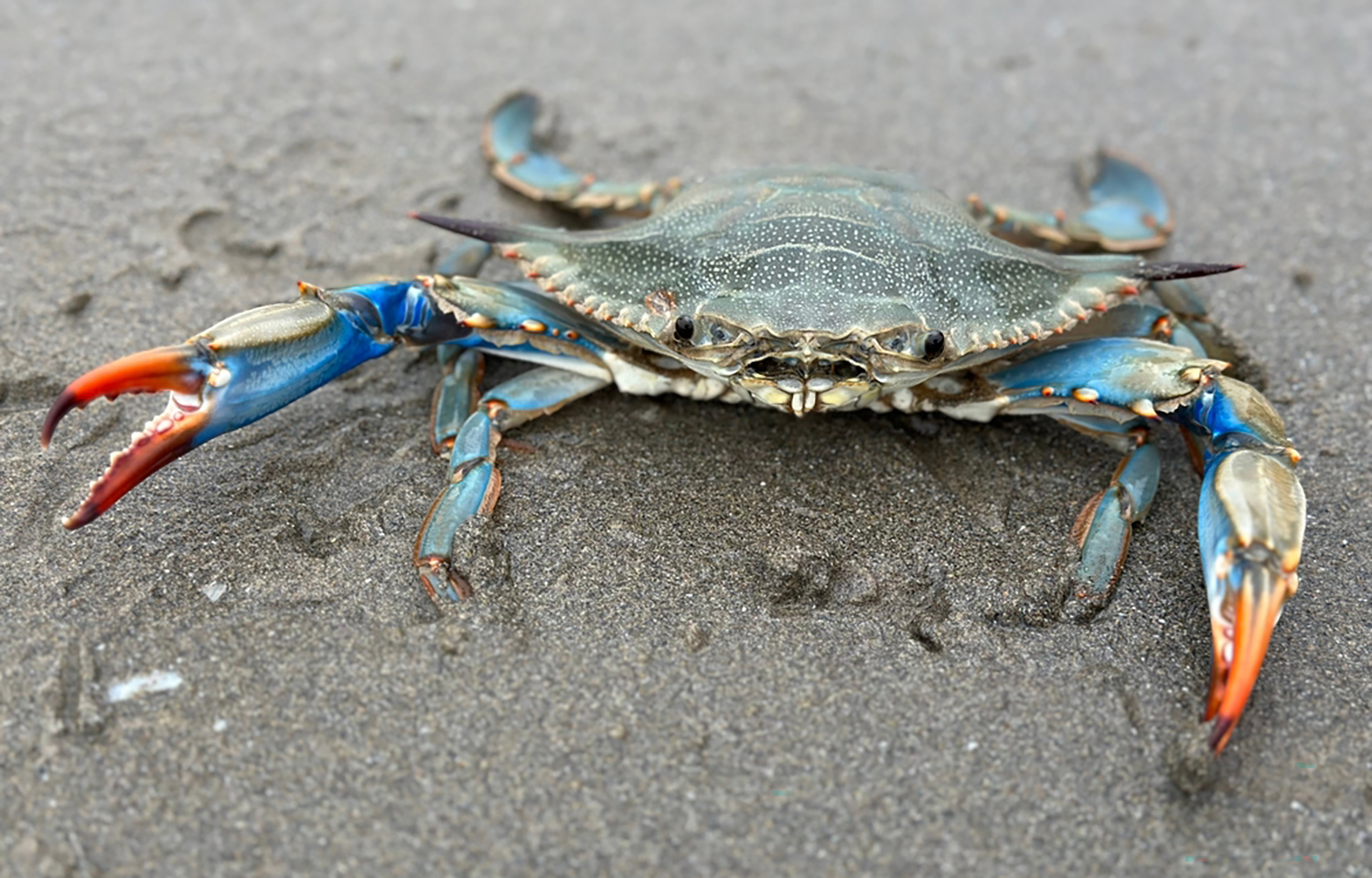
Seafood certification program Friend of the Sea, along with the World Sustainability Foundation (WSF), has launched an initiative to support Italian fishing and aquaculture businesses affected by the spread of invasive blue crab.
The “Blue Crab and Responsible Fishing” initiative invites seafood businesses, researchers, and other stakeholders to submit proposals for projects addressing the environmental and economic consequences of the species’ expansion along Italy’s Adriatic coast.
Citing governmental figures released in August, Friend of the Sea said the scale of the problem is particularly evident in the Italian region of Emilia-Romagna, where the spread of blue crab has contributed to more than 70 percent declines in the production of market-sized clams in some areas.
It further explained the crisis has placed significant pressure on various shellfish farming businesses and fishing communities, prompting calls for solutions that protect biodiversity while helping affected operators maintain their livelihoods.
Among several solutions to the issue, commercial utilization of blue crab is among the opportunities being explored. The crustacean is already consumed in several international markets and, because of its exploding prevalence, is attracting growing interest in Italy, where restaurants and distributors are beginning to promote it.
Developing dedicated processing and marketing supply chains could also provide additional income for fishers affected by the decline in traditional shellfish production, but Friend of the Sea and WSF stressed that commercial exploitation must remain consistent with the overall objective of containment.
“This is a central concern,” Friend of the Sea Founder and Director Paolo Bray told SeafoodSource. “Our objective is to reduce the damage caused by an invasive species while supporting affected coastal communities. Commercial use can help offset the cost of removal, but sales alone cannot demonstrate environmental success.”
Projects receiving support will, therefore, be expected to demonstrate that their business models remain compatible with declining local blue crab abundance.
“We would not support deliberate breeding, stocking, release, or introduction into new areas or arrangements intended to maintain wild populations for future supply. Commercial plans should recognize that successful containment could reduce the volume available,” Bray said.
Other proposed practical safeguards against the worsening issue include the use of locally appropriate selective fishing gear, monitoring fishing effort and non-target catch, and procedures to prevent crabs escaping during landing, storage, transport, and processing. Traceability infrastructure would also be required, according to Friend of the Sea, with records identifying the species, capture area and date, fisher or vessel, gear used, quantities landed, and subsequent buyers, among other key information.
These expectations would need to translate into project-specific conditions with relevant technical expertise, Bray said.
The initiative’s first-phase fundraising target is EUR 50,000 (USD 55,967), with the ambition of supporting up to three projects.
“The final number and scale will depend on the quality of proposals, their funding requirements, and the resources secured,” Bray said.
Depending on individual proposals and available resources, support could include direct financial contributions, assistance in identifying external funding partners, and access to relevant researchers, technical specialists, and businesses.
Friend of the Sea, the certification program of the World Sustainability Organization (WSO), explained that participation in the initiative would not itself result in securing certification; however, the certification body said it would be willing to assess certification pathways for eligible fishing, processing, and distribution activities involving blue crab, all of which would remain subject to compliance with applicable standards and independent audits.
Alongside technical and commercial projects, the initiative aims to help small-scale operators overcome barriers to independent certification, including through schemes other than Friend of the Sea where relevant. For businesses with limited resources, contributions toward audit and certification costs may be considered, potentially covering the first year if funding allows.
The aim is to complete the initial project selection by 31 December, with implementation expected to begin from February 2027 onward. Both milestones are subject to funding, necessary authorizations, and individual project readiness.
Those overseeing the initiative aim to agree upon a proportionate monitoring framework for each project and establish a baseline, measurable objectives, and a reporting timetable at the outset.
Bray said the intention is to use existing data and work with scientific partners wherever possible, keeping reporting requirements manageable for smaller operators.
“The test is whether an intervention demonstrably reduces crab pressure, bycatch, or damage while improving the position of affected businesses,” he said. “Targets would be set project by project once baseline data are available, and the findings would guide whether an approach should be continued, adapted, or expanded.”
