





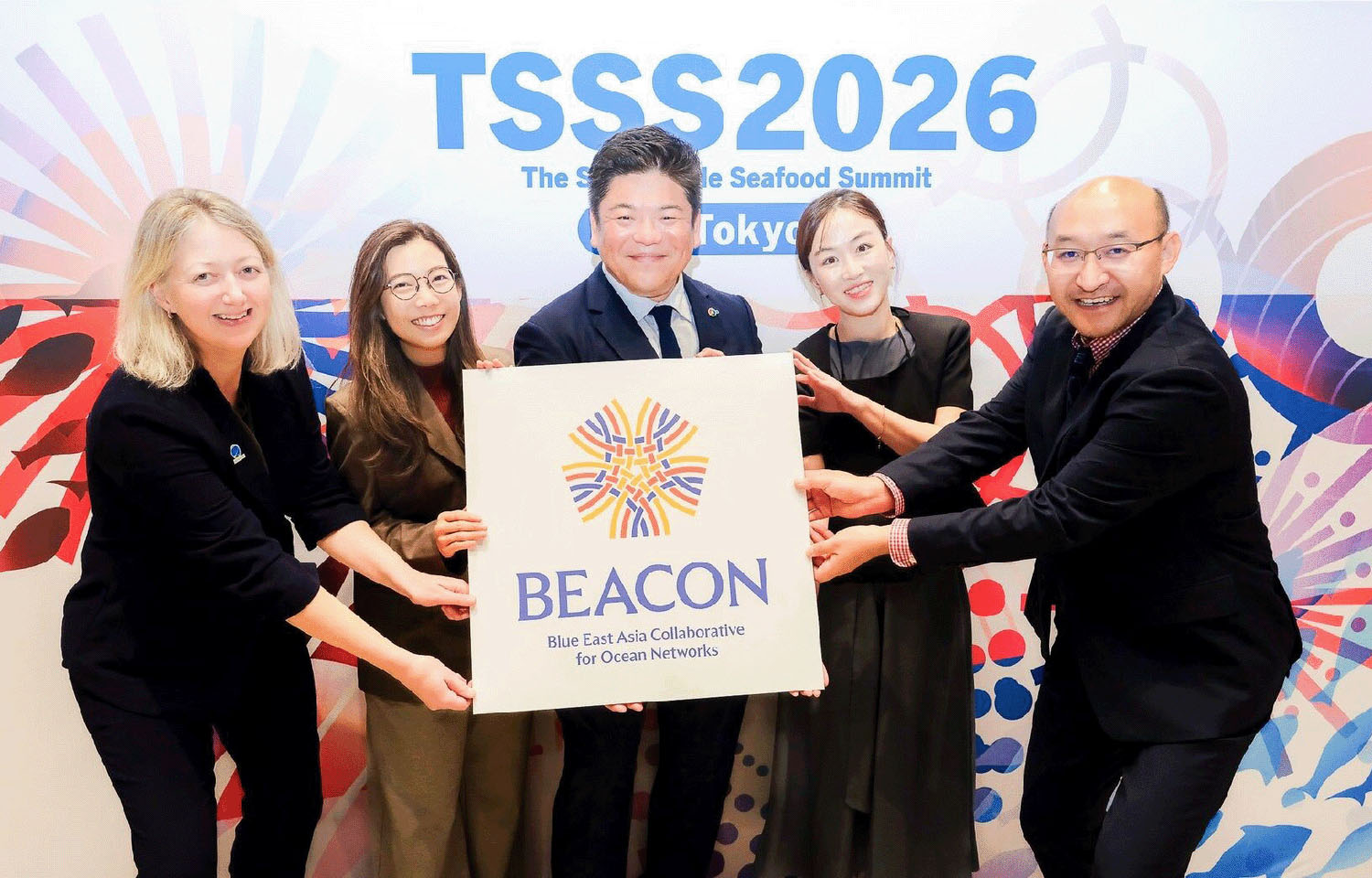
Five ocean conservancy and seafood organizations recently joined together to launch the Blue East Asia Collective for Ocean Networks (BEACON), aiming to better connect sustainability efforts across one of the world’s top seafood-producing regions.
The newly created group – founded by the Qingdao Marine Conservation Society, the Hong Kong Sustainable Seafood Coalition, seafood sustainability nonprofit Ocean Outcomes, Korean ocean conservancy think tank DearOcean, and Japanese seafood consulting firm Seafood Legacy (SFL) – is designed to combine local knowledge with regional coordination in an effort to ensure seafood sustainability efforts in East Asia are not carried out in isolation.
“BEACON is not about creating another organization to do the work others are already doing,” Qingdao Marine Conservation Society President Songlin Wang said. “It is about connecting existing expertise and relationships around shared fisheries priorities so that science, industry engagement, and implementation can work together more effectively across our region.”
This strategy, according to Seafood Legacy CEO Wakao Hanaoka, should help improve the “fragmented” seafood sustainability landscape currently present in East Asia.
“It brings organizations together to align, build on existing expertise, and ensure decisions across the seafood system reinforce one another,” he said.
According to an Ocean Outcomes release, BEACON will aim to advance six areas of work:
- Science and evidence, bringing together relevant research and identifying priority information gaps;
- Seafood supply chains and markets, connecting seafood companies and supply chain actors around sourcing, traceability, due diligence, and supplier engagement;
- Financial risk and engagement, supporting financial institutions with more usable information and indicators for understanding fisheries-related risks;
- Fisheries and aquaculture improvement, connecting producers and other stakeholders with practical pathways to improve fishing and aquaculture practices;
- Ecosystem approach to fisheries governance, helping communicate evidence and implementation insight into appropriate scientific and regional management processes; and
- Monitoring and learning, tracking collective progress and identifying lessons to inform future work.
By focusing on these six areas of work, BEACON will try to ensure improvements in seafood sustainability holistically involve value chain actors and, therefore, flow naturally throughout the region’s supply chain.
“Producers need clear, credible pathways to improve, while buyers and financial institutions need better information to recognize progress and make informed decisions,” DearOcean Founder Woojin Chung said. “BEACON will work to connect these needs, helping strengthen the relationship between responsible action, credible evidence, and market and financial decisions.”
Challenges facing the new initiative are myriad.
For instance, the Hong Kong Sustainable Seafood Coalition, which helped organize BEACON, has been one of several entities that have called on Hong Kong authorities to initiate urgent action to improve the traceability of local seafood trade, citing “systemic” failings and inaction on the part of the local government.
