




The Irish government is drafting legislation aimed at ending a loophole that allowed aquaculture facilities to indefinitely operate under an expired license while renewals were in the process of being facilitated.
The proposed legislation set to go before Irish Parliament would repeal Section 19A(4) of the nation’s Fisheries Amendment Act of 1997, under which an aquaculture licensee that had applied for a license renewal could continue to operate after its license had expired, pending a decision by the government on the renewal application.
“This is an important and overdue reform,” said Tony Lowe, a spokesman for Friends of the Irish Environment (FIE), an Irish conservation NGO.
Cases of firms taking advantage of this loophole include salmon-farming firm Mowi, which was controversially allowed to continue operating a farm in Southwest Ireland even though its license had been canceled.
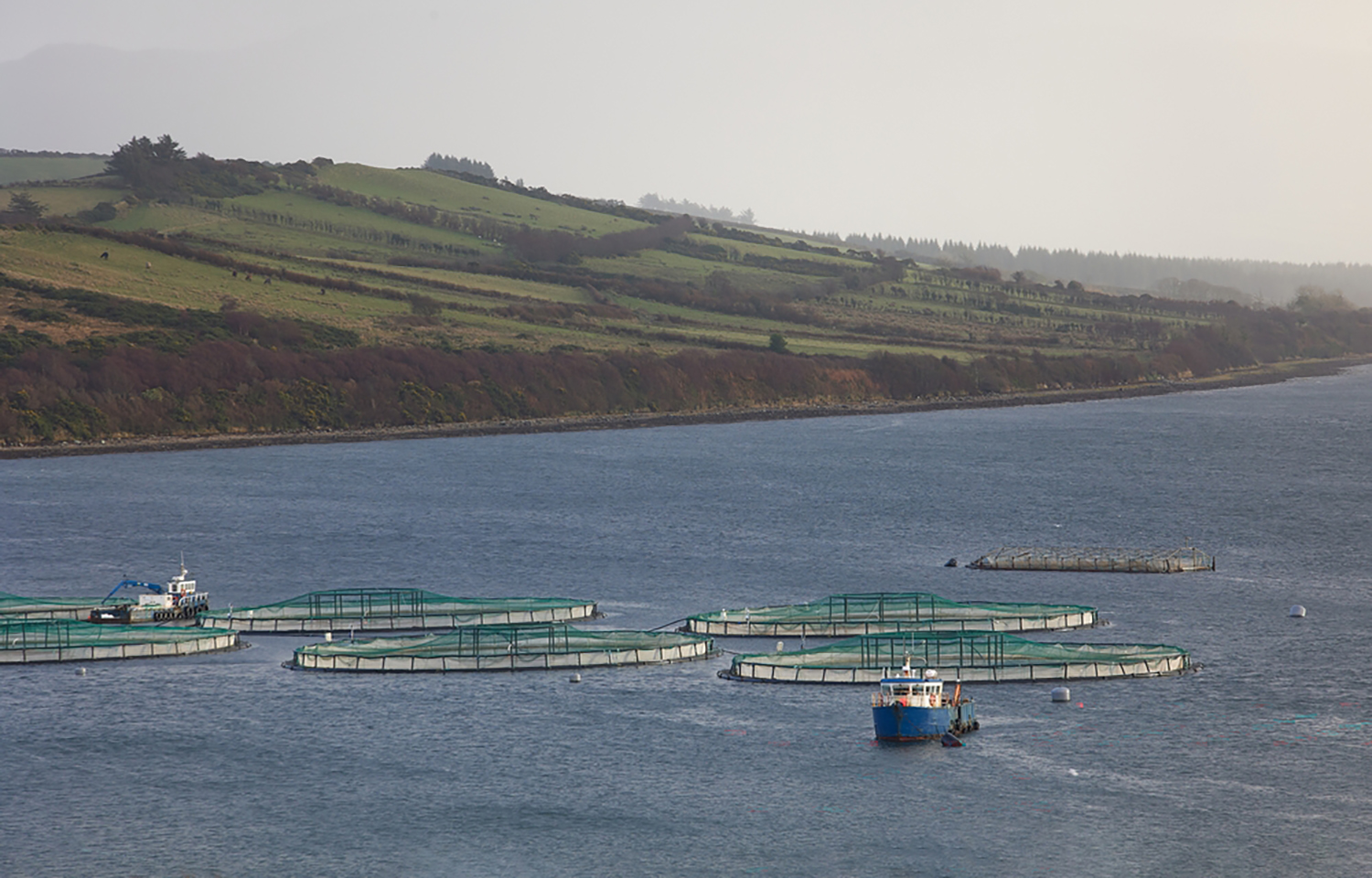
Ireland’s Ministry of Agriculture, Food, and the Marine canceled Mowi’s license in 2019 over breaches of a 500-ton annual harvest limit at the firm’s Deenish site, located in Ballinskelligs Bay in County Kerry. Mowi Ireland then appealed the decision to Ireland’s Aquaculture License Appeals Board (ALAB), which in September 2025 reversed the ruling and permitted the operation to continue.
Operations were allowed to continue at Deenish, despite the original ruling, throughout the appeal process under the aforementioned loophole.
FIE took legal action against Mowi’s Deenish site by asking Ireland’s High Court to reinstate its 2019 decision, a request that was granted permission to proceed.
Though FIE has largely welcomed the bill, Lowe clarified that it contains a “saver” provision that would allow the arrangement to remain available for applications made before the new law takes effect, unless the government determines that continuing the operation has the potential to have significant or adverse environmental effects.
Therefore, though the loophole would be removed for new license applications, it would allow the many applications still in the country’s backlog to take advantage of the arrangement.
“Repealing indefinite continuation for future cases is welcome, but the reform will fail if the old system is retained for the very backlog of historic licenses which made reform necessary. One such application, for example, has been outstanding for 18 years,” Lowe said.
Last year, Michael Mulloy, an ALAB member, told Irish Parliament there were 295 outstanding applications for either new licenses or renewals, all of which were severely delayed.
Mulloy called for the Galway, Ireland-based Marine Institute, which conducts the assessments needed for a company to receive or renew a license, “to be better resourced” – a call echoed by Finian O’Sullivan, the chair of the aquaculture section of the Irish Farmers Association (IFA).
When asked about the new legislation, O’Sullivan told SeafoodSource that IFA Aquaculture had just started to review the draft and had no comment on the document as of yet.
However, he referred to his group’s statement at a parliamentary fisheries committee meeting in January at which he called for adequate staffing at state agencies to clear the backlog of applications for renewals and new licenses. A functioning licensing system would, O’Sullivan said, unleash new investment and allow Ireland to exploit “competitive advantages” it enjoys in aquaculture.
He also continued his calls for a single new piece of legislation to govern the aquaculture industry that would consolidate various laws and amendments that currently govern the sector, as well as a 20-year license for fish and shellfish farmers in order to lend certainty to producers and attract investment.
“Our main focus with regards to aquaculture legislation is a full reform of the legislation, introducing a separate piece of legislation to cater for aquaculture development in Ireland,” he told SeafoodSource.
Meanwhile, O’Sullivan said he expects the draft legislation to take some time to undergo proper scrutiny before becoming law.
“While we welcome any effort to reform the legislation governing aquaculture, we recognize that these proposed amendments are at the first non-legal draft stage of a five-stage process in the legislative procedure and have a few hurdles to jump yet with likely amendments being made to the text before the [Irish parliament] votes on it,” he said.
Lowe said elsewhere in the draft legislation, proposed new enforcement powers, including inspections, compliance notices, and powers to restrict operations, “are potentially valuable” but must “be matched by clear powers to require reduced biomass, destocking, fallowing, and a halt to restocking where environmental risk or non-compliance demands it.”
