



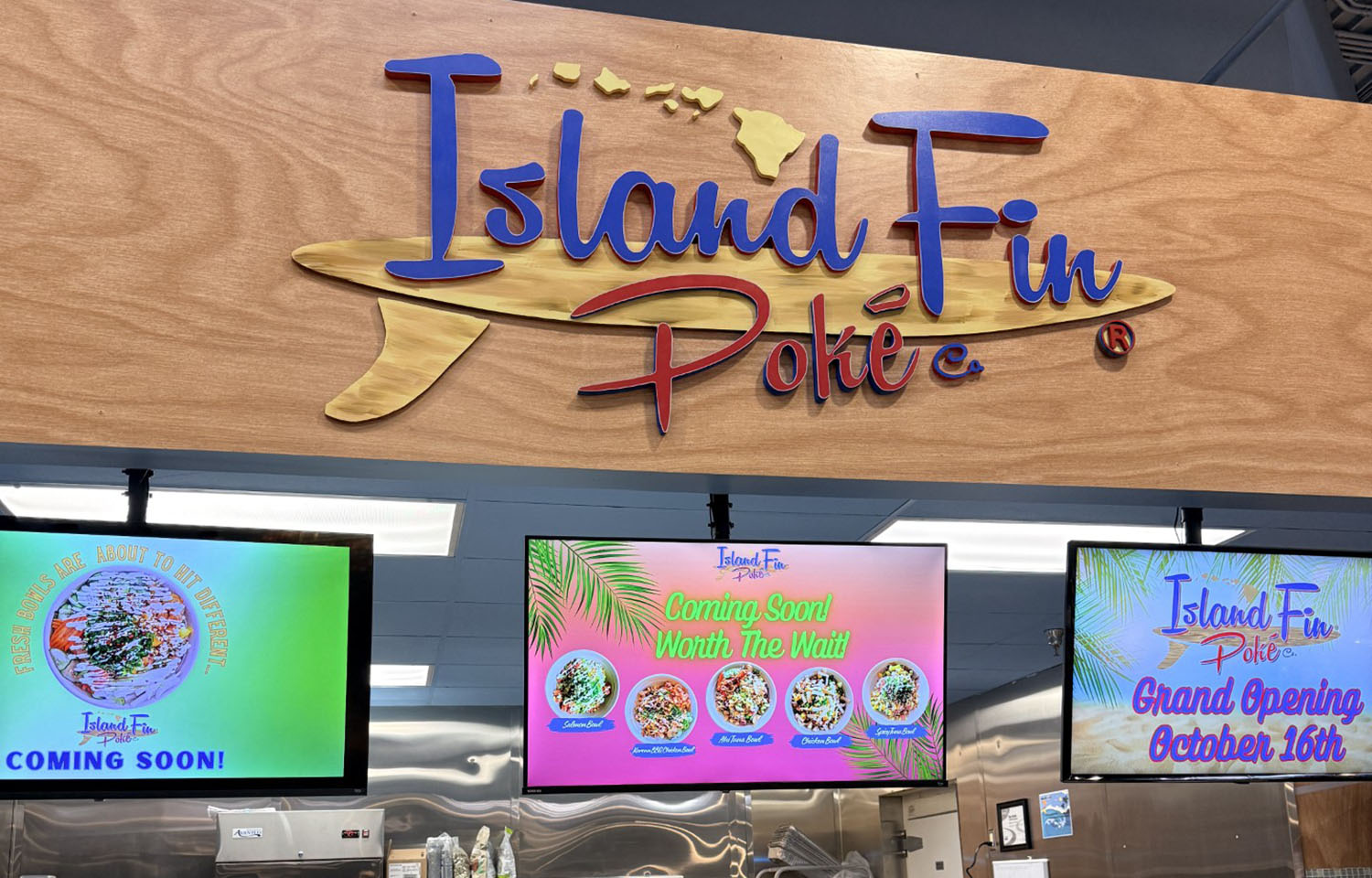
Orlando, Florida, U.S.A.-based Island Fin Poké Co. recently opened its first location within a grocery store, launching its 15th restaurant nationwide inside a Price Cutter in Springfield, Illinois.
The newest location, joining Island Fin Poké’s 14 other restaurants spread across six states, “brings a unique dining option to the local food scene, making Hawaiian-inspired cuisine more accessible to Springfield residents,” the company said in a release.
“By bringing its signature poké bowls directly into Price Cutter, Island Fin gives shoppers the opportunity to enjoy a fresh, made-to-order meal while picking up their groceries, combining convenience with the flavors and quality the brand is known for,” it said.
As for Price Cutter, which is operated by employee-owned regional grocery company Pyramid Foods, the addition of a poké restaurant to its Springfield store adds to its “evolving in-store dining experience,” which also includes a Starbucks coffee location, a deli, and a bar.
“Bringing Island Fin to our Springfield Price Cutter gives our customers something new to enjoy while making their shopping experience even better,” Pyramid Foods COO Richard Gunn said. “We want our store to be a place where people can find more than just their groceries, and this gives them another reason to stop in, enjoy a delicious meal, and experience something a little different.”
Island Fin Poké CEO Mark Setterington told SeafoodSource that the move was born out of necessity, with rising costs forcing the brand to innovate.
“The last couple of years have been tough on small restaurants. One of the reasons that led us to the grocery store was that we were looking at more non-traditional opportunities,” he said.
Though the company’s suppliers “have been pretty good to us and haven’t raked us over the coals with price increases” amid fluctuating tariffs and high fuel costs, Setterington explained that landlords of standalone restaurants are raising rent by as much as 30 percent annually in certain locations; conversely, at Price Cutter, Island Fin’s space is only a few hundred square feet, features shared refrigeration space with the retailer’s existing infrastructure, and requires very little of its own equipment.
“We really think the grocery store is the way to go,” Setterington said, adding that since its opening on 16 October, reception has been great, with many guests returning two or three times in the first week.
He specifically pointed to the quality and affordability of Island Fin’s build-your-own poké bowl experience for generating and maintaining customer loyalty.
Proteins offered by the brand include coho salmon sourced from Bellevue, Washington, U.S.A.-based Seattle Shrimp & Seafood, along with ahi tuna from New York City-based Mark Foods. Chicken, shrimp, and tofu round out the protein options, and a variety of vegetables, toppings, and sauces are also available for consumers to top off their bowls.
Island Fin has generally been able to keep prices on its bowls steady, Setterington said.
Customers at most locations can order a signature bowl for around USD 11.00 (EUR 9.92), or USD 14.99 (EUR 13.52) for a “three-scoop” bowl with chips, a brownie, and a soda.
“That’s a value. You can come in two to three times a month, instead of once a month,” Setterington said. “I would rather make 10 percent less on 20 percent more bowls than sell 20 percent fewer bowls.”
The value and convenience offered by Island Fin align with what many modern shoppers are looking for in a grocery store visit, according to foot traffic analytics platform Placer.ai.
According to the platform, visits to quick-service restaurants (QSRs) have largely declined around lunchtime, with grocery stores, instead, claiming “an increasingly large share of short midday visits (i.e., visits lasting less than 10 minutes between 11 a.m. and 3 p.m.).”
“While some of QSR’s relative decline in short lunchtime visits could be due to discontent with rising fast-food prices among highly value-conscious consumers, it also suggests that a growing share of consumers see grocery stores – where they can pick up ready-to-eat items – as convenient options during the lunch rush,” it said in a January report.
If the Springfield location continues to succeed, Setterington said Pyramid Foods may look to add Island Fin locations to five or 10 additional stores.
