
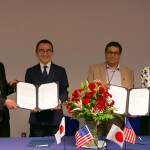

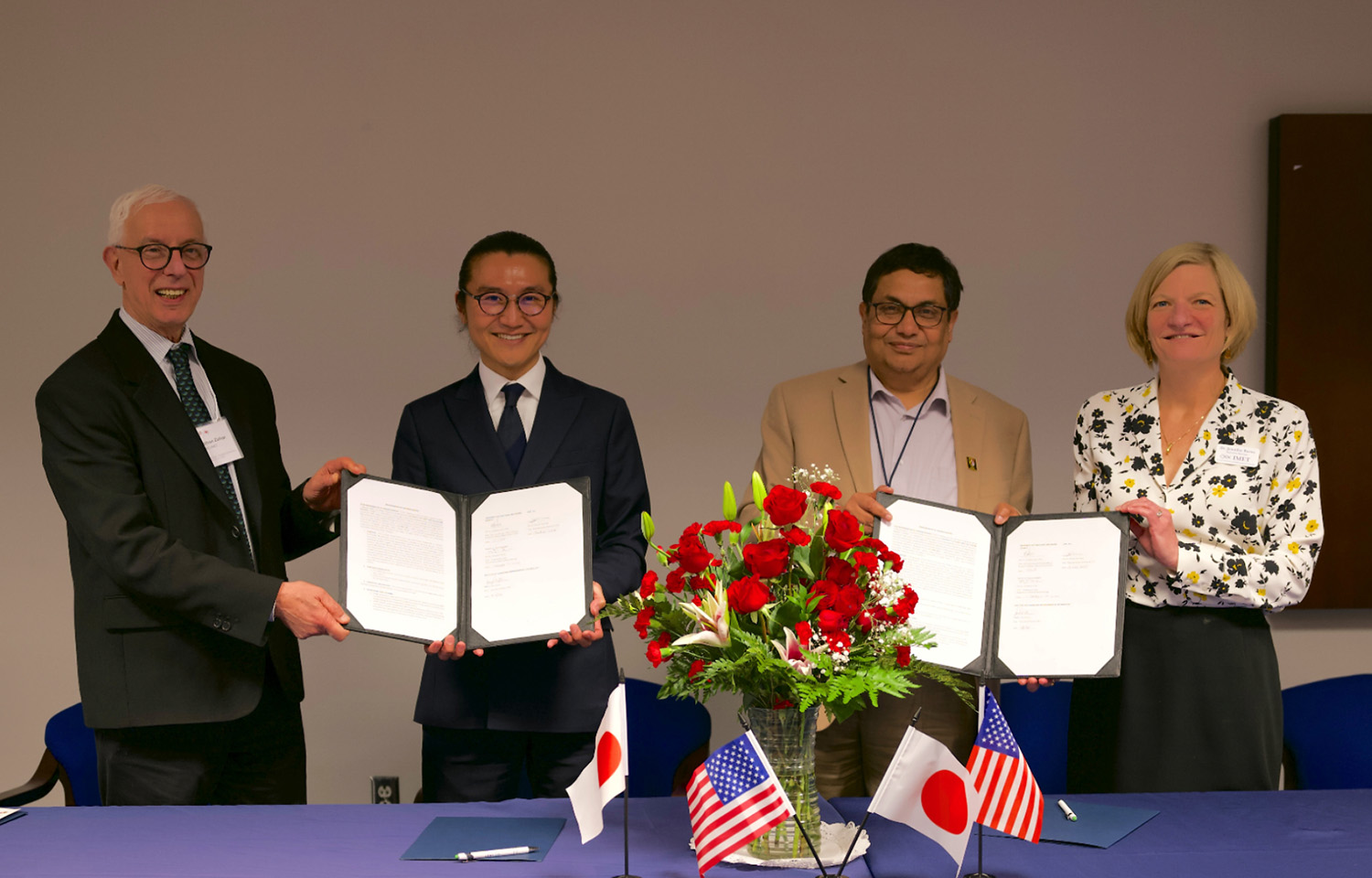
ARK, a company based in Japan that is developing modular recirculating aquaculture systems (RAS), has signed a memorandum of understanding (MoU) with the University of Maryland Baltimore County (UMBC) Institute of Marine and Environmental Technology (IMET).
Under the new agreement, the two entities will collaborate on research, technology development, and demonstration of grouper hatchery production in Baltimore, Maryland, using ARK’s RAS technology. The two groups said the partnership will also explore establishing grouper hatchery facilities across the state of Maryland and will also examine potential applications of the research in the U.S., Japan, and other markets.
ARK creates small RAS installations, which have already been in use in Japan. Shizuoka Gas, a gas distribution company in Shizuoka Prefecture, Japan, trialed the “ARK-V1” to cultivate yellowtail grouper in a small 10-meter square cube inside an urban area.
The university and ARK said they have been evaluating the potential application of ARK’s modular RAS to support stable grouper hatchery production and have discussed potentially establishing the first commercial grouper hatchery in the U.S.
“This MoU establishes a groundbreaking partnership between global aquaculture leaders at UMBC/IMET and in Japan to overcome critical bottlenecks in farming the grouper, one of the most heavily fished and high-demand marine species,” Yonathan Zohar, the chair of the IMET, said. “By closing the grouper's life cycle and enabling year-round juvenile production, this initiative will make commercial hatchery-based grouper aquaculture viable. Integrating basic and translational research across academia and industry, our work will culminate in the establishment of the world's first large-scale grouper hatchery in Maryland."
ARK Co-Founder and CEO Yosuke Kurihara said the MoU hopes to solve a challenge faced by both the U.S. and Japan, as both countries import the vast majority of the seafood they consume.
“Under this five-year MoU, we see tremendous potential in combining ARK's RAS technology with grouper hatchery production here in Baltimore. Grouper is prized as a delicacy across many food cultures, from Japanese sashimi to Chinese and Middle Eastern cuisine,” Kurihara said. “By working with IMET to build commercial hatcheries and train future talent, I hope this fish will serve as a bridge, fostering strong, warm relationships between local communities in the U.S., Japan, and around the world.”
