





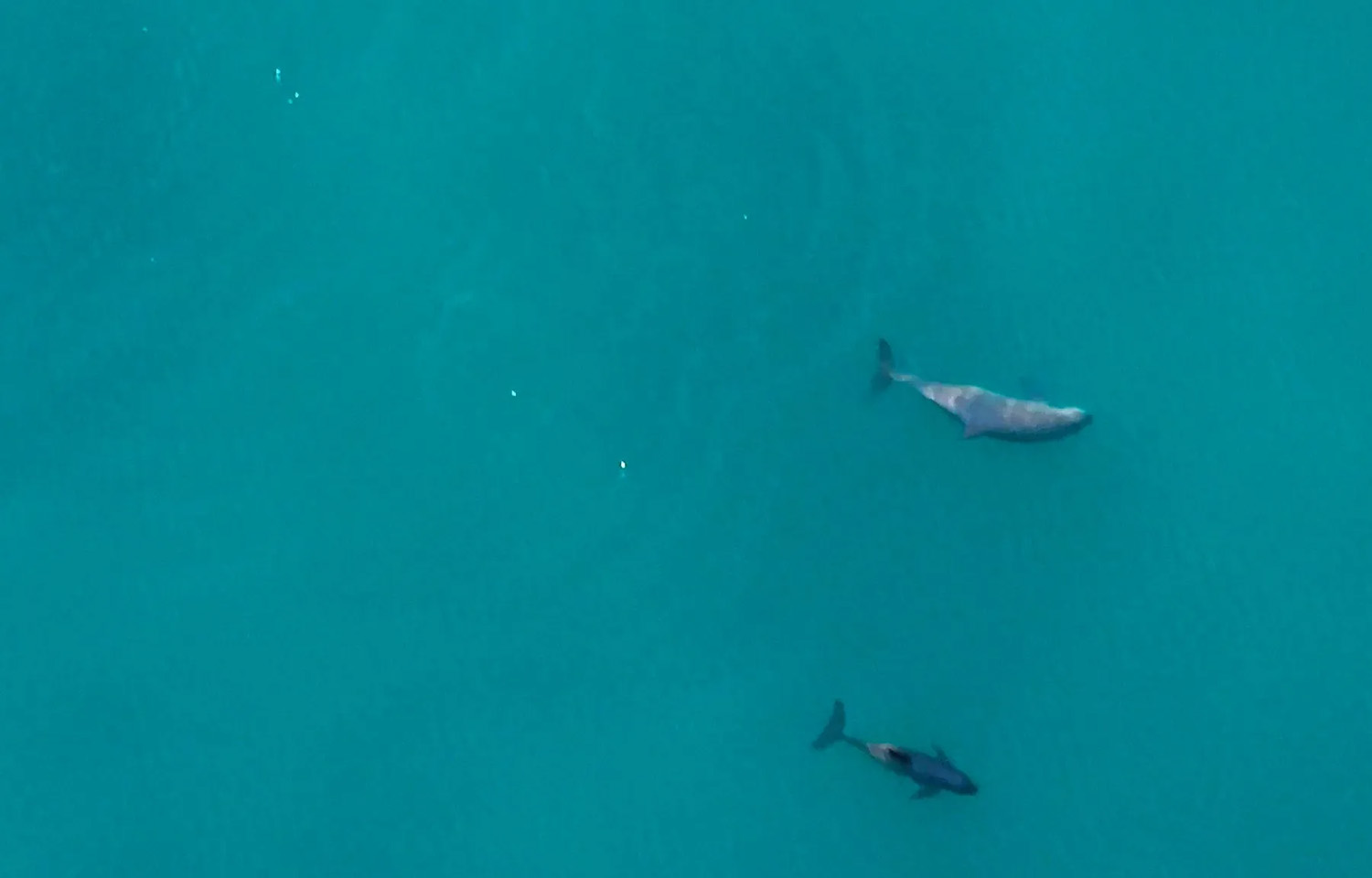
The Mexican government has shrunk the area covered by a gillnet ban put in place to protect vaquita, an extremely endangered porpoise that lives in the Upper Gulf of California.
“Mexico’s new regulations will expedite the extinction of the vaquita. The rules entirely contradict what should be done to save a critically endangered species,” Animal Welfare Institute Senior Wildlife Biologist DJ Schubert said in a release. “Rather than strengthening enforcement and retaining an ample protected area for the species, the new regulations will protect vaquita in only a fraction of its historic range and allow deadly gillnets to be used in vaquita habitat, potentially jeopardizing the future existence of the species. Mexico should reverse these rollbacks, strengthen on-the-water enforcement, and maintain protections that reflect the vaquita’s real, shifting distribution and facilitate population recovery.”
The number of vaquita in the wild has diminished rapidly over the last three decades; researchers estimated there were 567 in 1997 but now estimate only seven to 10 individuals remain.
The Mexican government has been frequently criticized by conservation organizations for failing to adequately protect the porpoise. The Secretariat to the Convention on International Trade in Endangered Species of Wild Fauna and Flora (CITES) sanctioned the government in 2023 for not cracking down on illegal fishing activities that endanger the few remaining vaquita, noting that fishers regularly ignore the few rules in place.
The main government protection in place is the 2020 Gillnets Order, which bans gillnet usage around the vaquita's known habitat. Earlier this year, however, the Mexican government signaled its intent to shrink the area covered by the ban, with the Intergovernmental Group on Sustainability in the Upper Gulf of California (GIS) claiming the change would help Mexico’s commercial shrimp and clam harvesters. The government said its decision is supported by visual and acoustic monitoring of vaquita populations that took place between May and September 2025.
Conservation groups say the move reduces the area covered by the gillnet ban by 86 percent compared to the original 2020 protection.
“With only a handful of vaquita left, it’s absolutely shocking that the government is gutting protections rather than stepping up to help these little porpoises,” Center for Biological Diversity Senior Scientist and Mexico Representative Alex Oliver said in a release. “Instead of ramping up enforcement, Mexico is normalizing illegal fishing that the government has been unable or unwilling to stop. These new rules open most of the vaquita’s remaining habitat to the gear that kills them. Vaquitas don’t follow maps, and scientists have repeatedly seen the porpoises outside the only area where the gillnet ban is currently enforced. It’s heartbreaking because if this isn’t reversed, it will almost certainly lead to the vaquita’s tragic extinction, which could’ve been prevented.”
