




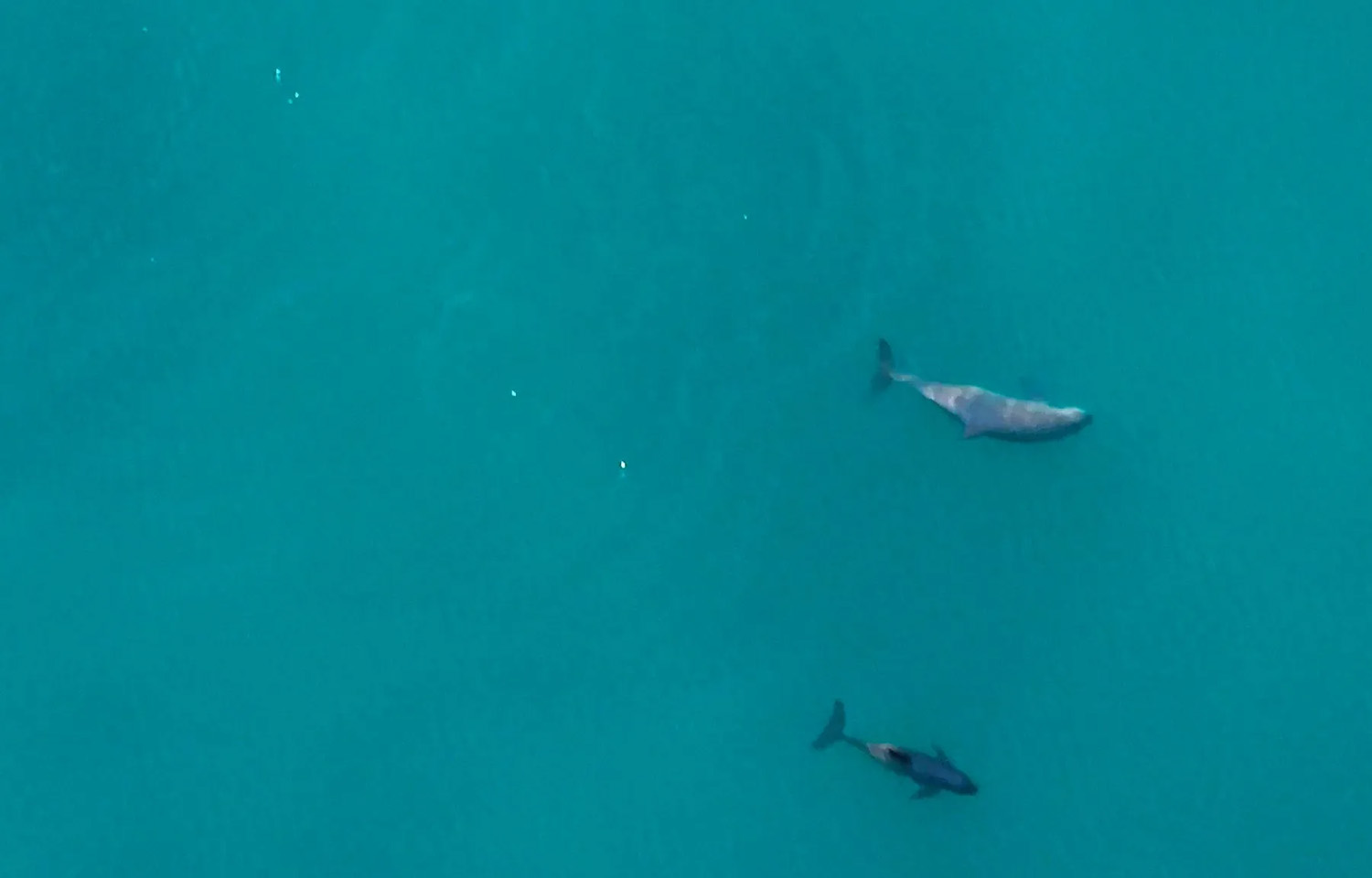
Scientists surveying the Upper Gulf of California for the critically endangered vaquita porpoise have confirmed sightings of between 7 to 10 individuals and the birth of new calves, a slight increase from the 2024 survey, which marked the lowest results ever recorded.
Found only in the Northern Gulf of California off the coast of Mexico, the vaquita porpoise is among the planet’s most endangered species. The population has seen a steady decline since its first survey in 1997, when scientists estimated roughly 567 individuals. By 2024, that number had fallen to just eight – the lowest level ever documented – with no sightings of newly born calves.
This year’s survey results, conducted from May to September 2025, may offer a glimmer of hope. According to Sea Shepherd Conservation Society, scientists recorded between 7 to 10 vaquita porpoises using acoustic and visual monitoring, observing at least one to two calves.
“This monitoring allows us to adjust our work strategy, to reinforce actions in precise areas in order to achieve greater vigilance and protection,” Marina Robles García, Undersecretary of Biodiversity and Environmental Restoration of Mexico’s Ministry of Environmental and Natural Resources, said in a statement. “But it also tells us several things: that the vaquita is still there, that it persists, that the downward trend has not continued, that there are even individuals we had not seen for several years – clearly spending time in other areas where we have not been monitoring – and that it continues to reproduce. The fact that a species continues to reproduce and appears healthy is the best indicator of its life, of its condition as a species, but also the best invitation to maintain our efforts, our hope, and our joint work.”
The survey results come after an international commission accused the Mexican government of not adequately protecting the vaquita from illegal, unregulated, and unreported (IUU) fishing, despite the country’s claims of improved enforcement.
In August, the Commission for Environmental Cooperation (CEC), a body that investigates the enforcement of environmental law under the United States-Mexico-Canada Agreement, released a report claiming that the Mexican government was failing to protect the vaquita from gillnets used by poachers to catch totoaba, a different endangered species that’s highly valued in foreign markets.
“This report confirms a heartbreaking reality. Illegal gillnet fishing is squeezing the last breaths out of the poor vaquita,” Sarah Uhlemann, the international program director at the Center for Biological Diversity, said in response to the report. “Mexico needs to shut down all gillnet fishing immediately and start round-the-clock enforcement throughout the vaquita’s habitat to give these little porpoises even a sliver of hope to avoid extinction.”
Over the years, Mexico has faced international criticism and legal pressure for failing to curb totoaba poaching, seen as the biggest threat to vaquita. In 2023, the Secretariat to the Convention on International Trade in Endangered Species of Wild Fauna and Flora (CITES) sanctioned Mexico for failing to adequately combat illegal fishing. In response, the Mexican government implemented an action plan to combat illegal fishing and protect the vaquita, prompting CITES to lift the sanctions.
In January 2025, the Mexican government announced it had met the goals of its 2023 action plan but was still expanding surveillance to better track illegal fishing. By July, the country said it had installed the first 10 satellite trackers to monitor small fishing vessels, with more than 800 still needed to cover all the small fishing vessels in the area.
After the most recent survey results were announced, Sea Shepherd Conservation Society President and CEO Pritam Singh said the organization will continue its efforts to protect the vaquita.
“Sea Shepherd will continue doing everything possible to save the vaquita,” he said. “We will also continue working with the Government of Mexico, and with our local and international friends and allies, to defend the vaquita’s habitat and take the necessary actions to protect it better.”
