





An international commission has released a report accusing the Mexican government of not adequately protecting the endangered vaquita from illegal, unregulated, and unreported (IUU) fishing in the Upper Gulf of California, despite claims of improved enforcement.
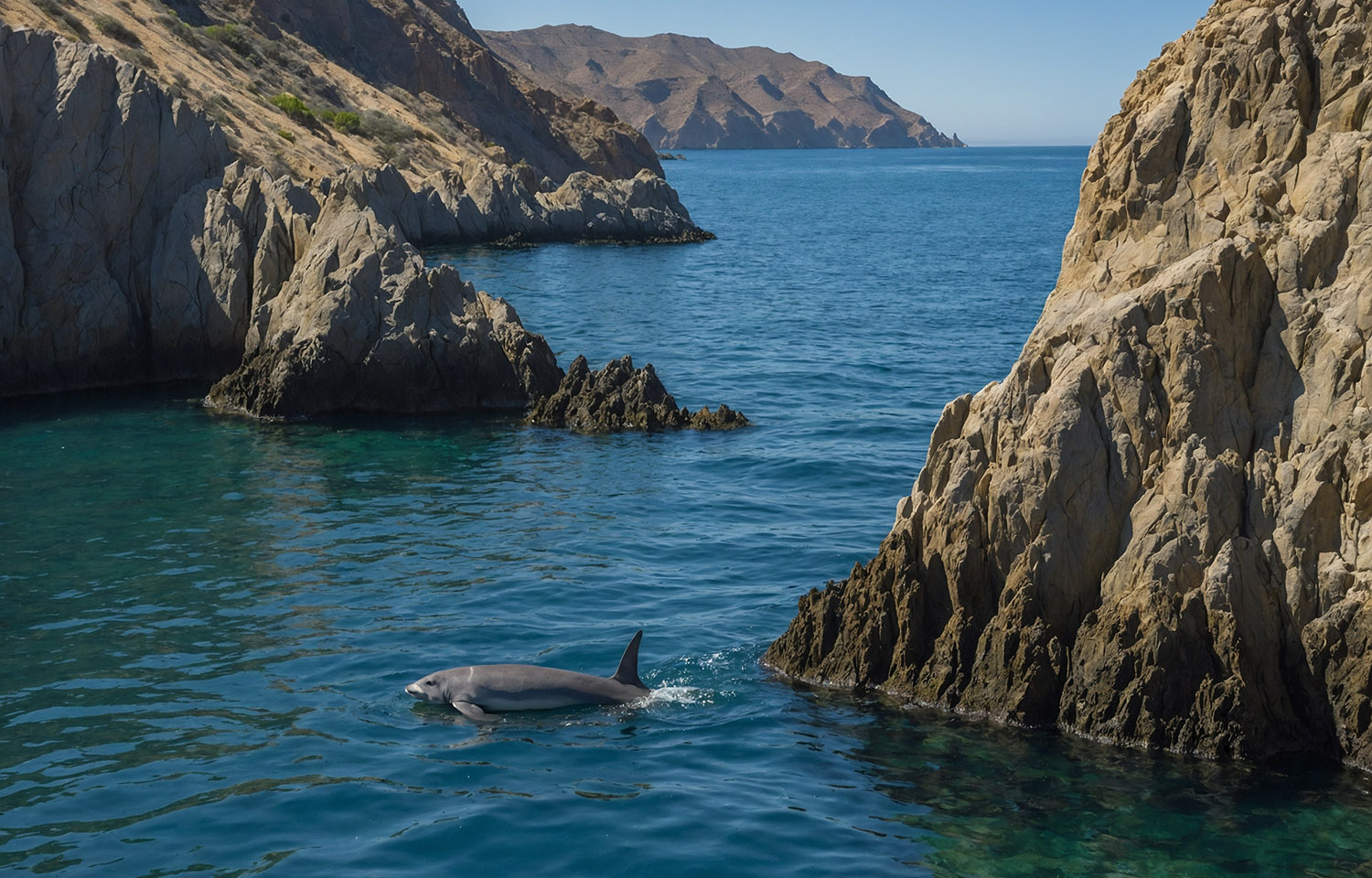
In the report, the Commission for Environmental Cooperation (CEC), a body that investigates the enforcement of environmental law under the United States-Mexico-Canada Agreement, said that the Mexican government is failing to enforce regulations designed to protect totoaba, which is highly valued in foreign markets. The gillnets used by poachers to catch totoaba can also entangle vaquita, an extremely rare porpoise that lives only in the Upper Gulf of California. Scientists estimate that there are fewer than 10 individual vaquita left in the wild.
“This report confirms a heartbreaking reality. Illegal gillnet fishing is squeezing the last breaths out of the poor vaquita,” Sarah Uhlemann, the international program director at the Center for Biological Diversity, said in response to the report. “Mexico needs to shut down all gillnet fishing immediately and start round-the-clock enforcement throughout the vaquita’s habitat to give these little porpoises even a sliver of hope to avoid extinction.”
As the vaquita population has continued to decline, the Mexican government has faced increased pressure to crack down on IUU fishing and implement legal protections for the fish. In 2023, the Secretariat to the Convention on International Trade in Endangered Species of Wild Fauna and Flora (CITES) sanctioned the government for not adequately addressing IUU fishing. CITES eventually lifted the sanctions after the Mexican government adopted an action plan to rectify the issue.
According to CEC, however, the Mexican government was still failing to address IUU fishing properly and protect vaquitas.
“Although the use of gillnets in the VRA (Vaquita Refuge Area) is banned under the 2020 Gillnets Order, experts and fishermen interviewed by the Secretariat indicate that fishing activities continue at similar levels and with the same modalities as before the restrictions,” the report states.
The report also highlighted the use of nets to catch shrimp in the Upper Gulf of California as another threat to vaquita.
In a release, conservation groups called on the U.S. government to use the report to pressure Mexico to better enforce IUU fishing rules.
“This report makes painfully clear what we’ve known for years: Mexico’s failure to enforce its own laws is driving the world’s rarest marine mammal to extinction,” Natural Resources Defense Council Marine Mammal Protection Project Director Michael Jasny said in a statement. “There’s no time left for half measures. The U.S. must use every tool under the USMCA to hold Mexico accountable and stop the illegal fishing that’s pushing the vaquita over the edge.”
Some of the changes being implemented by the Mexican government took place after the secretariat completed interviews for the CEC report in September 2024. In January 2025, the Mexican government declared it had completed the objectives of the 2023 action plan but it was still rolling out broader surveillance tools designed to better monitor for IUU fishing. In July 2025, the government installed the first 10 satellite trackers designed to monitor small fishing vessels to ensure compliance. The government still needs to install more than 800 devices to cover all the small fishing vessels in the area.
The Mexican government has also highlighted the amount of IUU fishing gear seized as evidence of improved enforcement and has partnered with the Sea Shepherd Society to remove illegal gillnets.
Conservation groups say stronger action is still needed.
“Stronger actions through the USMCA remain our last chance at giving the near-extinct vaquita any glimmer of hope at survival,” CT Harry, a senior ocean policy analyst with the Environmental Investigation Agency, said in a statement. “With the Mexican government’s continued failure to prevent illegal gillnet operations, time is running out before these unique animals take their final breaths.”
