


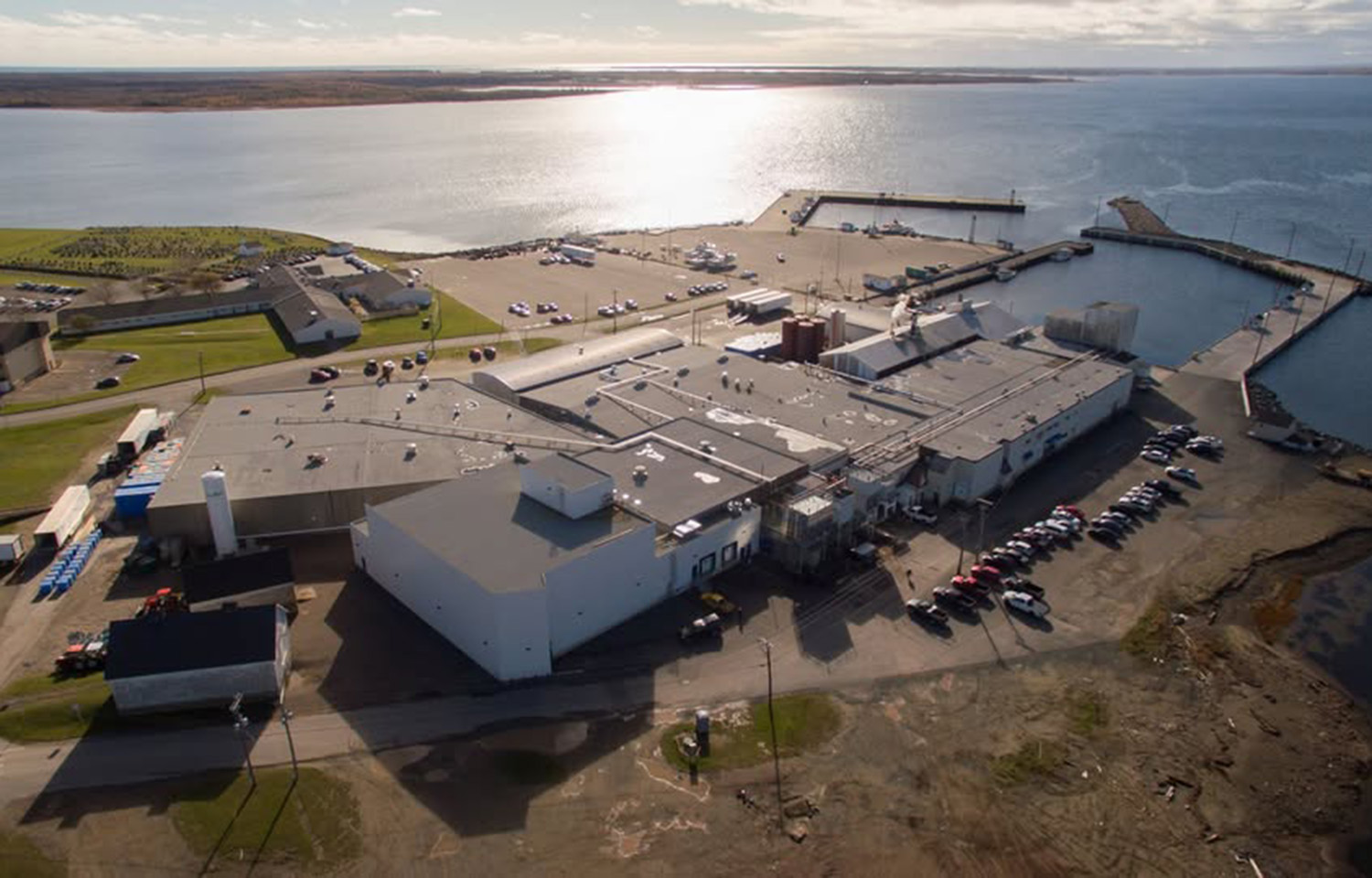
A major seafood processor on the Acadian Peninsula in New Brunswick, Canada, has filed for creditor protection, seeking time to restructure its operations amid financial difficulties.
The Island Fishermen’s Cooperative Association (IFCA) filed for the protection, which was accepted by a judge in Canada on 13 August, Radio Canada reported. According to a release by the company, the court appointed Ernst & Young to oversee the attempted restructure process, which is allowed under the Companies' Creditors Arrangement Act, a Canadian law that allows companies with over CAD 5 million (USD 3.6 million, EUR 3.1 million) in debts to restructure their finances.
According to Radio Canada, the company employs 360 seasonal workers when operating at full capacity and specializes in the purchase and processing of lobster and crab. Court documents submitted by the company indicate it has debts totaling more than CAD 25 million (USD 18.1 million, EUR 15.5 million), and the company said it is outright insolvent.
“It is clear that this situation will have significant negative repercussions for the employees, suppliers, and fishermen who are members of the cooperative,” the company said in a release it issued on 14 August. “The board of directors and management are fully aware of the challenges ahead and are currently taking the necessary steps to try to stabilize the cooperative's financial situation.”
According to Radio Canada, the company cited several factors that led up to its financial issues, including the collapse of the northern shrimp fishery.
Canada’s shrimp fishery off the coast of Newfoundland and Labrador was only recently reopened after an 11-year closure, and the total allowable catch for the species in the Gulf of St. Lawrence was cut heavily in 2023. At that time, the quota decreased to 3,060 metric tons (MT) for the 2024 season, down from the 14,500 MT quota in 2023. That, too, was a far cry from the 35,000 MT quota the fishery had as recently as 2015, and the industry pushed back against the cuts.
Despite industry opposition, quotas remained low and left the company without that source of revenue. That, coupled with increased costs for processing crab and lobster, volatility in prices for the species, rising fuel prices, and uncertainty caused by the U.S.’s tariffs all contributed.
“The cooperative model no longer corresponds to the contemporary realities of the commercial crab and lobster fishing industry,” the company said in a release.
The company also pointed to competitive pressures in the region, which make it more difficult to operate the business profitably.
Basile Chiasson, a lawyer representing the company, told Radio Canada the company recognizes the wider impact its insolvency could have on the industry in the region.
“There are people who risk losing money they've invested in the cooperative over the years,” Chiasson said. “There are people who have sold things to the cooperative and are waiting to be paid. Beyond that, there's a community reality that I'm convinced is deeply felt on Île-de-Lamèque and throughout the Acadian Peninsula.”
