




The U.K. has an opportunity to become a global leader in land-based seafood production but only if the country’s government provides the right support infrastructure, according to a new policy blueprint.
“Investing in the U.K.’s Blue Transformation,” a policy paper conducted by the University of Exeter, insists that recirculating aquaculture systems (RAS) are no longer an emerging technology but a strategic opportunity to assist domestic food security, rural regeneration, and export efforts.
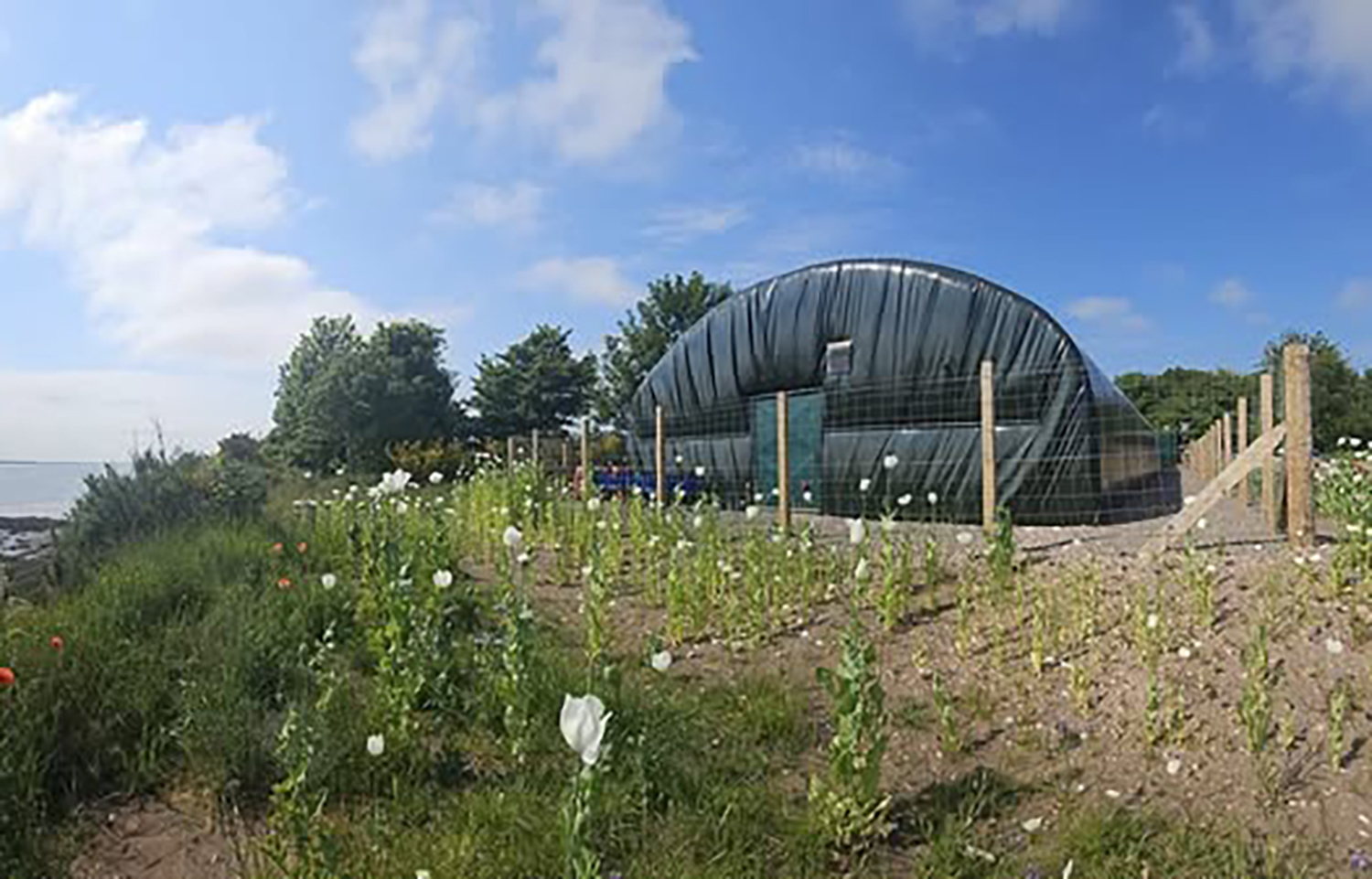
Having already demonstrated through the U.K. Sustainable King Prawn Project that warmwater shrimp can be cost effectively produced at scale by land-based methods, the university concluded there is strong potential for land-based aquaculture to take place anywhere – whether in urban, brownfield, or farmland sites – and evolve into a high-tech industry in the U.K. that combines engineering, biology, digital technology, renewable energy, and circular food production.
The policy paper, developed by University of Exeter Professor Rod Wilson and his colleague Rob Ellis, together with partners from academia and industry, acknowledged that the commercial success of many RAS operations has often been constrained by high capital costs and expensive energy requirements.
“The technological capability has been there for quite some time. The real question has always been whether it makes economic sense," Wilson told SeafoodSource.
Nevertheless, he said that innovations have helped move the cost-effectiveness needle.
For instance, improved insulation materials have dramatically reduced heating expenses, while waste heat from anaerobic digesters, data centers, and other industrial processes can increasingly be captured to maintain optimal water temperatures.
Renewable energy offers further opportunities, Wilson said, allowing facilities to be located well beyond traditional farming areas.
Initially, the research team behind the paper modeled shrimp farms co-located with agricultural anaerobic digesters, using surplus heat that would otherwise be wasted; however, they quickly realized the concept could be much broader, with the potential to take waste heat from several sources.
Once heat becomes available, RAS facilities no longer need to be tied to farmland. They could occupy brownfield developments, which is a piece of land that was previously used but now sits empty; industrial estates; or urban regeneration projects, with that flexibility significantly expanding the sector's potential, Wilson explained.
Unlike many established industries attempting to retrofit sustainability, land-based aquaculture is in its infancy in the U.K., allowing the sector to embed circular principles from the outset.
“If you're building these systems from the ground up, you can build circularity into the business model from day one,” Ellis said.
While technological capabilities no longer provide much of a barrier, a long-term challenge to U.K. RAS development is competition from imported seafood.
The paper highlighted that as much as 80 percent of the U.K.’s seafood demand is met by imports. Meanwhile, the alternative of farming on-land in the country could unlock a “cleaner and greener production stream” through production of domestic species like trout, salmon, and mussels, as well as non-natives like warmwater shrimp, yellowtail kingfish, and barramundi, that are all benefiting from expanded market appeal.
Additionally, public perception presents a barrier, as the term aquaculture itself can carry negative associations before conversations on differences in farming methods even begin, Ellis said.
Changing those opinions will require greater public understanding of where seafood comes from, how modern production systems operate, and why domestically produced seafood can contribute to food security and environmental sustainability, he said.
"We're not trying to create demand for seafood. People already love it. We're trying to change how people think about where their fish comes from and how it’s produced," Ellis said.
To overcome the barriers that still exist, the paper calls for a national strategy to accelerate U.K. land-based aquaculture through research, demonstration facilities, regulatory reform, and targeted public investment, pointing to several major benefits of such an approach, including economic growth, job creation, productivity gains, improved food security, workforce development, and climate benefits.
Ellis said trends are already moving in the right direction to make this happen, as governments increasingly account for carbon emissions, environmental externalities, and food security within agricultural policy.
More specifically, the paper’s key recommendations include the creation of a dedicated Center for Land-Based Seafood Production, bringing together researchers, technology developers, farmers, regulators, educators, and investors.
This hub, it stated, will help overcome barriers by providing support for research and innovation while also being a “focal point” for industry training, public engagement, regulatory guidance, and commercial demonstration facilities.
This is required, Ellis said, because modern aquaculture increasingly resembles advanced manufacturing rather than traditional farming.
“Tomorrow's workforce will need expertise spanning engineering, chemistry, biology, automation, artificial intelligence, sensors, and data analysis. That multidisciplinary environment makes the sector attractive to younger people who may never previously have considered careers in seafood production,” he said.
The paper proposed that Southwest England offers the ideal location for such a national center as the region already combines strong marine research capability, an established shellfish industry, maritime technology expertise, and government recognition as an area for scientific and food production investment. Furthermore, locating a flagship facility outside Scotland would also reinforce that land-based aquaculture extends well beyond salmon production.
"There are already excellent capabilities in Scotland," Ellis said. "But, this is about creating a genuinely U.K.-wide industry."
The researchers also pointed out opportunities to support rural economies in Devon, Cornwall, Wales, and elsewhere by creating new businesses that can occupy brownfield or low-productivity sites while complementing existing farming operations.
Whether through explicit inclusion within agricultural support schemes, investment in a national center, regulatory reform or public engagement, Wilson and Ellis said the country has an opportunity to establish global leadership while the sector remains relatively young.
"We're not saying this will happen overnight," Ellis said. "But if we prepare now, Britain has an opportunity to become a leader rather than a follower."
