


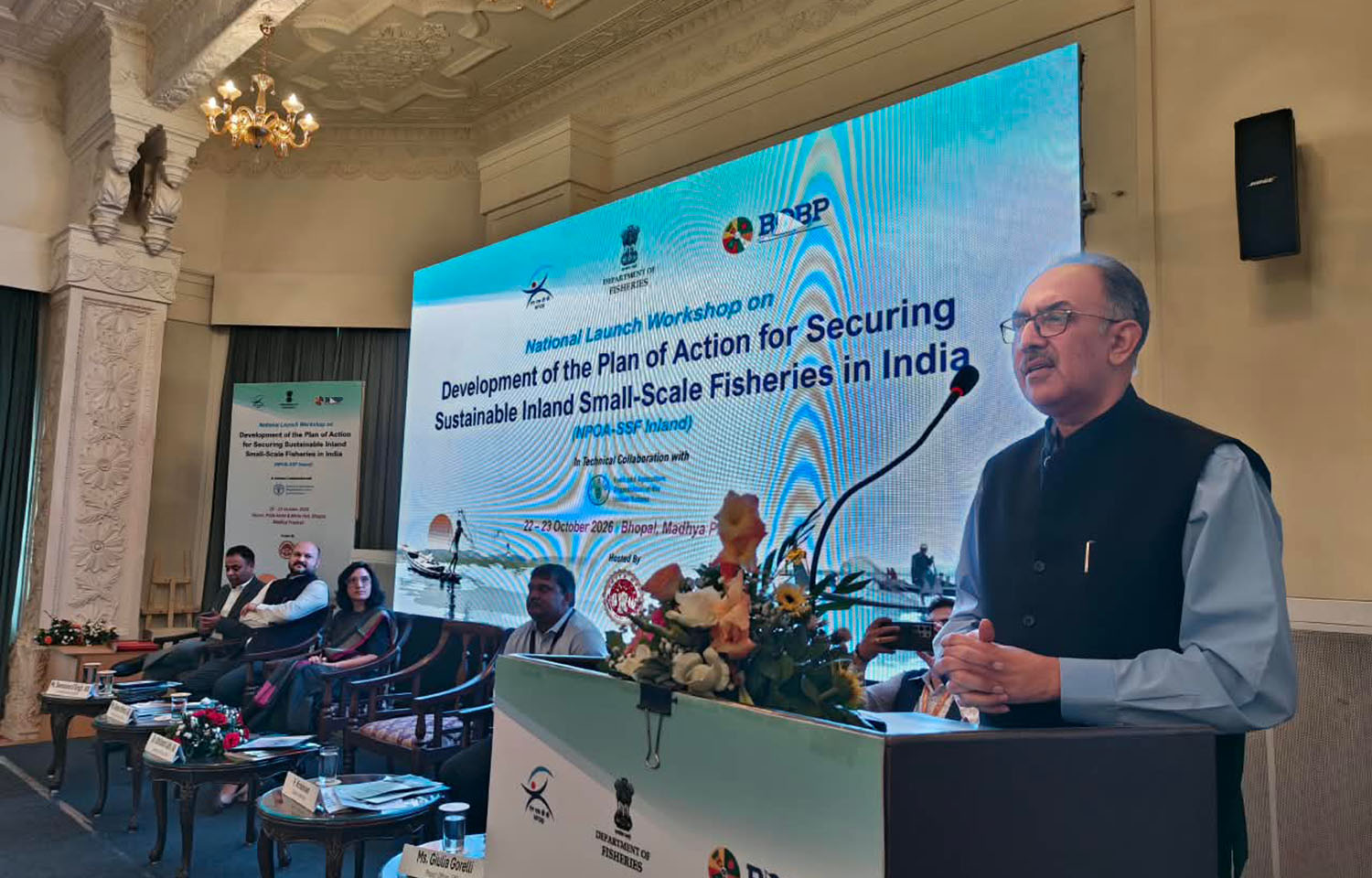
India has begun the development phase of a national action plan for its inland small-scale fisheries, and is planning to set a target of 30 million metric tons (MT) of overall fish production in the next five years.
India has been considering a national action plan, and the Bay of Bengal Program Intergovernmental Organization (BOBP-IGO) has called for support from the Food and Agriculture Organization (FAO) to help both the government and the organization create roadmaps in the process. According to BOBP-IGO, the government has now moved into the development phase of that action plan, with a focus “on livelihood improvement, enhanced coordination, and better management of freshwater resources.”
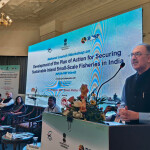
Union Fisheries Secretary Abhilaksh Likhi launched the development phase on 23 October and said the development will be using the framework of the FAO. BOBP-IGO said the initiative will be lead by it and the Union Department of Fisheries.
A two-day national workshop helped identify key priorities for the action plan, which includes a proposed program to consult with fishing communities and other stakeholders in India’s small-scale inland fisheries.
“The document must translate into practical improvements in livelihoods rather than remain confined to government offices,” Likhi said.
Likhi said the country is targeting 30 million MT of production across its various sectors over the next five years, and that its seafood exports are expected to increase to INR 125 billion (USD 1.3 billion, EUR 1.1 billion). He said India has achieved an annual production of 19.7 million MT, and inland fisheries represent three-fourths of that output.
However that production has potential obstacles in its future, including climate change and deteriorating water quality, according to Likhi, and any national action plan needs to incorporate those challenges and build climate resistance.
Likhi said the action plan could be an opportunity for India to lead on global fisheries policy given the complicated nature of the country’s inland fishing industry. Any small-scale inland fishing plan needs to incorporate fisheries in rivers, canals, reservoirs, lakes, floodplain wetlands, tanks, and cold-water systems, he said.
“India's diverse inland fisheries sector, with its varied ecosystems, fishing communities, and region-specific challenges, could serve as a model for collaboration with the FAO,” he said. “The experiences of fishing communities across the country could help shape context-specific approaches to sustainable fisheries management and livelihood development, offering valuable lessons for wider application.”
BOBP-IGO said the plan will be finalized through stakeholder consultations, and that it is scheduled to have a public launch next month.
“The development phase is expected to address issues relating to fishing rights and resource management, employment and decent work, gender equality, value chains and post-harvest trade, as well as disaster risks and climate change,” BOBP-IGO Director P Krishnan said.
