




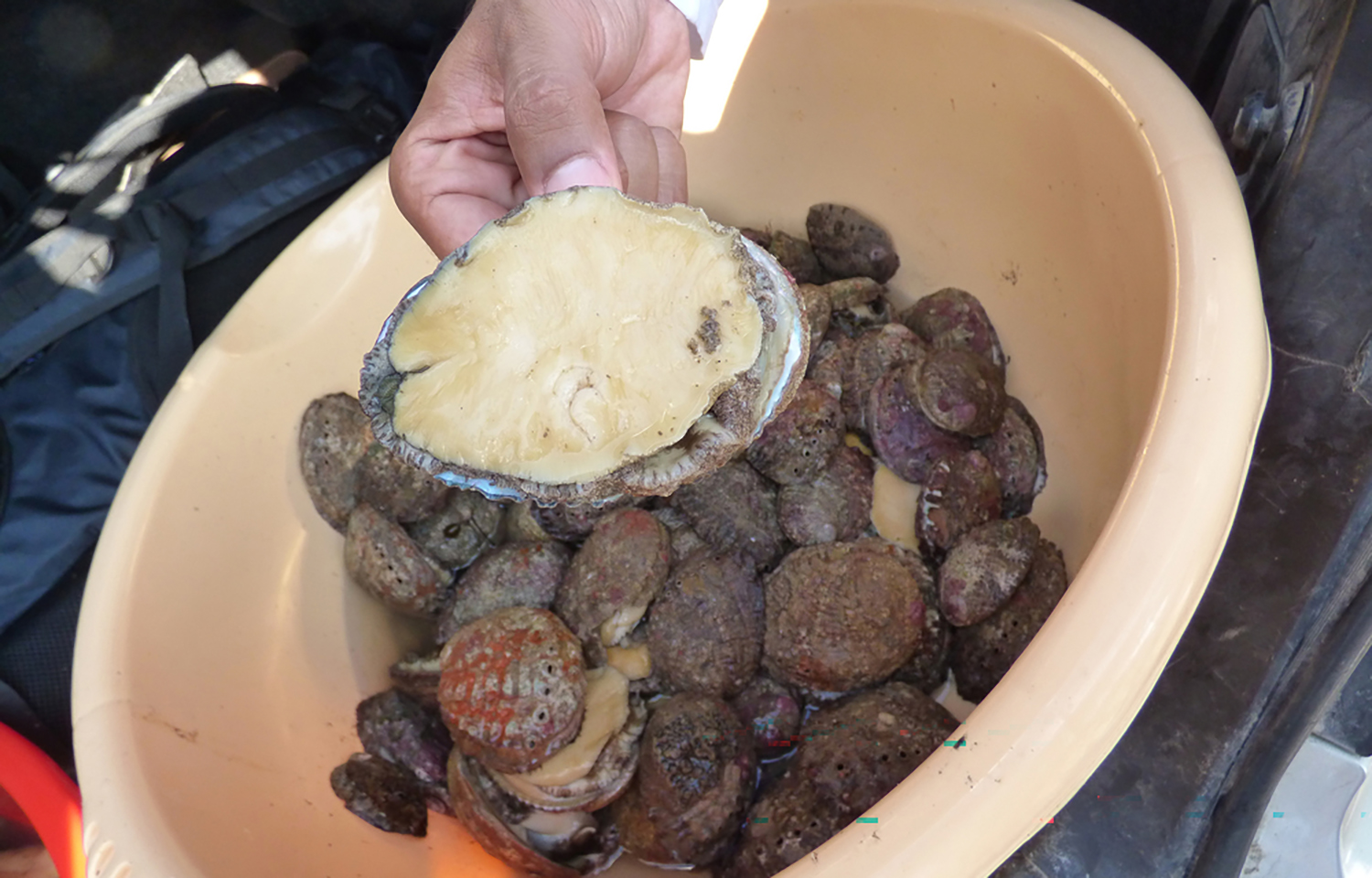
Oman's Ministry of Agriculture, Fisheries, and Water Resources has announced a one-year moratorium on wild-caught abalone operations.
A ministerial decree issued in late October said the moratorium will remain in place until 1 November 2027, a period during which Oman aims to implement measures, including a stock rebuilding program, that ease current pressure on its abalone stocks, namely reducing the impact of illegal, unreported, and unregulated fishing practices.
Previously, the Food and Agriculture Organization (FAO) blamed a lack in regulatory enforcement, overlap between fishing and abalone reproduction seasons, and an uncontrolled number of divers as the main reasons for declines in Omani abalone abundance and size.
FAO, therefore, said bans of one and even two years would most likely not be sufficient in protecting abalone stocks.
“Future fishing closure[s] must be extended for at least three years, and abalone harvest in Mirbat and Hasik should be banned for at least five years,” the United Nations agency proposed in 2022, adding that “the number of divers must be regulated and changing the fishing season must be evaluated.”
Nevertheless, Oman has instituted a one-year ban, and with the moratorium, abalone producers have been prohibited from possessing, trading, or handling abalone, including transporting, buying, selling, and exporting.
The decree has further stated the possession of abalone harvesting tools and equipment of any kind will be prohibited aboard fishing boats and vessels near coastal areas and fishing grounds throughout the ban.
Though wild capture of abalone has been banned for a year, farmed supply is growing in the country.
According to data from the Oman Department of Aquaculture Development, farmed fish output reached 9,240 metric tons (MT) in 2025, marking growth of 67.7 percent compared to 2024 totals. That growth in output led to the total value of aquaculture production increasing 63.7 percent, reaching OMR 20.3 million (USD 52.6 million, EUR 45.5 million).
Species that contributed to last year’s higher yields, according to Oman's Director of Aquaculture Issa Mohammed Al Farsi, were abalone,whiteleg shrimp, sea bream, tilapia, and rock oysters.
