

There are high hopes the long-term strategy recently unveiled for Scottish aquaculture will allow the industry to scale up its adoption of innovative technology, production methods, and sustainability measures.
Recognizing the crucial role aquaculture plays in the country’s plans for a blue economy and ensuring food security, the “Vision for Sustainable Aquaculture,” published by the Scottish government 21 July, sets out overarching aspirations for the finfish, shellfish, and seaweed farming sectors, as well as the wider aquaculture supply chain through 2045.
Scotland harvested 205,393 metric tons (MT) of farmed salmon and 7,655 MT of rainbow trout in 2021, as well as 9,092 MT of mussels, over 4 million Pacific oysters, 109,000 MT of native oysters, and 39,500 MT scallops in 2022. The country’s aquaculture businesses support some 11,700 jobs and generate GBP 885 million (USD 1.1 billion, EUR 1 billion) in gross value added annually, the report found.
In the vision’s foreword, Scotland Cabinet Secretary for Rural Affairs, Land Reform, and Islands Mairi Gougeon said the industry’s growth to date has relied on innovation to remain relevant and competitive, acknowledging that advances have occurred across a wide range of disciplines, including animal husbandry, nutrition, genetics, and engineering.
“Innovation will be fundamental in ensuring aquaculture meets the challenges of a changing environment brought about by the climate crisis, as will a streamlined regulatory framework that ensures high environmental standards and is recognized as an asset to businesses and our communities,” she wrote.
The vision document includes measures to safeguard the natural environment, support innovation across the sector, ensure local communities receive lasting benefits from aquaculture, and promote new infrastructure and supply chain developments. By 2045, the vision document calls for the country’s aquaculture sector to up its contribution to the Scottish food and beverage sector’s reputation for quality and environmental stewardship.
Moreover, the strategy document calls for the aquaculture industry to lead the way in the nation’s goal toward reaching net-zero carbon emissions and to adapting to challenges arising from climate change. The document also links the industry’s outlook to the objectives laid out in Blue Economy Vision it published in March 2022.
Sustainable Aquaculture Innovation Centre (SAIC) CEO Heather Jones said her organization supports the vision document.
“It is encouraging to see the strategy recognizing the value of innovation, which will be a driver of enhanced sector performance – particularly from an environmental perspective,” Jones said. “[I realize] the vision, however, will be linked to the pace of change and the rate of adoption. That will likely depend on three main factors: the sector’s capacity to invest in new ways of working; the creation of a regulatory environment that enables, rather than disables, innovation; and a desire from everyone to work collaboratively.”
SAIC will act as a collaborative hub focused on sustainable aquaculture and that the center has a track record of working closely with all parties – both government and industry professionals, she said.
“Our impact is now being seen internationally as a great example of how to make innovation happen, helping to position Scotland as a leader in next-generation seafood production,” Jones said. “There are big opportunities to showcase the work that underpins Scotland’s collective vision, boosting the sector’s economic potential while minimizing its environmental footprint.”
The Scottish aquaculture industry, which has been critical of recent government initiatives such as Scotland’s recently scrapped highly protected marine area (HPMA) plan – has largely backed the vision, with Seafood Scotland CEO Donna Fordyce telling SeafoodSource she not only welcomes it because of its objectives, which she agrees with, but also because of what it represents.
“It demonstrates that the aquaculture industry and Scottish government have reached a mutual understanding of the priorities and challenges facing the sector, much more so than I have witnessed before,” she said.
Salmon Scotland Chief Executive Tavish Scott also lauded the vision for putting salmon farming at the heart of the country’s economic growth plans, while also progressing Scotland along its journey toward net zero and supporting healthy diets.
“There is extraordinary potential for further sustainable growth of Scottish salmon, providing good, well-paid jobs and a highly nutritious, low-carbon food source,” he said. “Salmon from Scotland is the U.K.’s [top] food export, and salmon and seafood is a global success story.”
According to Seafood Scotland’s figures, salmon generates GBP 760 million (USD 977.3 million, EUR 887.8 million) for the local economy annually and comprises 9.4 percent of the entire marine economy, ahead of fisheries at 7.3 percent. The sector also directly employs 2,500 people and supports more than 3,600 suppliers, with a further 10,000 jobs dependent on farm-raised salmon.
However, the industry still needs strong government support in addition to what the vision is outlining, Scott told SeafoodSource.
“To grow, we need to recoup lost market share to our international competitors, who are not only bigger, but growing at a faster rate,” Scott said. “We want the Scottish government to recognize that governments elsewhere take a pro-sustainable growth approach to their sectors and emulate that. Our farmers are ready to make significant investments, but we need a consenting and regulatory process that deals with planning applications efficiently and unlocks economic growth in our coastal communities.”
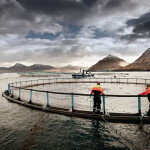
Kames Fish Farming, a producer of steelhead trout, is also supportive of the vision, according to the Loch Melfort, Argyll-based company’s managing director, Andrew Cannon. Cannon said he’s encouraged by the open dialogue between the sector and the government, which he said can enable progression toward a more sustainable future for aquaculture.
“We can only really tackle these sustainability challenges, such as climate change and environmental impact, by working collectively and collaboratively and through better education and discourse with research institutes and public bodies,” Cannon said. “We hope this vision document triggers action, further than just words, within the industry.”
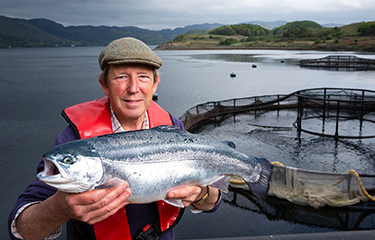
Photo courtesy of Kames Fish Farming
