
Japan’s Nagasaki Prefecture experienced the worst case of red tide damage in the region’s history in early August, leading the prefectural governor to call on the country’s national government for additional aid to compensate affected aquaculture companies and research how to better anticipate red tide to prevent future damage.
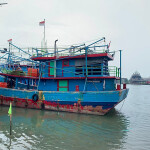
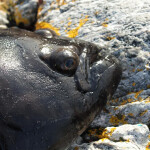
The crisis stems back to late July, when people began to notice areas of dark brown water in Tachibana Bay along the coasts of Nagasaki, Isahaya, and Unzen. The affected water gradually spread, killing about 1.1 million tiger pufferfish, striped mackerel, and red sea bream farmed by 19 companies.
Nagasaki is the nation’s largest producing region of high-end, luxury fish products, and statistics from Japan’s Ministry of Agriculture, Forestry, and Fisheries show that the prefecture’s blowfish production accounts for about half of Japan’s total output. The loss to the affected species is likely to affect pricing and supply throughout the country.
Total damages from this instance of red tide amounted to an approximate JPY 1.3 billion (USD 8.8 million, EUR 8.2 million), making it the most expensive red tide damage ever recorded in Nagasaki.
The phytoplankton karenia mikimotoi, which thrives in rising seawater temperatures and in water with decreased levels of salinity, was the main culprit behind Nagasaki’s red tide. If the toxic phytoplankton exceeds 500 cells per milliliter of seawater, it destroys the gill tissue of fish on contact. Authorities confirmed concentrations of up to 3,400 cells per milliliter in the region.
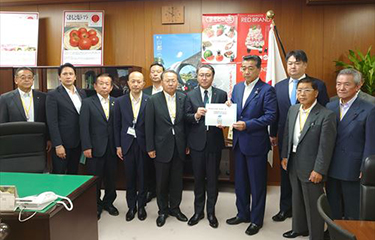
In response to the disaster, Nagasaki Prefectural Governor Kengo Oishi, along with representatives from individual cities in the region and related fisheries cooperatives, visited national government offices to make requests regarding the damage.
“The red tide … caused the largest damage in the prefecture’s history, and there are concerns that the aquaculture production area will collapse and cause major damage to the local economy, so we request support from the national government,” the representatives stated in their request.
Specifically, they asked for direct compensation to the region’s fish farmers for losses exceeding the amount of mutual aid typically offered by the national government, a review of the mutual aid program, and consideration of a reduction of mutual aid premiums, as well as financial support for local governments working on measures to combat the damage.
Japan’s fisheries mutual aid program provides compensation for losses from various types of disasters and damage, and the applicable program in this case from which the representatives are seeking additional compensation is the aquaculture mutual aid program. The program covers damages related to both mortality and sharp price declines, and in the case of mortality, a loss of 15 percent qualifies for a claim.
However, the program does not cover the full value of fish. In the case of pufferfish, the sales price is about JPY 3,000 (USD 20.31, EUR 18.99) per fish, but the compensation from mutual aid money is only about one-third of this total, leading to the group seeking more in compensation due to the severity of the outbreak.
The group of representatives also asked the government about the practical application of control technology for future use.
In addition to seeking national help, Governor Oishi proposed a supplementary budget bill on a regional level to the Nagasaki Prefectural Assembly that included approximately JPY 11.75 million (USD 79,500, EUR 74,500) to support business reconstruction, including the restocking of fish to net pens.
Following the enactment of the budget, officials from the Nagasaki City Tachibana Fisheries Cooperative Association and the Tachibana Bay Eastern Fisheries Cooperative visited the prefectural office to express their appreciation.
“I visited the site in August and was shocked by the scale of the damage, and I believe that this budget measure is the first step in providing assistance,” Governor Oishi said. “I think it will take time to recover, but the prefecture would like to work together with you [fishermen] to restore the vitality of the production areas. I hope that you will continue to do your best with a strong will.”
This is not the first red tide that has affected regions around Japan.
A similar red tide occurred in the same period of the year in Kumamoto Prefecture. The approximately 1.12 million fish killed in the region comprised sea bream, striped mackerel, and amberjack, and the damage amounted to JPY 1.54 billion (USD 10.4 million, EUR 9.7 million).
The most extreme red tide damage that has ever occurred in Japan was in October 2021 – a crisis that occurred off the east coast of Hokkaido in an area that is usually too cold for red tides to form. In that event, around 90 percent of the sea urchins off the coast of the town of Kushiro died, as well as some wild salmon and farmed kelp. Damages there amounted to an estimated JPY 7.6 billion (currently USD 51.4 million, EUR 48.1 million).
Photo courtesy of Nagasaki Prefecture
