

Auburn, New York, U.S.A.-based recirculating aquaculture system (RAS) coho salmon farmer LocalCoho is months away from proving steady-state production at its pilot farm and anticipates kicking off a capital raise in the first half of 2024 to fund its next expansion.
The company – formerly known as Finger Lakes Fish – is currently operating a pilot RAS facility in New York serving markets in the Northeast U.S. In the past year, the company has secured investments from prominent aquaculture figures and organizations, including Peter Pan owner Rodger May and former land-based coho salmon farm operator Per Heggelund and aquaculture investment fund Cuna del Mar.
That funding, LocalCoho CEO Michael Fabbro told SeafoodSource, has helped the company solve what he calls the “achilles heel of RAS” – fish quality and taste.
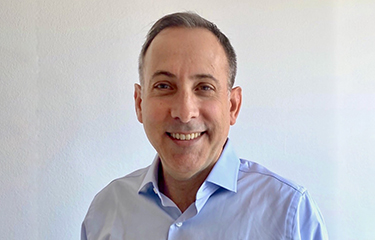
Fabbro, who was named CEO in April 2022, said the company’s pilot facility is in the final steps of proving it has reached steady-state production levels, and more importantly, has proven it can farm coho salmon indoors and avoid some of the negative flavor profiles associated with tank-based aquaculture. He told SeafoodSource the company has had “notable” customers in the culinary scene of New York City.
“Our fish quality has been really outstanding,” he said. “With RAS farms, the question is often ‘what about the off flavors, what are you doing about the off flavors?’ We’ve really solved for that, there’s a few things we’re doing, and we’ve brought in some new technology.”
LocalCoho, Fabbro said, is using new technology during its purge staging that has helped the company remove any off-flavors. Farms using a RAS often institute some form of “purge” stage to remove off-flavors caused by biosolids and biofilms that form in RAS equipment over time. Fish raised in an a recirculating aquaculture system can develop a “musty” flavor due to the accumulation of geosmin, which a purge stage in a different system can help eliminate.
Fabbro said the new technology, along with not feeding fish in the purge stage before saughter – has helped keep geosmin levels low. in LocalCoho's RAS.
“We’re getting a super-clean favor on our salmon right now. We do testing as well, and the tests are verifying that,” he said.
The company’s recent partnership with Shinkei Systems, a seafood technology startup, has also helped increase quality. Shinkei Systems is focusing on using AI and robotics to automate seafood processing and achieve an “ikejime” level of humane harvesting – which also benefits flavor.
“You’d really like to minimize or even eliminate the stress and the hormone release that accompanies stress, and then you also get a proper bleed-out,” Fabbro said. “The fish are tasting great, which is job number one.”
The next step is proving that its pilot facility, which they’ve called phase one, has achieved steady-state production. Fabbro said the company has overcome some unique challenges that are largely the result of its choice to farm coho instead of Atlantic salmon.
“We’ve made some changes to our photoperiods strategy that is now very tailored specifically to coho,” Fabbro said. “We were kind of on a more generic salmon photoperiods strategy earlier, but now through some work and finding some people with real great expertise in it, we’ve been able to implement a very coho-specific photoperiods strategy, which is helping with our growth rates and growth cycles.”
The improved photoperiod, Fabbro said, has helped the company keep on track to hit its target growth rates and harvest size of three kilograms.
“We’re tracking to get there in the first quarter of 2024 – which is really our last main operational KPI [key performance indicator] that we want to achieve at our pilot farm, which is also a proof of concept,” he said.
The fish, he said, are roughly three months from reaching target size – barring anything catastrophic happening – and based on current metrics, would be proof the pilot farm has reached steady-state production.
“Phase one is about operating a pilot farm and getting every all the operations down and proving the concept,” Fabbro said. “Phase two would be scaling up to a size which we can actually be a profitable company, and a self-sustaining company.”
To achieve those goals, he said, the company will need additional funding. In 2024, at some point in the first half of the year, LocalCoho will kick off a capital raise to fund an expansion facility capable of farming roughly 1,200 metric tons (MT) of salmon annually. The company is currently exploring areas to locate the new facility, but Fabbro said it’s likely that it will be located in central New York, in relatively close proximity to the pilot facility in Auburn. Fabbro said the future facility's design is still being developed.
“Adding an additional 1,200 tons of capacity ... will allow us to operate profitably," he said. "The scale works, the economics work, the numbers work, but it’s also not such a huge jump in scale. It helps keep the capital raise to what we think it achievable, and also helps mitigate the capital risk.”
On a spreadsheet, a RAS farm that can produce 50,000 MT of fish a year will have better economies of scale than a smaller farm – but the risk is also high.
“We think the size we’re targeting is a good fit between being realistic about raising the money and also having a scale that we can operate,” he said.
Fabbro said LocalCoho's big picture strategy is to capture the premium market for fresh, local farmed coho in major Northeast U.S. markets including New York City; Boston, Massachusetts; Montreal, Canada; Philadelphia, Pennsylvania; and Washington D.C., which can more than absorb the 1,200 MT production capacity.
“We want to have a strong brand, to able to kind of tell the story through the brand about all the benefits of local land-based farming,” Fabbro said. “Cohos just eat differently than Atlantic [salmon], so we’re trying to differentiate ourselves from the commodity market.”
Fabbro said the support it has received from high-profile figures in the aquaculture industry have provide reassurance LocalCoho is on the right track.
“Cuna del Mar, they have a lot of startups and early stage aquaculture companies that knock on their door, and they can be very very choosy and they run a very thorough due diligence process,” Fabbro said. “So to go through all that, an have them sign on the dotted line and back us, it’s a really validation point.”
Photo courtesy of LocalCoho
