




Punta Arenas, Chile-based salmon farmer Nova Austral has successfully appealed a sanction levied by the Chilean Superintendency of the Environment (SMA) that aimed to revoke the company’s environmental license for its Cockburn 14 grow-out center.
The July 2022 sanction, which the SMA hailed at the time as a “historic decision” against “a recalcitrant offender,” targeted three of Nova Austral’s farming centers – Cockburn 14, Cockburn 23, and Aracena 10 – for exceeding permitted production between 2015 and 2017. After issuing the sanction, the environmental regulator ordered the company to present a timeline for closing the centers, all of which are located within the Alberto de Agostini National Park in the Magallanes region.
According to the court’s latest ruling, the SMA’s sanctioning resolution “lacks due legal argument and, therefore, the sanction is disproportionate” in the case of Cockburn 14.
The court questioned the SMA’s reasoning that led it to the heaviest sanctions rather than lower-intensity sanctions which would have fulfilled the same purpose. It added that “there were not reasonable and sufficient reasons to apply, in this particular case, the sanction of revocation of the environmental license” and called on the SMA to issue a new, proportional sanction in accordance with the law.
Appeals for the other two sites are still under review, offering a sliver of hope for the beleaguered Nova Austral, which is reportedly USD 560 million (EUR 530 million) in debt and struggling to stave off bankruptcy.
Environmental nonprofits, such as Greenpeace, which has sponsored a campaign against salmon farming in Chile’s national parks and nature reserves, were quick to criticize the court’s decision on Cockburn 14.
“The Valdivia Environmental Court’s support for Nova Austral is absolutely incomprehensible and contradictory,” Greenpeace Campaign Coordinator Estefanía González said in a statement. “The court recognizes that the company caused intentional environmental damage to a national park but that it seems disproportionate for the environmental license to be revoked – a criterion that was legally justified at the time.”
The SMA still can take the case to Chile’s supreme court, González said, “because the seriousness of these events is such that today, under the new legislation that modified the penal code, what happened with Nova Austral corresponds to economic-environmental crimes.”
“Failing to sanction [the company] means the failure of our institutions,” she said.
The SMA said it is analyzing the court ruling and evaluating possible next steps. It highlighted that Nova Austral overstepped production limits by up to 35 percent, which involved an exponential increase in feed and fish feces and contributed to the depletion of oxygen on the seafloor, among other environmental infractions.
While the SMA seeks to shut down Nova Austral’s operations at the three sites, the looming possibility of closures is concerning residents in the area in which the farms are located.
“This is a main concern because our borough has 8,000 residents, and a large part of the population revolves around Nova [Austral],” Porvenir Mayor José Gabriel Parada told local publication Pulso. “Some 800 people work in the plant alone, and another 70 work directly in the fish farms. There is no other company in the borough that can replace the jobs that a possible closure of Nova Austral would leave behind. Many companies were created [to service the company].”
Nova Austral has been under intense public scrutiny since 2019 after it became publicized it allegedly engaged in false reporting of its mortality figures – an infraction for which it has faced criminal charges – followed by fines for reported inadequate mortality and sanctions for overproduction.
Nova Austral has said the malfeasance “completely misaligned” with its business, and at the time, its board of directors commissioned an internal, independent investigation to detect and correct the internal problems that led to the misreporting. That effort resulted in a complete overhaul of the company's senior management.
The company has also been trying to restructure in an attempt to settle its debts. In October, the company proposed three different reorganization options to financial creditors who have been unable to agree on a restructuring proposal, pushing back the dates to make a move on four occasions. The latest attempt to do so included creditors moving a meeting scheduled for 9 November to vote on the proposed reorganization to 21 November.
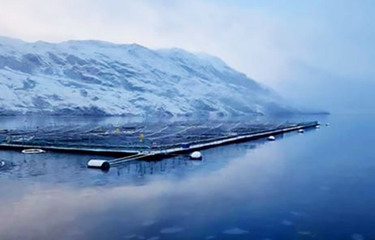
Photo courtesy of Nova Austral
