

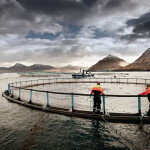
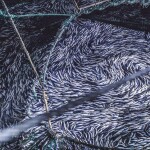


Taprobane Seafood Group has invested in the first-ever vannemei shrimp cultivation program in Sri Lanka, including a hatchery and farm site in Mannar, near the company’s headquarters in the country’s north.
The project, officially launched in January 2019, is a partnership between Taprobane and the Sri Lankan Department of Fisheries and National Aquaculture Development Authority (NAQDA), according to company director Dilan Fernando.
“The success of a pilot project has created a pathway for the island-wide introduction of specific pathogen-free vannamei,” Fernando told SeafoodSource in an email. “Over the past eight months, Taprobane has established Sri Lanka's only vannamei hatchery and first intensive, fully bio-secure, and environmental-friendly shrimp farm in the former conflict area in northern Sri Lanka.”
Sri Lanka accounts for approximately 0.5 percent of global shrimp production, or around 8,100 metric tons (MT), but that total is entirely composed of black tiger shrimp (Peneaus monodon). The introduction of Peneaus vannamei, or whiteleg shrimp, will make Sri Lanka more competitive in the global shrimp market, which has increasingly shifted to a preference for that species, Taprobane Managing Director Tim O’Reilly told SeafoodSource.
“Taprobane’s vannamei products [are being] harvested, processed, and exported to the European Union, with plans to move into U.S.A. and Japanese markets in 2020, achieving yet another first for Sri Lanka's seafood export industry,” O’Reilly wrote in an email.
Taprobane fought for more than three years to gain government permission to import and farm vannamei, O’Reilly said. According to the Sri Lanka Daily News, prior to Taprobane’s efforts, an import procedure did not exist for vannamei shrimp. As a means of addressing environmental concerns about the introduction of a new species into the country, O’Reilly said his company will implement best practices, including acquiring Global Aquaculture Alliance Best Aquaculture Practices (BAP) and Aquaculture Stewardship Council certifications for its shrimp farm in the near-future. Taprobane also plans to introduce 100 percent digital traceability on all its shrimp products, he added.
For 2019, Taprobane expects to harvest around 500 MT of vannamei. But O’Reilly said the company hopes to scale up sharply in the next two years to reach more than 2,600 MT of vannamei production by 2021. The company also wants to open a vannamei processing facility to handle the majority of the 50,000 MT target of vannamei production called for by NAQDA Chairman Nuwan Prasantha Madawan Arachchi.
In a statement, Arachchi praised Taprobane’s efforts to launch vannamei farming in Sri Lanka.
“I really appreciate the support and courage that Taprobane Seafood Group [has] made for pioneering the successful introduction of SPF vannamei to Sri Lanka,” Arachchi said. “Vannamei introduction will be the main turning point in the industry, that we all have taken together. In the journey of achieving the target, Sri Lanka’s government welcomes investors for farming, manufacturing, value addition and other supporting areas of the supply chain. Soon, our environmentally friendly farming will be able to cater high quality and sustainable vannamei to the world market, and help uplift the Sri Lankan economy.”
Photo courtesy of Taprobane Seafood Group
