



Despite achieving record first-quarter profit and revenue, salmon farming giant Mowi has warned of the potential long-term consequences that would likely follow the introduction of Norway’s proposed new aquaculture resource tax in its current form.
The Norwegian government presented a revised resource rent tax proposal to parliament on 28 March, 2023, with a few changes made from its initial proposal, which was announced in September 2022. These included a reduction in the tax rate from 40 percent to 35 percent. As such, the proposed total tax rate is now 57 percent, including corporate tax, compared to 62 percent previously, rising to about 75 percent when including Norwegian wealth tax.
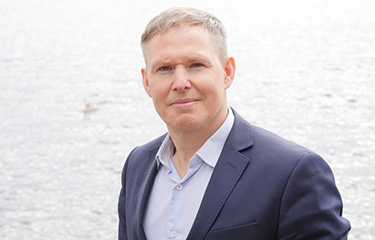
Mowi CEO Ivan Vindheim insisted that, even with the revision, it remains “totally out of proportion and unsustainable.”
Delivering Bergen, Norway-headquartered Mowi’s Q1 2023 results in Oslo, Norway, on 10 May, Vindheim said there were “disappointingly few changes” in the revision, with it being “almost devoid of almost any concessions” to the industry. But he said he remains hopeful the needle will move now that political negotiations are underway, with a final vote expected before the summer.
As documented by several parties in the consultation process, including Mowi, the tax model is not fit for effective business, he said.
“As it stands today, the proposal will be hugely detrimental to the Norwegian salmon industry and puts major limitations on future growth and development if it’s enacted, because there’s no such thing as a free lunch. The additional millions of Norwegian kroner going to resource rent tax payments going forward will not be replaced by external capital infusions and, therefore, will deteriorate the investment capacity of the industry,” Vindheim said. “Ultimately, it will lead to the demise of [Norwegian salmon farming] … our Silicon Valley — the family silver.”
With huge global demand for salmon, the likelihood is that the industry will relocate to other countries and its technological shift will accelerate at the expense of Norway, Vindheim said.
“We cannot let this happen. It’s too important for that,” he said. “The bill is still to be voted on before the summer, and no matter what, we won’t give up until we have secured a Norwegian salmon industry with reasonable framework conditions going forward. So, if anything, this is just the first round — we will fight until cramps get us, and then we will fight a little more.”
Mowi CFO Kristian Ellingsen advised that 80 percent of Mowi’s earnings in Norway are related to the seawater grow-out phase, which is the only stage to which the proposed additional 35 percent resource rental tax applies. As such, work is now underway to establish a pricing methodology that measures the seawater phase with the rest of the value chain.
“Until now, this has not been relevant because everything has been part of the same tax machine, but now it becomes important,” Ellingsen said, adding that with a wide range of transactions involved, Mowi’s work to establish the correct principles and prepare robust documentation will take time to conclude.
With the government yet to finalize a formal agreement, the IFRS has not officially enacted the tax change, so the tax estimate did not impact Mowi’s profit and loss statement and its balance sheet in Q1 2023.
In its Q1 results, Mowi adjusted its earnings per share with a conservatively estimated EUR 57 million (USD 62.5 million) based on the 80 percent of earnings that are related to the tax scope and the 35 percent extra tax, Ellingsen said.
“We have also adjusted the return on capital employed with the same number, and in practice, we have considered this an extra cost to salmon farming in Norway,” he said.
According to Mowi’s Q1 report, mainly due to an improved performance by its farming segment, operational earnings before interest and taxes (EBIT) for the first quarter of 2023 reached a best-ever EUR 321.8 million (USD 352.8 million), up 56 percent compared with the EUR 206.7 million (USD 226.6 million) posted for Q1 2022. Simultaneously, its revenue increased EUR 267.1 million (USD 292.9 million) to an all-time high of EUR 1.36 billion (USD 1.5 billion), with the company citing record-high prices driven by a tight supply-demand balance.
The global salmon supply contracted 4 percent year over year in Q1 2023, Vindheim confirmed.
Compared to Q1 2022, the reference price was up by 18 percent in Europe compared to Q1 2022 and by 6 percent in the Americas for salmon of Canadian origin. For salmon of Chilean origin, the reference price was relatively stable in the quarter, he said. However, Mowi’s price achievement was 6 percent below the reference price in the quarter due to the seasonally high record spot prices and the company’s fixed-contract prices being at a lower level. Additionally, the price was affected by the quality-downgrading of Norwegian volumes due to winter sores.
“It’s fair to say that we have had more problems with winter sores this year than last year,” Vindheim said. “We said something similar last year, so it seems like the main causative agent has changed and made the available vaccines less effective. This is something we and the pharmaceutical industry are looking into.”
Mowi confirmed its harvest volume in the opening three months of 2023 increased by 6,344 metric tons (MT) year-over-year to 102,944 MT gutted weight. This volume was also nearly 5,000 MT ahead of its earlier estimates for the period.
In Norway, Mowi’s largest and most important farming region, the company produced 65,627 MT of salmon in Q1 2023. Elsewhere, its operations in Scotland contributed 11,373 MT, Chile produced 10,588 MT, Canada totaled 7,579 MT, Ireland harvested 781 MT, the Faroes offered 2,130 MT, and its newest region, Iceland – via Arctic Fish – produced 4,866 MT.
Mowi harvested a record 464,000 MT in 2022, and it expects to grow to produce 484,000 MT of salmon in 2023.
Its downstream business, Mowi Consumer Products, delivered record-high first-quarter results, with an operational EBIT of EUR 37.2 million (USD 40.8 million) and an operating revenue of EUR 854.5 million (USD 936.9 million). Some 53,184 MT of products were sold by the division in the quarter, with the report highlighting a good performance in both the fresh and smoked categories, and across all geographies, partly helped by Easter and Lent.
Mowi Feed also reported a strong quarter, with record Q1 sales of 108,577 MT and a seasonal best operational EBIT of EUR 6.1 million (USD 6.7 million).
Vindheim said the first quarter of 2023 had been the “best quarter ever” for Mowi from a financial perspective and that the second quarter had started “on a good note,” with strong prices on a continued modest supply.
“How this will develop on the demand side — no one really knows, including ourselves. But normally, salmon fares well in challenging economic times,” he said. “The supply side looks supportive with a modest supply growth expected for this year and the coming years, with seasonal and annual fluctuations as usual.”
Photo courtesy of Ivan Vindheim/LinkedIn
