



Punta Arenas, Chile-based salmon farmer Nova Austral fell deeper into the red during the first quarter of 2023, and the company is struggling to find a path out of its difficult financial position.
Nova Austral has been under intense public scrutiny since 2019 after revelations that it allegedly engaged in false reporting of its mortality figures – an infraction for which it has faced criminal charges, followed by fines for reported inadequate mortality and solid waste management, sanctions for overproduction, and government-imposed production limits.
Now, a punishing hit in fair-value adjustments in Q1 2023 has deepened Nova Austral’s financial woes. According to documentation published on the Oslo Børs, the company recognized that its financial position “is not sustainable.”
“A comprehensive restructuring of the company's capital structure is necessary,” Nova Austral said in its Q1 results statement. “The implementation of the restructuring proposal that has been approved by the company's secured creditors in a bondholder meeting on 25 April remains uncertain, and there is a high degree of risk that a consensual restructuring may not be completed.”
On 19 June, the company said in a new statement to the Oslo Børs it was doubtful it can complete a consensual restructuring despite it having “worked diligently and extensively with its secured creditors to jointly develop a restructuring plan, implement such proposed restructuring plan, and to facilitate the due diligence process by the main bondholders.”
“We regret to inform that no consensual solution has been reached, neither for an equitization of the bonds … nor for a voluntary sale by the secured creditors of the shares in the company,” Nova Austral said. “The company will take such actions as are deemed necessary to protect its operations, employees, and the environment and is considering all available options, including possible judicial reorganization," or insolvency.
Nova Austral revealed in March it had entered default on loans, and in a new report in early April, the company issued a notice to bondholders offering two alternatives: corporate restructuring, which would include a USD 20 million (EUR 18.3 million) loan to inject needed liquidity to the company, or a competitive selling process in which Nova Austral's parent company – Sweden-based private equity firm Altor – would exit the firm.
Nova Austral's recent financial troubles came to light the same month when a representative of one of Nova Austral’s bond providers, Nordic Trustee, recognized itwas traversing a “challenging” liquidity position, with the company seeking an additional USD 8.5 million (EUR 8.7 million) in new cash equity on top of the USD 15 million (EUR 15.4 million) Altor Fund III and Bain Capital had injected into the company in December 2021.
Nova Austral's Q1 2023 results continued to reveal the company's strained financial position, as it posted a net loss of USD 43.2 million (EUR 39.6 million), up from USD 11.4 million (EUR 10.4 million) year-over-year. It did post 61 percent more revenue, at
The company said sales in its main markets of the U.S. and Europe increased when compared to the first quarter of 2022 due to greater volumes sold. Its U.S. ales reached USD 18.7 million (EUR 17.1 million) in Q1 2023 compared to USD 12.3 million (EUR 11.3 million) in Q1 2022, and its European sales more than doubled from USD 2.3 million (EUR 2.1 million) to USD 5.8 million (EUR 5.3 million). Its Asia also increased to USD 3 million (EUR 2.7 million) from USD 2 million (EUR 1.8 million) in Q1 2022.
In terms of product mix, fresh products and frozen portions led sales in the first quarter of 2023, which together represented 70 percent of Nova Austral's net sales in the period. In the quarter, fresh products saw a slight decline to USD 7.4 million (EUR 6.8 million) from USD 7.8 million (EUR 7.1 million) in Q1 2022. Over the same period, frozen portions more than doubled in value to USD 12.4 million (EUR 11.4 million) from USD 5.6 million (EUR 5.1 million) in Q1 2022. Nova Austral said it would continue to focus on selling fresh products and frozen portions in the coming months.
For its hatchery operations, the company said that during the first quarter of the year, it delivered one million smolts to third parties. The company stocked no eggs in Q1 2023.
Nova Austral said it finalized its joint venture with Trusal, signed in February 2020, for the production of salmon, with three licenses on Skyring Sound in southern Chile’s Magallanes Region. Harvest of the last site of the JV was finalized in February 2023 and most of the salmon from the JV have now been sold. Nova Austral said the end of the JV impacted its total stocking levels.
For the full-year 2022, the company sustained USD 50.8 million (EUR 46.5 million) in net losses, compared to losses of USD 43.1 million (EUR 39.5 million) in 2021. Its revenue reached USD 88 million (EUR 80.6 million) in 2022, down 2 percent from the previous year.
At the end of the year, Nova Austral had USD 450,000 (EUR 412,000) in cash and cash equivalents, compared to USD 3.16 million (EUR 2.89 million) at the beginning of the year.
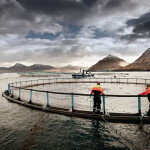
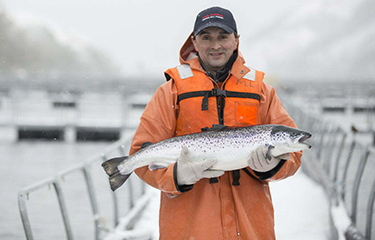
Photo courtesy of Nova Austral
