





Negotiators at the World Trade Organization (WTO) are intensifying talks to reach an agreement on a draft text that would limit subsidies driving overfishing and overcapacity among global fishing fleets.
Icelandic Ambassador to the WTO Einar Gunnarsson, who has been chairing the negotiations, said he hopes to get a deal outlined before the organization’s ministerial meeting in February.
“I can tell you we are really turning up the heat,” Gunnarsson said. “Our main objective is to complete a full read-through of the text, collecting specific suggested amendments as we go through the agreement provision by provision.”
Within the draft’s framework, negotiators are trying to agree on rule exemptions for developing member nations of the WTO, many of which oppose the way the talks are heading.
Indian representatives are threaning to block any deal the WTO puts forward, claiming the responsibility for overfishing rests with a handful of the world’s largest economies, specifically those with distant-water fleets. A letter issued in July 2023 by Indian fishery unions and civil society groups described the WTO agreement as “grossly unjust and inimical to the interests of fishers in developing and less developed countries, especially for small-scale fishers.”
The letter said developed countries “in particular in Europe and North America” are mostly to blame for overfishing by paying subsidies that support industrial fishing, and that countries with no distant-water fleet deserve a 25-year transition to new subsidy rules, not the two years proposed in the WTO talks.
The negotiations exclude payments made in government-to-government access deals, which allow the E.U. and other major fleets to fish in various states’ waters, particularly in West Africa. Such payments do not fall under the current definition of a subsidy set by the WTO’s Agreement on Subsidies and Countervailing Measures.
One fact that might sway some developing nations toward cooperating with the WTO negotiations is that they could force transparency into deals that allow Western industrial fleets access to fisheries in developing countries, according to Ernesto Fernández Monge, the senior officer for conservation support at the Pew Charitable Trusts, said.
“Coastal states, particularly small countries and small island states, could gain a lot from the proposal to prohibit subsidies that support fishing in areas beyond the subsidizing member’s jurisdiction, as this will put a limit to programs that directly or indirectly allow distant-water fleets to fish in foreign exclusive economic zones,” Fernández Monge said.
Monge, though, pondered whether countries with large fleets might demand flexibilities in the text, which would limit the power of any deal to properly prohibit subsidies. Such exceptions in the previous WTO deal struck in 2022 were a major target of criticism, with numerous non-governmental organizations labeling them as loopholes that allow the world’s fishing superpowers to continue their bad behavior.
“[WTO] members need to be careful not to include flexibilities to this prohibition for access agreements, as this will allow big fishing nations to circumvent the rules,” he said.
Gonzalo Macho Rivero, an artisanal fisheries expert at the University of Vigo in Spain, echoed Monge’s concerns, stating that even if a fair agreement is signed, developing countries generally have a lack of means to ensure the adherence of larger countries.
“For example, many agreements are based on a certain amount of money that the Western country gives to the developing country for getting [a certain] amount of tons of one species in its waters using their own fishing vessels,” he said. “But many times the catches are not landed in the developing country due to a lack of infrastructure or other reasons; instead, the catch is landed in the Western country, in a third country, or offshore transshipment happens. So, the developing country is not really controlling how much has been caught, which is usually going to be higher than the amount agreed.”
There are also concerns a lack of research on the status of worldwide stocks could cause problems with implementing any agreement. Rivero explained that the status of stocks in most fisheries remains unassessed, particularly in small-scale fisheries, pointing to research by Daniel Ovando finding roughly 50 percent of global landings and the majority of global fisheries are currently “unassessed.”
“So, if the continuation of fuel subsidies are going to be based on stock status, which is largely unknown, how could this be implemented?” Rivero said.
Rivero said he fears that in the case of unassessed fisheries, fuel subsidies will remain “until a formal stock assessment is done, despite the fact that there might be local experts claiming that the fishery is overexploited.”
“This might be an incentive for governments to [never properly assess] fisheries so they can keep fuel subsidies going, [keeping] fishing industries happy and worsening the state of the stocks,” Rivero said. “Due to a lack of scientific research on the state of their fish stocks, developing countries are signing with closed eyes.”
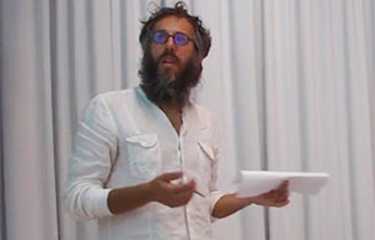
Photo courtesy of University of Vigo
