






The European Union recently approved a contentious law that would entail member-states implementing restoration measures on at least 20 percent of Europe’s land and sea by 2030.
A revised draft of the E.U. Nature Protection Law (NRL) that included several amendments passed in a crunch vote – 336 votes in favor, 300 against, and 13 abstentions – in Strasbourg, France, on 12 July, 2023, moving on to trialogue negotiations under the guidance of the Spanish Presidency of the European Union, in advance of a final round of negotiations.
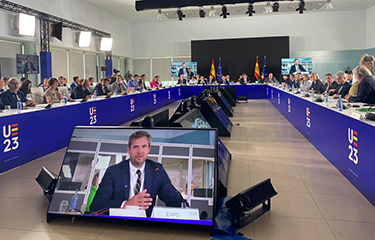
While proponents of the law lauded its goals of restoring wild areas and their biodiversity, some groups that opposed the law are worried that its enforcement will be uneven across the E.U. The European Association of Fish Producers Organisations (EAPO) is one such group, insisting that a level playing field is necessary across all marine space users to avoid disproportionate impacts.
“[EAPO] would like to insist on the need to limit both direct and indirect anthropogenic impacts on restoration areas,” EAPO President Esben Sverdrup said. “Lowering or stopping fishing pressure cannot guarantee effective restoration when the sea is in a critical state, as in the case of the Baltic Sea. We also question the level playing field dimension of the nature restoration plans. As individual member-states will be developing their own plans, a level playing field cannot be guaranteed.”
The European Parliament’s fisheries and agriculture committees rejected a previous draft of the NRL, calling the proposal ill-thought-out, unrealistic, and likely to have negative consequences.
EAPO, agreeing with the committees’ opposition to the initial draft, wants the final NRL to emphasize clarity in its approach to limiting marine environmental impacts, Sverdrup told SeafoodSource.
Sverdrup acknowledged this wouldn’t be easy, saying that in recent times there’s been “accrued pressure” on the maritime space, which has increasingly led to conflicts between longstanding players such as EAPO’s members, and newcomers, such as those trying to implement offshore wind projects.
“Differing from food production, the European Parliament’s position lists renewable energies as being of overriding public interest, meaning that wind farms, not fishing activities, can be set up in restoration areas,” Sverdrup said. “We [EAPO] see this as highly problematic because in this case, restoration measures are, in fact, limited only to restricting fishing activity and not dealing with the impacts of offshore renewable energies (ORE).”
Representing 28 producer organizations from nine member-states with approximately 10,000 vessels, 3.5 million metric tons (MT) of landings, and an estimated first-sale value of EUR 3 billion (USD 3.3 billion), EAPO maintains that “no one has a greater interest in a healthy and productive marine environment” than its members, who mainly include fishers relying on the ocean for their livelihoods.
Sverdrup said over the past 20 years and particularly since the ongoing restructuring of the E.U.’s fisheries control rules, Europe's fishing sector has greatly reduced its environmental impact, and fishing pressure is now at an all-time low.
With the Kunming-Montreal Biodiversity Agreement, the revision of the Renewable Energy Directive, and the NRL all setting targets dedicated to the use of marine areas, policy coherence would ensure newcomers to the space don’t overlook fishers when it comes to accessing fishing grounds, according to Sverdrup. Additionally, the E.U. has provided no funding in the proposal to implement the NRL, despite the setting of “ambitious objectives” in terms of restoration, specifically 30 percent of E.U. land and sea by 2030, 60 percent by 2040, and 90 percent by 2050, he said.
“Data collection is very resource-intensive – restoration measures all the same. Without funds, we believe this regulation does not have the means to achieve its objectives,” Sverdrup said.
The center-right European People's Party (EPP), the largest party formation in the European Parliament, also opposes the NRL, seeing it as a direct threat to the livelihoods of European fishers, farmers, and forest managers. Previously, EPP stated that the law’s legally binding targets would disrupt supply chains, decrease food production, and raise prices for everyday consumers.
However, groups and individuals, including the European Commission, several NGOs, climate scientists, players in the renewable energy industry, and companies including IKEA, Unilever, Nestlé, and Danon, have contested some of the claims made by EAPO and the EPP, saying that nature restoration is both compatible with existing use of the space and essential to global marine preservation targets.
Under the revised legislation, E.U. member-state governments must draft long-term plans on nature restoration, laying out projects and initiatives they wish to pursue to meet the law’s overarching targets. Among the amendments adopted was a requirement to set up new marine protected areas making it mandatory for member-states to produce action plans for the restoration and protection of marine ecosystems.
Most experts weighing in on the NRL debate are either opponents or proponents, but a small group agrees with the text in principle yet believes it doesn’t go far enough. Certain NGOs, for example, such as Seas at Risk and Oceana, are among those who believe the European Parliament has voted for a weak text that will do little to meaningfully restore nature, prevent biodiversity loss, or fight climate change.
Seas at Risk Senior Marine Policy Officer Tatiana Nuño said while the NRL provides some hope for the future of Europe’s seas, it’s still disappointing that the law fell victim to what she said was a significant weakening of the final legislation.
“There is a long way to go until we have the necessary, ambitious tools to face the climate and biodiversity crises, and now is the time for E.U. citizens to send a strong signal to the political class at next year’s elections that they won’t stand for politicians playing political games with their future,” she said.
Photo courtesy of EAPO
